
Dutse’s dazzling Durbar


Muhammad Hameen Nuhu Sunusi (centre), Emir of Dutse, riding during the Durbar horse procession in Dutse. — AFP

VEILED women ululated as the blare of trumpets and booms of hunting guns filled the air, heralding the approach of the emir in a huge procession of horseback riders draped in colourful robes and turbans.

Durbar, a festivities-filled procession held each Aidilfitri, saw Emir Hameem Nuhu Sunusi, of the Jigawa state capital Dutse, ride through his city as traditional leaders across the rest of Nigeria’s Muslim-majority north did the same.
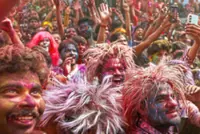
In Dutse – also the capital of the Dutse emirate – the Unesco-recognised fete had residents dressed to the nines as they lined the streets, raising clenched fists in homage to the emir amid drumming, singing and dancing by royal troupes and thousands of horsemen.

Drenched in sweat, the troupes danced to the drums in a frenzy, while royal guards dressed in their hallmark robes of red and green flanked the emir, seated on a white stallion under a blue parasol to shield him from the scorching west African sun.

A horseman parading as he rides during the Durbar horse procession in Dutse. Durbar is a colourful procession of horses dating back to the 15th century in which the emir and thousands of horse riders accompanied musicians march through the streets in predominantly Muslim northern Nigeria. Although the festival originated in North’s largest city of Kano. — AFPA horseman parading as he rides during the Durbar horse procession in Dutse. Durbar is a colourful procession of horses dating back to the 15th century in which the emir and thousands of horse riders accompanied musicians march through the streets in predominantly Muslim northern Nigeria. Although the festival originated in North’s largest city of Kano. — AFP

The festivities marking the end of Ramadan continued, with the emir making a tour of the city to meet residents.

“Durbar spices up the Eid celebrations,” spectator Awwal Adamu, a 27-year-old undergraduate said, one of the thousands in the throng.

It also showcases Nigeria’s rich cultural heritage – often overshadowed by the north’s myriad armed conflicts, Emir Sunusi said afterwards in his palace.

Horsemen parading during the Durbar horse procession.-AFPHorsemen parading during the Durbar horse procession.-AFP

Durbar takes place twice a year, on Aidilfitri and Aidiladha holidays celebrated worldwide in the Islamic calendar.

The festival dates back to the 15th century, originating in Kano, the north’s largest city.

But this year, Sunusi stole the show from Kano, which cancelled its Durbar for the second time in a row due to a legal tussle between two rival royals contesting the emir’s throne.

Nigeria’s traditional rulers have no constitutional powers but are important cultural custodians, wielding enormous influence that is crucial for politicians wishing to win election to the country’s secular federal government.

A royal hunter firing his hunting gun to announce the arrival of the Emir of Dutse during the Durbar horse procession. — AFPA royal hunter firing his hunting gun to announce the arrival of the Emir of Dutse during the Durbar horse procession. — AFP

The Dutse procession culminated with the governor, Umar Namadi, receiving the emir and his entourage outside his office as daring young men perched on gnarled boughs of baobab trees overlooking the pavilion to watch.

Seated next to Namadi, Sunusi received homage from his 26 district heads, who took turns to greet the monarch by squatting on all fours in royal obeisance.

Each contingent of the procession led by the district heads “has its own different system of decoration for the horses and the horse riders,” said Wada Alhaji, the chief of staff to the emir.

“The different displays showcase the rich diversity within the emirate.”

Durbar is not just a cultural festival – it is also an avenue for the emir to lodge his people’s complaints to the government.

Members of a royal troupe parading during the Durbar horse procession. — AFPMembers of a royal troupe parading during the Durbar horse procession. — AFP

The emir told Namadi about the menace of erosion and flooding affecting some areas in the emirate, and the people’s call on the government to expedite work on a new police training college.

Dutse resident Khadija Ibrahim called the Durbar “the most interesting part of Eid”.

“I can’t imagine Eid without the Durbar,” said the 45-year old-mother of eight.

The event, which draws onlookers and well-wishers from across Nigeria, as well as foreign tourists, “is part of the things we are proud of”, said Emir Sunusi.

“In lots of places when you talk about Nigeria, it is negative things that come to mind,” the 46-year-old monarch said.

“I feel we are not judged fairly.”

A royal camel driver making a camel lie down at the residency of the Emir of Dutse before the Durbar horse procession, in Dutse. — AFPA royal camel driver making a camel lie down at the residency of the Emir of Dutse before the Durbar horse procession, in Dutse. — AFP

Sunusi said he hopes the Durbar can change the negative perception of Nigeria abroad and help attract more tourists who would be able to see the “good people, peace-loving, honest people” of the country’s north, where the rural hinterlands have been beset by years of armed conflict.

Durbar, added to Unesco’s list of intangible cultural heritage, tells a fuller, more complex story of the north.

“Once Unesco recognises you it means you will be known all across the world,” Sunusi said.

“This will help us a lot in making other people know us more.” — AFP

Follow us on our official WhatsApp channel for breaking news alerts and key updates!

Next In Focus

Babbling brooks beat bathroom blushes
Loyalty first, expertise second
Monarchs on the move
Polar bear capital at the edge
The race for star power
What to expect in 2026
Teaching the world’s lost leaders
At the centrestage of Asean�
#coldplaygate: Speaking out against the ritual shaming of the woman
The Epstein files: 'Truthful hyperbole'?

Others Also Read