
FROM ancient star streams to the innards of white dwarfs, the Gaia space telescope has seen it all.
In late March, mission specialists at the European Space Agency sent Gaia, which is low on fuel, into orbit around the sun, and switched it off after more than a decade of service to the world’s astronomers. They also overwrote some of Gaia’s onboard memory with the names of team members, some of whom wrote personal goodbyes.
Gaia has charted the cosmos since 2014, creating a vast encyclopaedia of the positions and movements of celestial objects in our Milky Way and beyond.
It is difficult to capture the breadth of development and discovery that the spinning observatory has enabled.
But here are a few numbers: nearly two billion stars, millions of potential galaxies and some 150,000 asteroids. These observations have led to more than 13,000 studies, so far, by astronomers.
Gaia has transformed the way scientists understand the universe, and its data has become a reference point for many other telescopes on the ground and in space.
And less than a third of the data it has gathered has so far been released to scientists.
“It’s something that is now underpinning almost all of astronomy,” said Anthony Brown, an astronomer at Leiden University in the Netherlands who leads Gaia’s data processing and analysis group.
“I think if you were to ask my astronomy colleagues, they couldn’t imagine anymore having to do research without Gaia being there.”
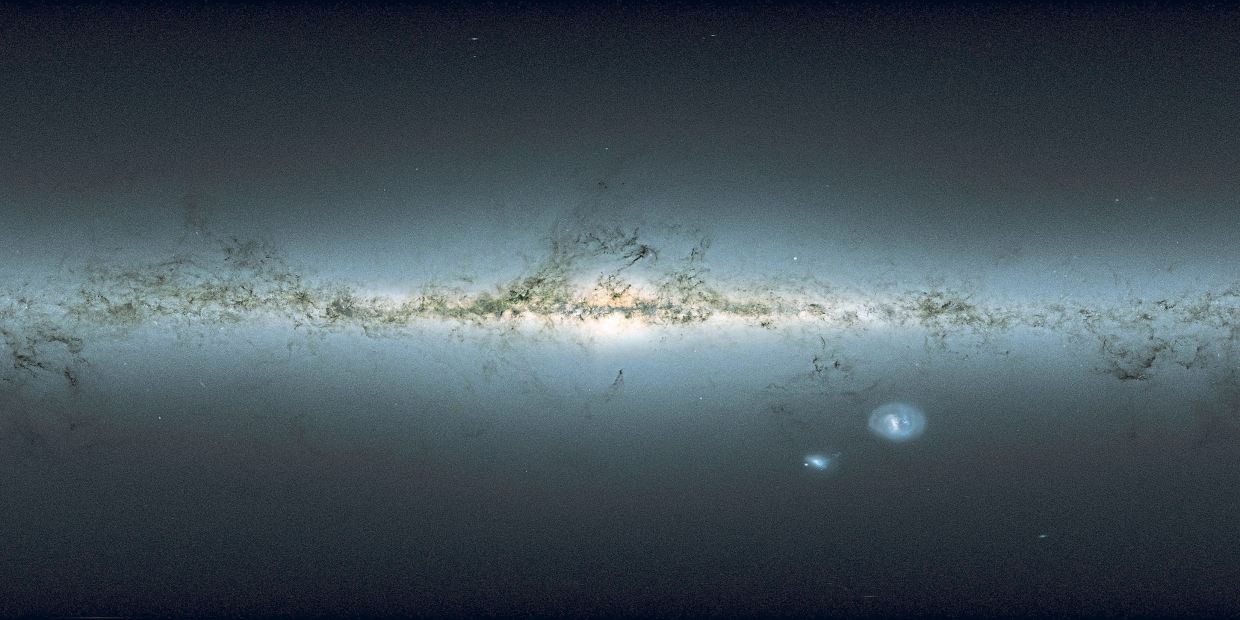
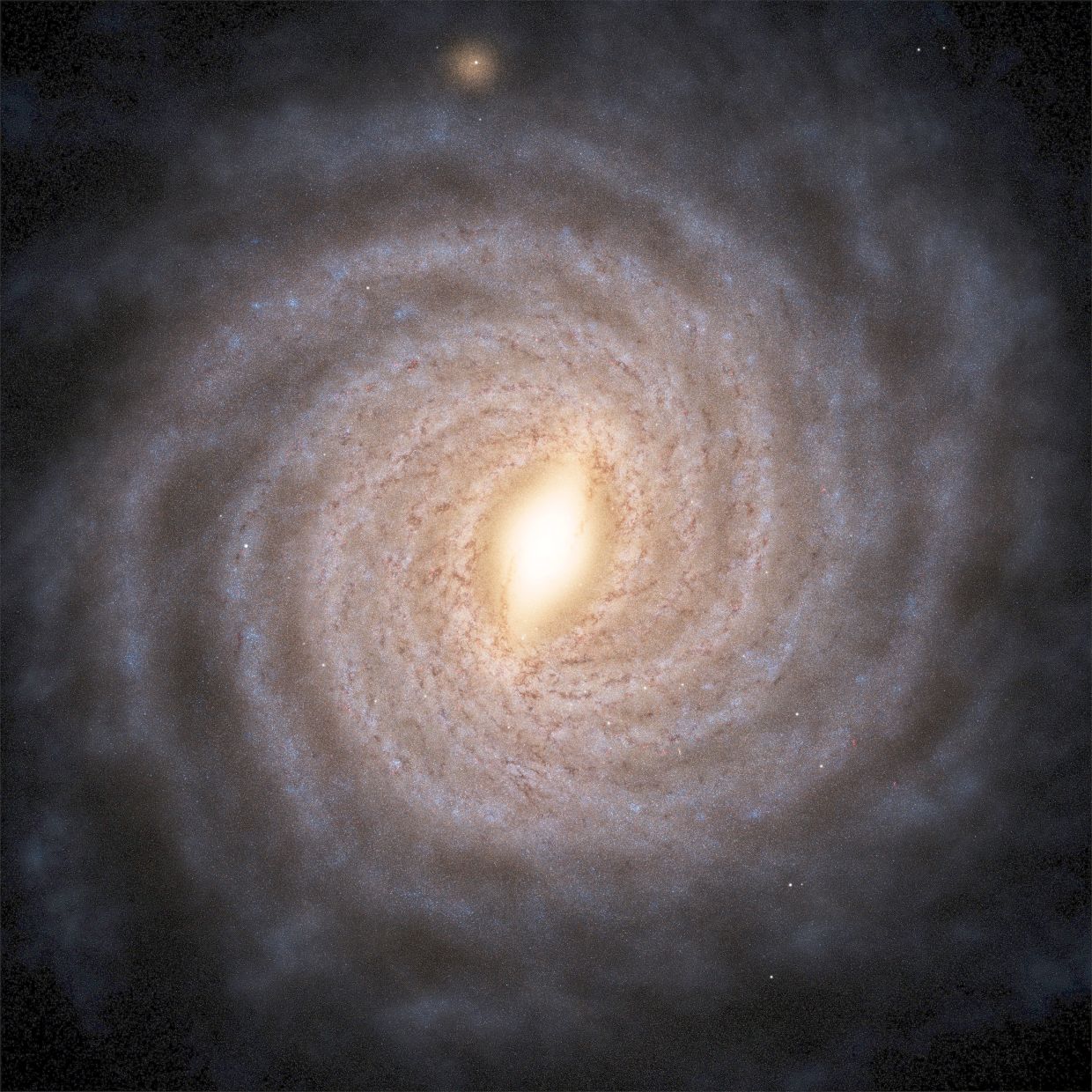
Launched in 2013, Gaia’s primary goal was to reveal the history and structure of the Milky Way by building the most precise, three-dimensional map of the positions and velocities of one billion stars.
With only a fraction of that data, astronomers have estimated the mass of the halo of dark matter engulfing our galaxy and identified thousands of trespassing stars, ingested from another galaxy 10 billion years ago.
Measuring ongoing vibrations in the disc of the Milky Way – a kind of galactic seismology, Brown explained – has also led to evidence of an encounter with a satellite galaxy that orbits our own much more recently than scientists had believed. That could be why the Milky Way appears warped when viewed from the side.
Gaia’s reach extended beyond what can be gleaned about our galactic address.
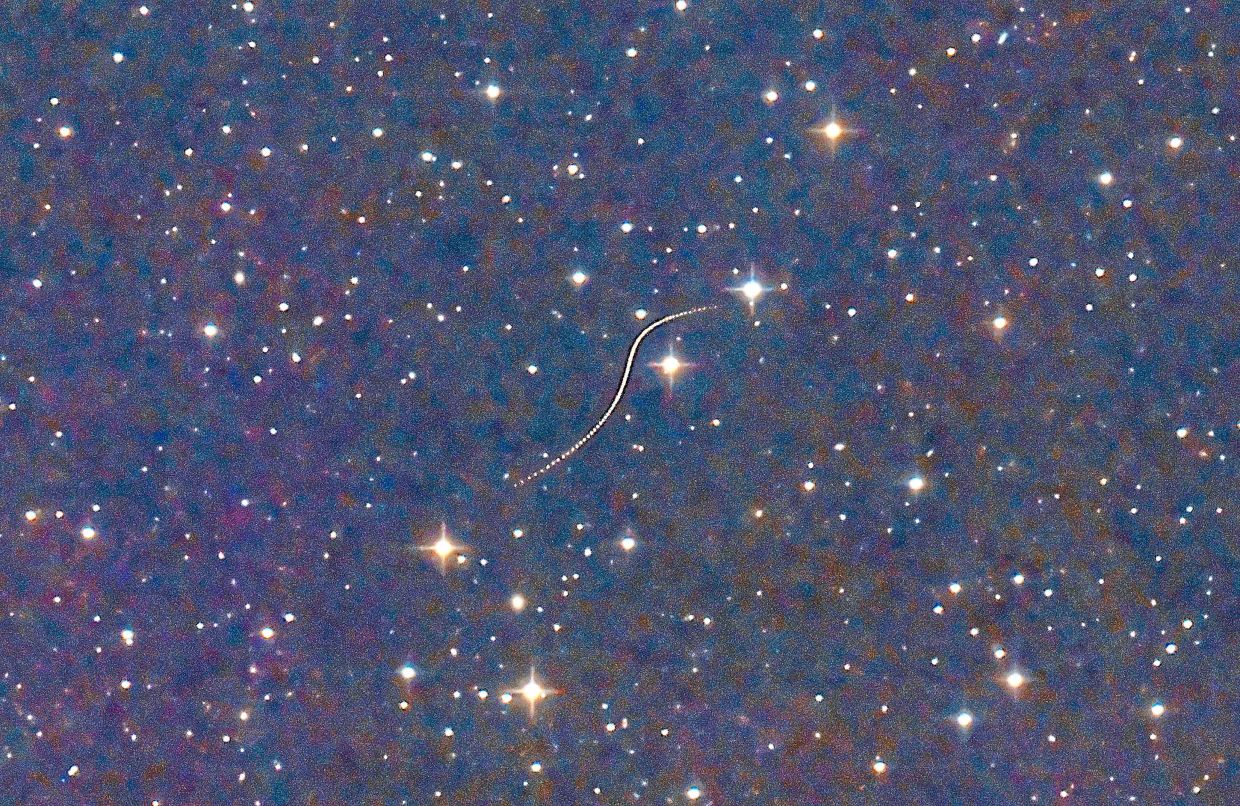
The spacecraft has helped observe moons orbiting other worlds in our solar system, captured starquakes and spotted hyperfast stars zipping across the Milky Way.
Within its catalogue of stars, astronomers have found hints of new planets and black holes, including the closest known to Earth.
Cosmologists have used Gaia’s records of pulsing stars to help measure the expansion rate of our universe.
“Gaia has been and will be incredibly important to our understanding of the cosmos,” said Lisa Kaltenegger, an astronomer at Cornell University who, in 2021, used Gaia’s catalogue to learn which alien worlds might be able to see us.
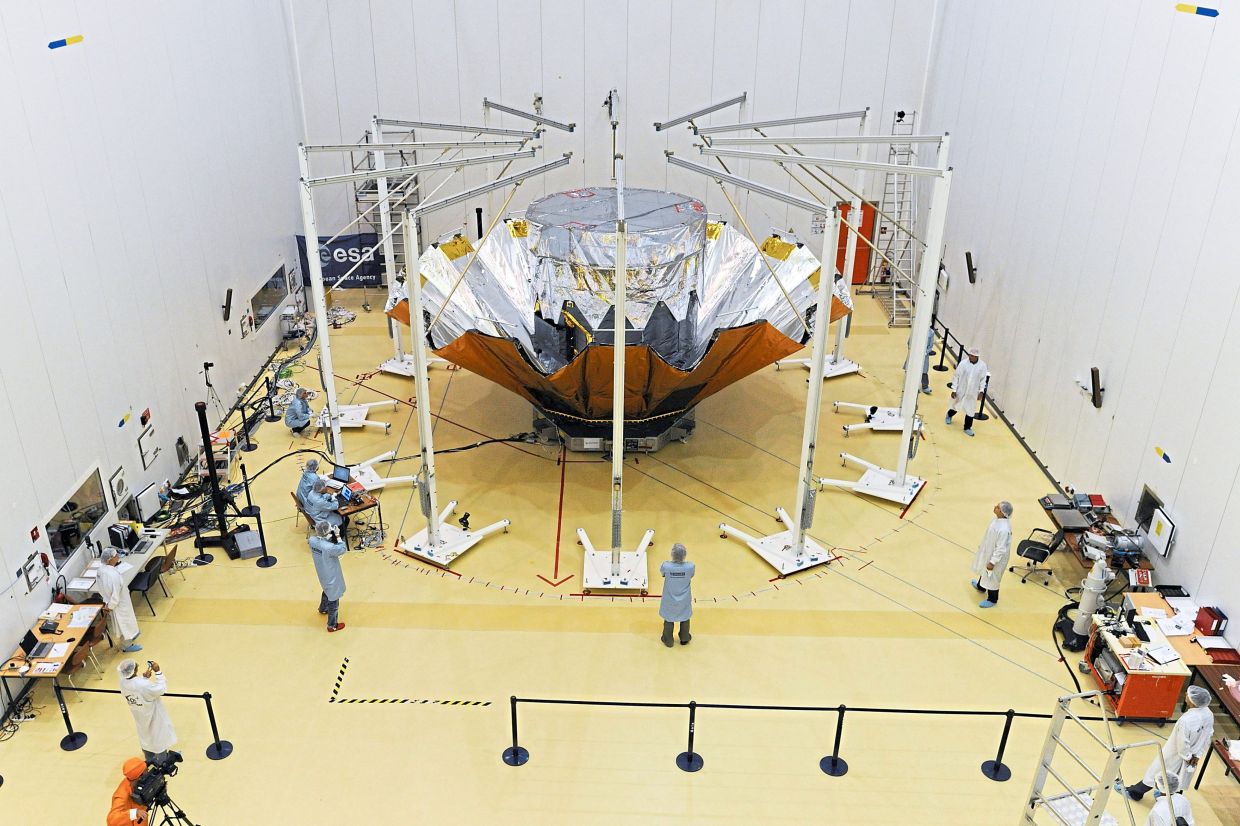
The mission began recording data about six months after its launch. For more than 10 years, it has twirled slowly in space one million miles from Earth, where the gravity from our planet and the sun balance with the motion of the satellite.
Twin telescopes, pointed in different directions on the spacecraft, scanned the sky, capturing light that streaked across its field of view.
Three instruments aboard precisely measured the positions, velocities and colours of stars and other celestial objects. From this data, scientists inferred information about temperature, mass and chemical composition.
“It’s doing, in a sense, what sounds like boring work,” said Joshua Winn, an astrophysicist at Princeton University. “But it really is one of the most important astronomical projects of the last several decades.”
Winn recently discovered a new exoplanet in Gaia’s catalogue by identifying tiny wobbles in the motion of the star around which it orbited.
It is one of few planets to be found using a method called astrometry, which helps uncover massive worlds that orbit far from their host stars.
“Gaia is the first resource we’ve had that should find a whole bunch of planets, undeniably, through this technique,” Winn said. “It’s the beginning of what I think will be the next big phase in exoplanet discovery.”
Gaia closed its eyes to starlight on Jan 15. Since then, mission specialists have been conducting final technical tests of the spacecraft’s instruments that could help with the operation of future telescopes.
Its orientation relative to the sun has changed during these tests, making the spacecraft bright enough for amateur astronomers to spot in the night sky, a final hurrah for the ageing spacecraft.
Scientists who worked on the mission were lyrical in their beamed farewell messages.
Ronald Drimmel, a Gaia astronomer at the National Institute for Astrophysics in Italy, wrote: “Duty is done. It’s time to be untethered, to wander free beneath those stars, no further measures to be taken. You’ll hear no more from me, nor we from you, but you’ll not easily be forgotten.”
“It’s a bittersweet moment when a mission stops taking data,” said Johannes Sahlmann, a physicist at the European Space Agency and Gaia’s project scientist. “But the mission itself is far from being over.”
Despite the duration of its mission, only a chunk of what Gaia has observed is available to astronomers because more time is needed to process the enormous amount of data it collected.
The spacecraft’s next data release is set for 2026, and will have five-and-a-half years of data. The final release, containing the entire dataset, is scheduled for no earlier than 2030.
A number of newer spacecraft are extending Gaia’s scientific legacy by using the mission’s catalogue of stars to calibrate their observations.
Those include Nasa’s James Webb Space Telescope and the European Space Agency’s Euclid mission.
The forthcoming American-built Vera C. Rubin Observatory and Europe’s Extremely Large Telescope, both in Chile, will also benefit from what Gaia saw.
European scientists are already planning a successor spacecraft that will carry on Gaia’s galactic torch, next time collecting infrared, rather than optical, light. Such a telescope would launch no earlier than the 2040s and would help astronomers peer through the dust that shrouds the centre of the Milky Way.
In the meantime, Gaia will spend the rest of its days circling our home star, a fitting graveyard given its exploration of more distant objects across the Milky Way.
For scientists on the mission, there will be no more weekly meetings with the flight control team, and no more new data coming in.
“It’s a strange feeling,” said Brown, who became involved in designing the mission in 1997.
“On the other hand, it’s good to see things coming to an end. And, of course, we still have many years of work ahead.”
Sahlmann beamed the spacecraft another fond farewell: “Enjoy the peace, Gaia. Thank you for guiding us to the stars. Thank you for helping us, realising our dreams. Thank you for inspiring our future. Almost family.” — ©2025 The New York Times Company
This article originally appeared in The New York Times
Already a subscriber? Log in
Get 20% OFF The Star Digital Access
Cancel anytime. Ad-free. Unlimited access with perks.