
IN less than a minute into the film I was transported into this somewhat alien rural estate school setting, but somehow it was easy for me to relate. Even at the very start of the film I was reminded that we are all Malaysians by the oh so familiar school morning assembly scene. Regardless if you studied in an SK or SJK(T) or SJK(C) (national school or national type school), we all started our day the same way, singing the same national anthem.
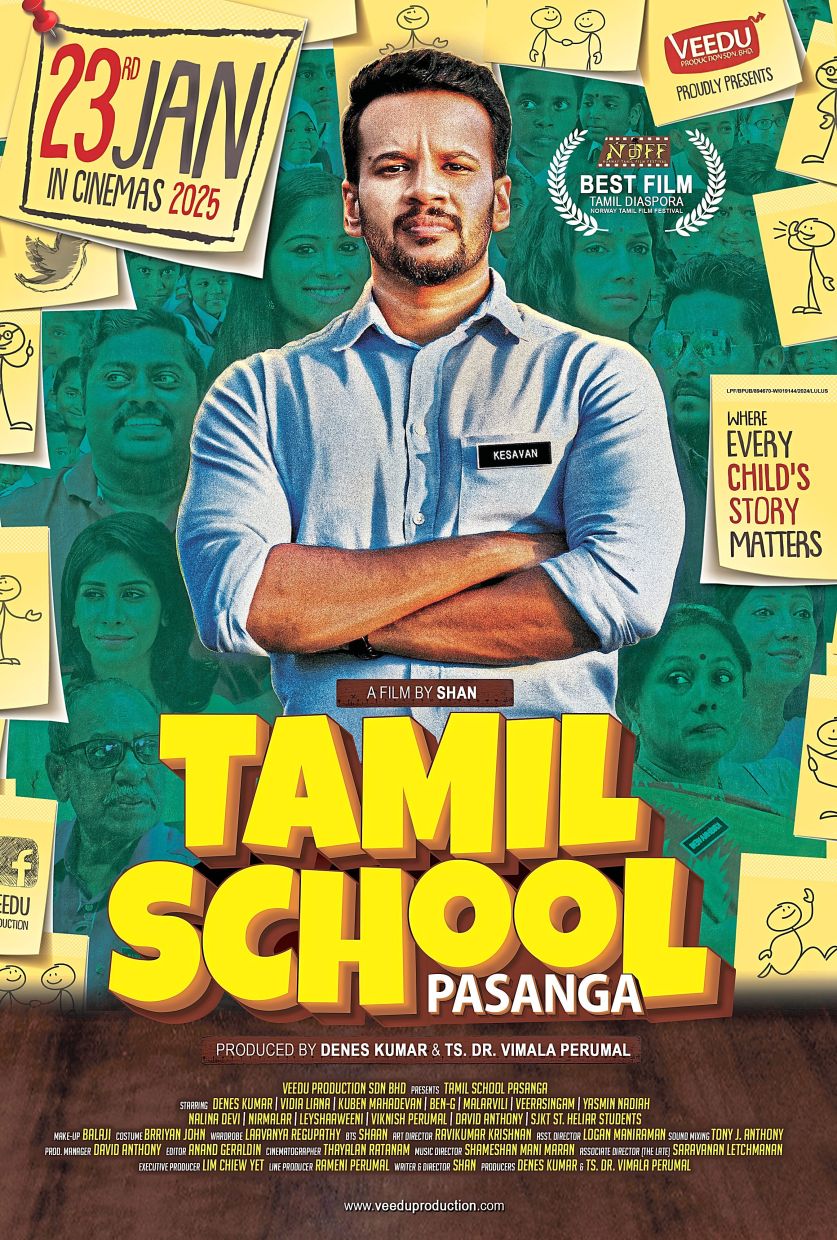
Tamil School Pasanga is a Malaysian Tamil film that was released in the cinemas on Jan 23 this year, directed and written by K. Shunmugum, also known as Shan, whose last film Sweet Dreams (2006) left me yearning for more.
It took Shan 19 years since his last film to make another, and it did not disappoint.
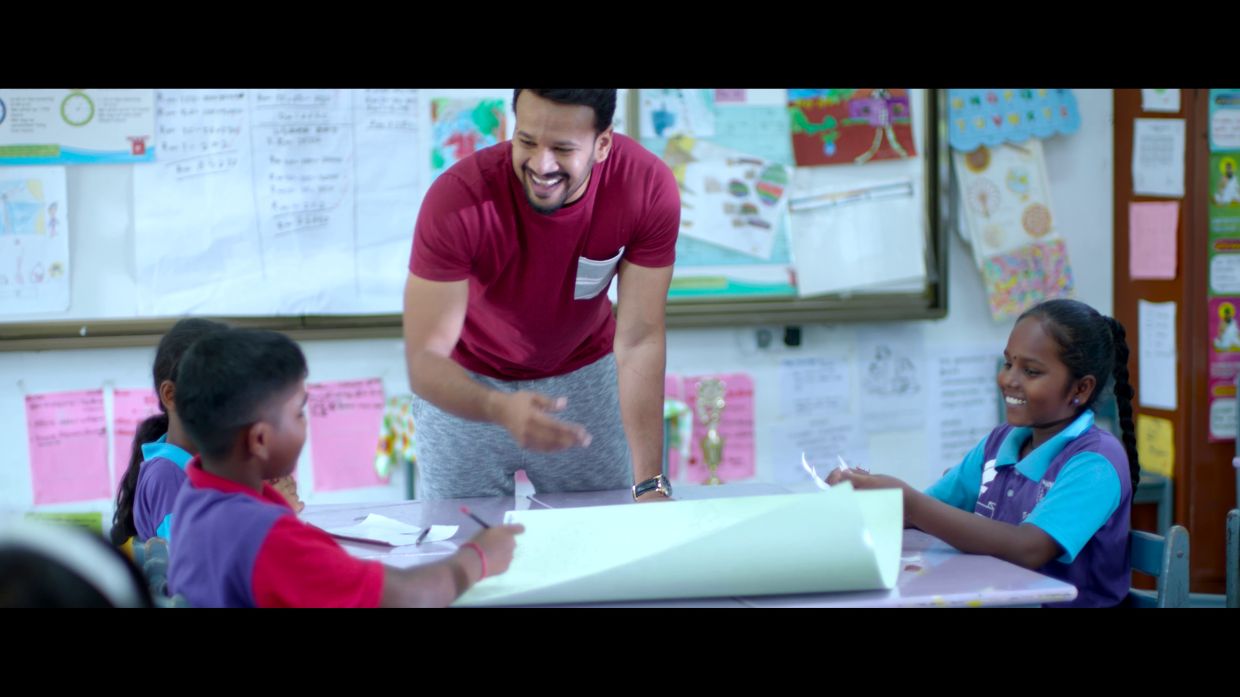
Produced by renowned Malaysian Tamil film power couple Denes Kumar and Dr Vimala Perumal – who are famous for their “pasanga (boy)” series – Tamil School Pasanga follows the journey of Kesavan, an idealistic and passionate young teacher who is transferred from the city to a struggling rural Tamil school in need of transformation.
You will be hit by the stark realities and harsh issues the film presents but this heartwarming movie remains unwaveringly optimistic in its celebration of the community’s resilience and the power of compassion.
This is not a review of the film though, so no spoilers here for those who may be persuaded to catch it in the cinema while it is still showing under Finas’s Compulsory Screening Scheme (Skim Wajib Tayang Finas).
Films like this should really have Malaysians queuing to watch it, but unfortunately we don’t – thus it begs the question: how effective is the Finas scheme, which will mark its 20th year in implementation come June this year?
For those who aren’t familiar with it, the scheme was introduced to provide local films – including joint venture films – the opportunity to enjoy guaranteed screening in local cinemas for 14 days.
This means that if a film fulfils all the necessary requirements, it will have the chance to be shown on the big screen.
However, not all films get to stay on for the stipulated number of days, as the film’s commercial viability is firstly evaluated based on the initial three days.
A local film’s survival in the Compulsory Screening Scheme depends on whether it has more than 15% ticket sales on the first three days before the exhibitor has the right to withdraw it completely, or move it to a smaller hall if it has less than 30% ticket sales.
More often than not, many good independent films don’t get to stay long enough in the cinemas for them to get noticed by cinemagoers.
Meanwhile, commercial films with big marketing budgets get to play the game on a different level of the playing field.
Block booking for “ghost” viewers is an actual thing. Films with money behind them can buy seats at their own screenings to fulfil requirements and ensure they stay long enough in the cinemas while the films build traction.
This tactic seems to work for many as it seems like Malaysian film viewers tend to wait for a film to be out there for a while before they catch it.
This habit does not benefit independent film producers, and something as worthy for Malaysian audiences like Tamil School Pasanga will not get the chance to be available for long.
I am not jinxing the film, as it could still do well if all of you, after reading this article, flock to the cinemas.
But the point is that so many good Malaysian films do not get the reach they deserve. And when this happens the film is making a loss, the filmmakers are at loss and so are the rightful viewers.
The diversity of Malaysians is so much so that it is impossible define what makes a Malaysian, “Malaysian”.
While some of us are blessed to be able to cross different boundaries, there are many others who are divided by class, race, religion, and language, among others.
But Malaysian films like this one that delve into the people’s culture, for example, give us an opportunity to be a fly on the wall to observe and understand each other better.
Of course there are other ways for integration, but local films – especially good honest ones like this one – can really help us to rise above the divisions that are happening all around us.
Perhaps there should be more encouragement in different forms to get Malaysians to watch Malaysian films of different races and languages.
Perhaps after 20 years of “Skim Wajib Tayang”, Finas could look into how to advance it not only to benefit the film industry, but to benefit Malaysians and Malaysia as a whole.
Tamil School Pasanga gave me insights into the condition of Tamil schools and “that particular” Tamil life in Malaysia. It made me feel that while we may be different, we are still connected in many ways.

As Malaysians we don’t only share our space but also many issues and challenges. And to view them from a different community’s perspective has left me feeling like I know Malaysia a little better.
The film’s cheeky writer-director has a little something in store for all us Malaysians in the film, which I thought was really clever. If by now you’re convinced to catch it in the cinema, be prepared for it to take you on an emotional ride.
Malaysia is so unique that we have Malay, Chinese, Tamil films and even Iban and Dusun language films these days. There are so many opportunities to learn about each other, and films can be the new road to nationhood.
Let’s be people who treasure this opportunity and care for a better Malaysia.
Nik Jassmin Hew is an art and media practitioner, educator, and a cultural and social environmental activist. The views expressed here are solely her own.