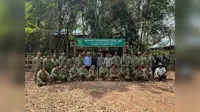
WHILE the Malayan tiger population in some areas such as Endau-Rompin in Johor is showing signs of stabilising after dipping in previous years, their overall numbers in the wild continue to hang in the balance.
Wildlife Conservation Society (WCS) Malaysia Programme country director Dr Mark Rayan Darmaraj says it is hard to determine how the animal is faring at the national level without having assessed the latest figures from all sites where the species is found.
“At the site level, depending on localised threats such as forest clearance and poaching rates, I am pretty sure that some sites would have experienced a drop in tiger numbers.
“But in other sites, such as in the Endau-Rompin Johor landscape, where we have been monitoring the animal since 2007, there are clear trends of a stabilised tiger population,” he says in an interview in conjunction with Global Tiger Day on July 29, 2023.

“It’s not dipping, there’s even a slight increase [in the density],” he adds, declining, however, to reveal the density figures.
Darmaraj explains that in a normal tiger population, even without any disruption or poaching, it is usual to have fluctuations in tiger density due to the species’ social organisation, as well as other factors like availability of prey.
Tiger density in tropical rainforests like those in Peninsular Malaysia can never reach that of India, which has quite a number of deer species as prey, and a habitat of open grasslands and deciduous forests.
“The biggest deer species here is the sambar deer, and our prey density is very low. In India, it can reach 10 times the density here – perhaps 10 to 15 tigers per 100 sq km.
“We will only know the latest status [of tigers in Endau-Rompin] for sure next year after we complete the next full-scale camera trapping exercise across the entire landscape,” he says.
Based on camera trapping surveys conducted from 2016 to 2020 throughout Peninsular Malaysia, the latest official figure of Malayan tigers in the wild is fewer than 150 animals, down from between 250 and 340 individuals about a decade ago.
The Malayan tiger (Panthera tigris jacksoni) is classified as critically endangered under the IUCN (International Union for the Conservation of Nature) Red List for Threatened Species, meaning it has an extremely high chance of becoming extinct in the wild.
Darmaraj is worried about the advent of new threats, such as diseases like canine distemper, which also affects tigers – it was reported in 2020 that since 2019, there have been two cases of wild Malayan tigers dying from the disease.
African Swine Flu (ASF) is the other disease that threatens tigers as it affects the their prey species, wild boars. ASF was first detected in Sabah in 2021 before spreading to Peninsular Malaysia. Both wild pigs (Sus scrofa) and the larger bearded pigs (Sus barbatus) are present in Peninsular Malaysia and are an important food source for tigers, particularly in areas where large deer such as sambar are scarce or locally extinct.
While not many sites on the peninsula have bearded pigs, Darmaraj points out that Endau-Rompin is unique because it has both wild and bearded pigs. The situation is critical now as ASF continues to decimate and even cause localised extinction of this particular prey species.
The disease was detected in the forest by WCS Malaysia in September last year. Darmaraj believes ASF has likely caused the widespread death of both wild and bearded pigs, citing the recent increase in the number of cattle attacks by tigers in areas surrounding Endau-Rompin.
Although Endau-Rompin is fragmented from the Main Range-Taman Negara forest complex, the Malayan tiger population in it represents an ecologically critical sub-population for the nation, he says.
“Endau-Rompin has a substantial population of tigers in view of the nationwide low tiger numbers of fewer than 150, and should therefore not be sidelined or neglected as part of national tiger recovery efforts.
“Efforts by all parties, including the government and corporate sector, should be channelled to support habitat protection, enhancing connectivity, protecting from poaching, and augmenting prey to ultimately increase tiger numbers to reach carrying capacity,” he says.
On the captive breeding and rewilding of Malayan tigers currently being carried out by wildlife authorities, Darmaraj says while he does not have enough details to comment on the programme in depth, he believes it is imperative that enough financing and resources are allocated and channelled into all wild tiger conservation efforts.
There is a need to consider a few factors, such as dealing with existing threats like poaching, insufficient large prey, and how the existing social organisation of resident tigers will be affected within the chosen release site, as well as ensuring forest connectivity and making sure there is no habitat loss, he adds.

Darmaraj also commends several government-led initiatives over the past few years: The launch of Ops Bersepadu Khazanah in 2019 against the illegal wildlife trade – “I would say it is the best initiative in recent years,” he says; the setting up of Malaysia’s first National Tiger Conservation Task Force (MyTTF) in early 2022; the Wildlife Crime Bureau established in August that year; and the implementation of the Ecological Fiscal Transfer for Biodiversity Conservation (EFT), which was allocated RM150mil in Budget 2023.
MyTTF, which is chaired by the Prime Minister, has since announced six strategic approaches over a 10-year period beginning this year, including increasing “boots on the ground” for enforcement and patrolling, strengthening and maintaining habitats, and increasing forest cover in Peninsular Malaysia from 43.41% to 50% by 2040, as well as empowering innovative financial instruments in addition to the EFT.
What is really needed now, Darmaraj adds, is a “prioritising” exercise to immediately roll out key actions.
“The clock is ticking and what we really need now is to move quickly to identify resource gaps, execute key actions, and be adaptive to new threats [such as diseases] and opportunities [such as carbon financing, nature-based solutions] that arise,” he says.

“For example, would it be key for MyTTF to figure out how the EFT is prioritised – not just to be utilised for protected area management but also aid in retaining natural forests and corridors that have been or will be earmarked to be clear-felled?
“Such measures will not only aid in saving natural forests for their ecosystem services for the state, but will also safeguard them for tigers and for biodiversity to thrive in,” he says.
Darmaraj also thinks it is timely for all parties to ask themselves some really tough questions and re-assess how they are going to immediately turn the tide for tiger survival while adaptively developing mid- and long-term action plans that can be sustained over a longer period.
“There is still hope in turning things around, but this is dependent on what actions we take today and whether wild tiger conservation remains a national priority for Malaysia,” he says.
Already a subscriber? Log in
Get 20% OFF The Star Digital Access
Cancel anytime. Ad-free. Unlimited access with perks.