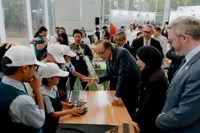
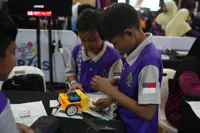
BOOSTING interest in the sciences is easy – just flip through our STEM textbooks.
Secondary School Standard-based Curriculum (KSSM) Science textbook author Tho Lai Hoong (pic) said textbooks adopt inquiry-based, problem-solving and project-based learning approaches.
“Students are also exposed to critical thinking and problem-solving skills, interpersonal self-reliance skills and information and communication skills to equip innovative students with 21st century skills.
“These textbooks are aimed at producing students who are creative and innovative, which are two important contributing factors to the success of STEM, ” he said.
To increase students’ interest in STEM, Tho suggested teachers choose an interesting topic or event, and encourage their charges to contribute their views or ideas based on their understanding of the topic or event.
Citing an example, he said the effectiveness of one’s face mask for protection from Covid-19 could be a topic of interest to be discussed during lessons.
“In the Form Five Science textbook, students learn the characteristics of viruses in chapter one.
“They will be amazed at how the reproduction sequence of viruses can help them to have a better understanding of the production of the messenger RNA (mRNA) vaccines.
“Teachers can apply learner-centred teaching strategies to develop problem-solving skills such as problem-based learning, professional skills such as thinking skills, communication skills, self-directed learning skills and project-based learning, and teamwork skills such as cooperative learning and collaboration skills among their students, ” he said, stressing the importance of STEM in everyday life. – By SANDHYA MENON
Already a subscriber? Log in
Get 20% OFF The Star Digital Access
Cancel anytime. Ad-free. Unlimited access with perks.