
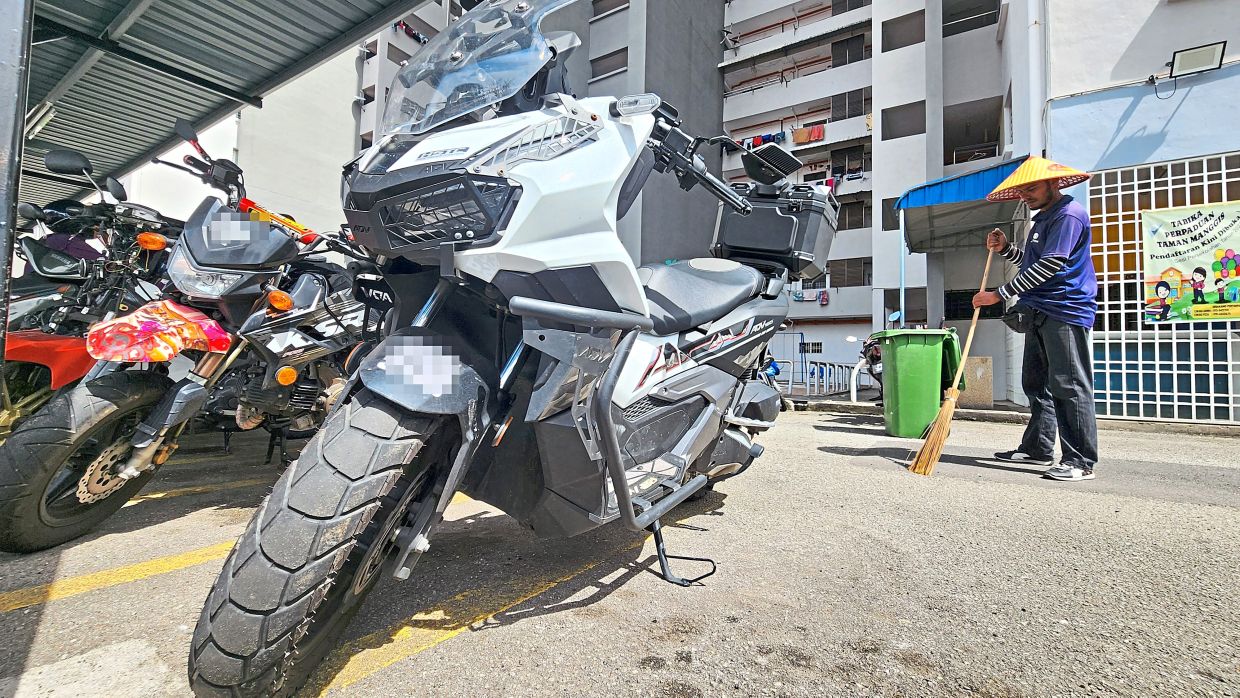
Imagine seeing cars or high-powered motorcycles, typically associated with middle-
income earners, parked at a People’s Housing Programme (PPR) complex.
Some of these vehicles cost more than RM100,000.
And some PPR units have also undergone extensive renovations, featuring modern fittings such as plaster ceilings.
Beyond raising eyebrows, the trend calls into question the fairness of public housing allocations.
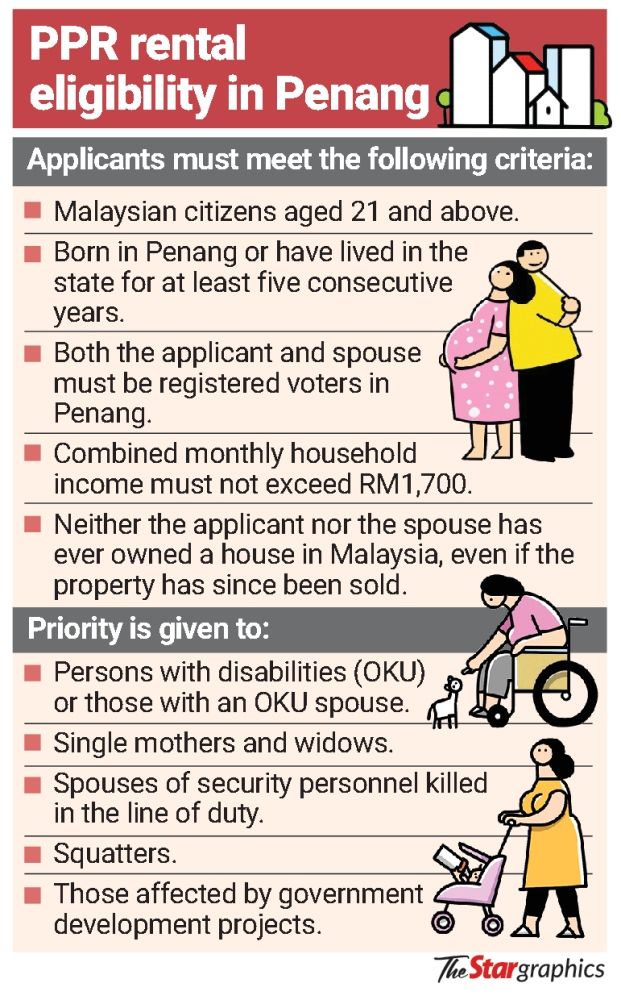
The PPR scheme is strictly reserved for households with a combined monthly income of no more than RM1,700.
It is meant to provide temporary accommodation, with
tenants given three years to improve their financial circumstances before their eligibility to remain is reassessed.
But a series of evictions in recent months has prompted questions about the state’s support for affected PPR tenants.
The Penang government, however, maintains that not
all those evicted were facing financial hardship, with some having become ineligible for PPR housing.
At the recent state assembly sitting, state Opposition leader Muhammad Fauzi Yusoff asked about alternative housing options for those evicted from the Taman Manggis PPR units in George Town.
Penang housing committee chairman Datuk Seri Sundarajoo Somu said PPR housing was meant for those who could not afford to own a home.
“We are not being cruel, but the reality is, those evicted no longer meet the eligibility criteria.
“When they first applied for PPR housing, their salary was RM1,500.
“The three-year rental period is for these PPR tenants to improve their financial standing.
“They must work towards improving their future. With genuine effort, I believe they can move on to the next option, that is the rent-to-own (RTO) housing within three to six years.
“Those with physical disabilities or who are registered as persons with disabilities are allowed to stay longer, even for 10 or 20 years,” he told the state assembly.
Limited units, high demand
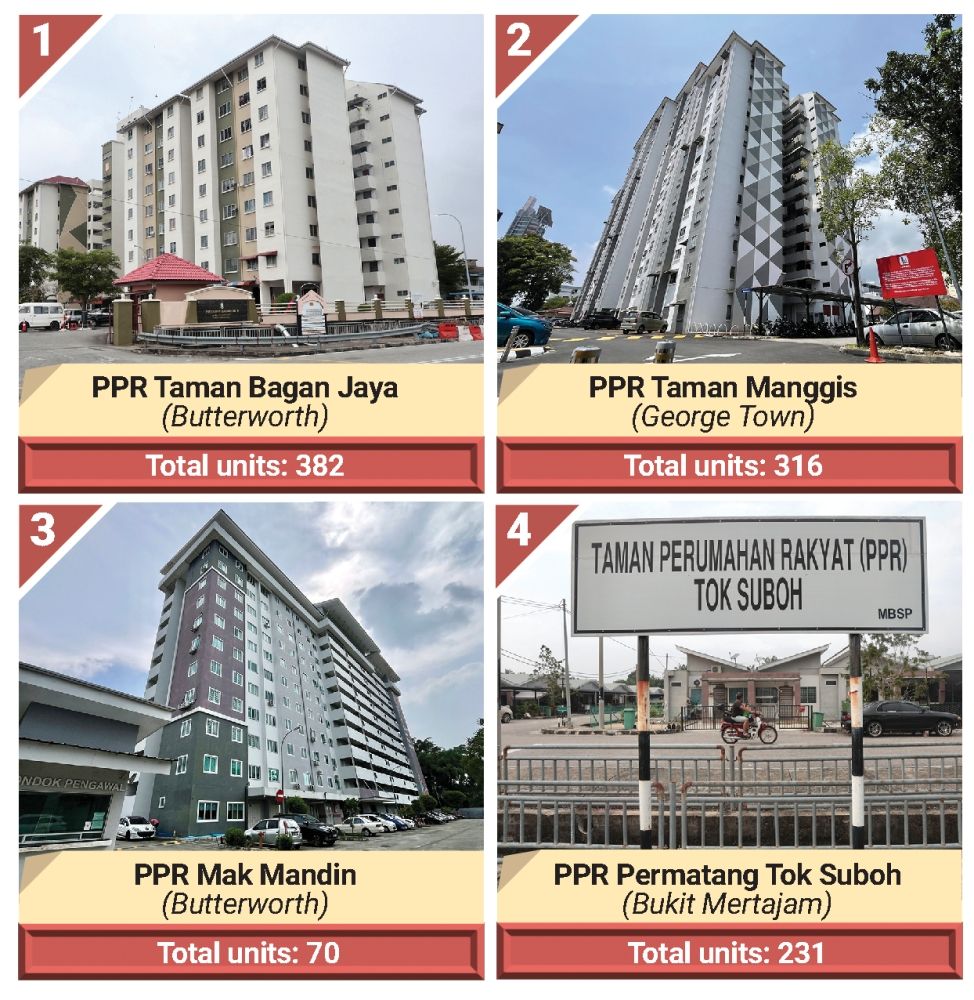
There are 999 completed PPR units across four projects in Penang. Of these, 316 units are at PPR Taman Manggis in George Town.
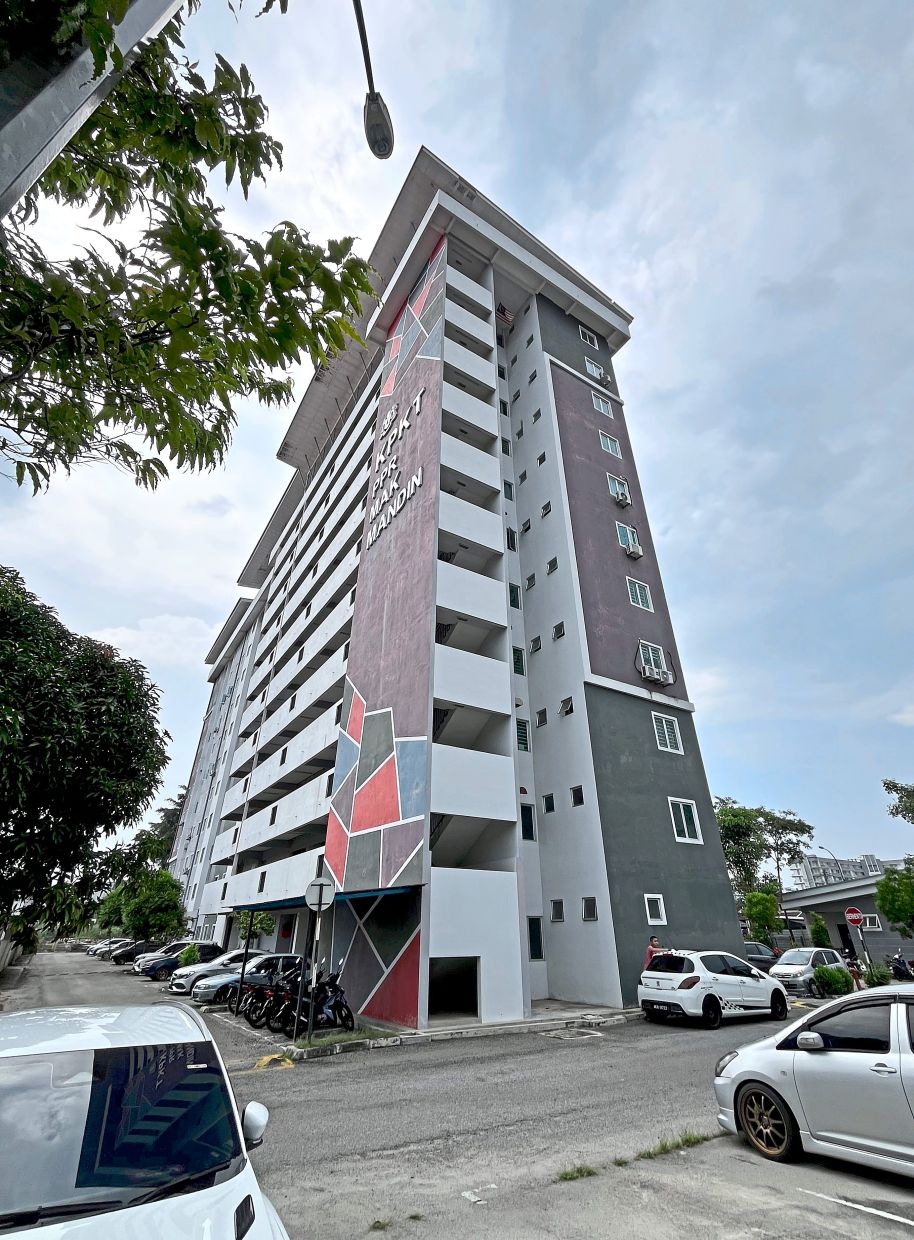
The remaining 683 are on the mainland – PPR Taman Bagan Jaya (382 units), PPR Mak Mandin (70) in Butterworth and PPR Tok Suboh (231) in Bukit Mertajam.
The monthly rental per unit is RM124, inclusive of maintenance charges.
Sundarajoo told StarMetro the PPR scheme was aimed at providing housing promptly to eligible applicants.
Of the 999 units, 941 are occupied while 58 remain vacant.
According to records in the PgHOME system, 138 active applications are on the waiting list.
Sundarajoo said the number of applicants had increased over the past five years.
“Demand for PPR units exceeds supply, while low tenant turnover means few units are available.
“Of the 58 vacant units, only 31 are ready for allocation. The remaining 27 are undergoing repairs.
“There is no fixed waiting period as this depends on unit turnover, the applicant’s priority status and final approval by the selection committee,” he said.
The 31 vacant units are expected to be offered to eligible applicants within the next three months, subject to completion of the selection and allocation process, said Sundarajoo.
“The 27 units undergoing repairs are also expected to be ready within the same period – depending on the extent of damage and time needed for procurement, repair work and quality checks.”
He said the main reasons for eviction were rental arrears and failure to meet eligibility requirements.
“In most cases, tenants no longer meet the PPR eligibility criteria, such as exceeding the household income limit,” he said.
“Some have stayed for many years, renovated their units and have the means to live elsewhere.
“They must update their personal details, attend an interview, submit their latest income documents and maintain a good payment record, besides complying with tenancy conditions and house rules,” he said.

Sundarajoo said those who no longer qualified, fell behind on rental payments or breached their agreements might be asked to vacate.
He stressed that subletting or allowing unauthorised occupants to reside at the units was strictly prohibited.
He said the governance and selection process was overseen by the M4PR Committee, comprising the Penang Housing Board’s (LPNPP) top management and chaired by its chief executive officer.
RTO scheme
During the state assembly, Sundarajoo had said that monthly payments under the RTO scheme started at RM250, about RM100 more than the monthly rental for a PPR unit.
He said the scheme gave tenants a chance to own a home over 15 years, rather than continue paying rent without eventually owning the property.
“We have given PPR tenants an opportunity to own a home through the RTO scheme.
“If they turn it down because they find the locations inconvenient, whether on the mainland, the island or in Teluk Kumbar, they then have to consider their options.
“The government cannot provide a home that meets every individual’s preferred location, where everything is within walking distance.
“People must also be prepared to make adjustments and overcome certain inconveniences.
“The government cannot be expected to resolve every issue, including personal preferences over location,” he said.
Sundarajoo also questioned the feasibility of providing homes for RM42,000 in central George Town, pointing out that land prices alone had reached RM800 per sq ft.
He said tenants at PPR Taman Manggis were living in a prime location in the heart of the city.
“Imagine paying RM124 in rent and living in George Town for over 20 years! Anyone would love the opportunity. I would too.
“Some tenants have grown accustomed to living there and are reluctant to move. That is the main issue,” he said.
Sundarajoo said the state would continue expanding its affordable housing projects across all constituencies, particularly in areas with demand such as Teluk Air Tawar and Pinang Tunggal.
He said the state government would offer 1,133 more affordable housing units under its scheme across five projects which are currently ongoing.
The units, which will be acquired by the LPNPP, are expected to benefit between 4,000 and 5,000 people.
More homes planned
Sundarajoo said Penang government was working with Housing and Local Government Ministry to increase the supply of affordable public housing through the Program Residensi Rakyat (PRR) – a transformation of the PPR.
One of the approved projects is PRR Kota Giam, sanctioned under the third rolling plan of the 12th Malaysia Plan.
The proposed development, Sundarajoo said, would be built on Petak B – a government-owned site in Section 1, Jelutong in the Northeast district.
Located beside the Tun Dr Lim Chong Eu Expressway and near the proposed Sungai Pinang LRT station, the project will comprise 180 units measuring 750 sq ft each.
Funded by the ministry, the development is expected to be completed in 2031.
Hoping to stay
Senior citizen Maula Mydin Shaiku, 79, who lives with his granddaughters, has lived at PPR Taman Manggis for nearly 20 years.
A diabetic who recently underwent heart bypass surgery, he receives slightly more
than RM800 a month in Social Security Organisation (PERKESO) benefits.
Maula Mydin signed his latest agreement with LPNPP for a new three-year term which took effect in July. He is grateful to the state government for giving him a home to stay.
He said tenancy terms varied, with LPNPP assessing each case to decide whether tenants could stay.
“The agreement states that we have to leave after three years.
“These units are meant to provide temporary accommodation
for people without homes, so we are expected to find somewhere else to live once the term expires,” said Maula Mydin.
While satisfied with general cleanliness of the PPR and its facilities, he hoped the management would provide better support for repairs and maintenance inside the units.
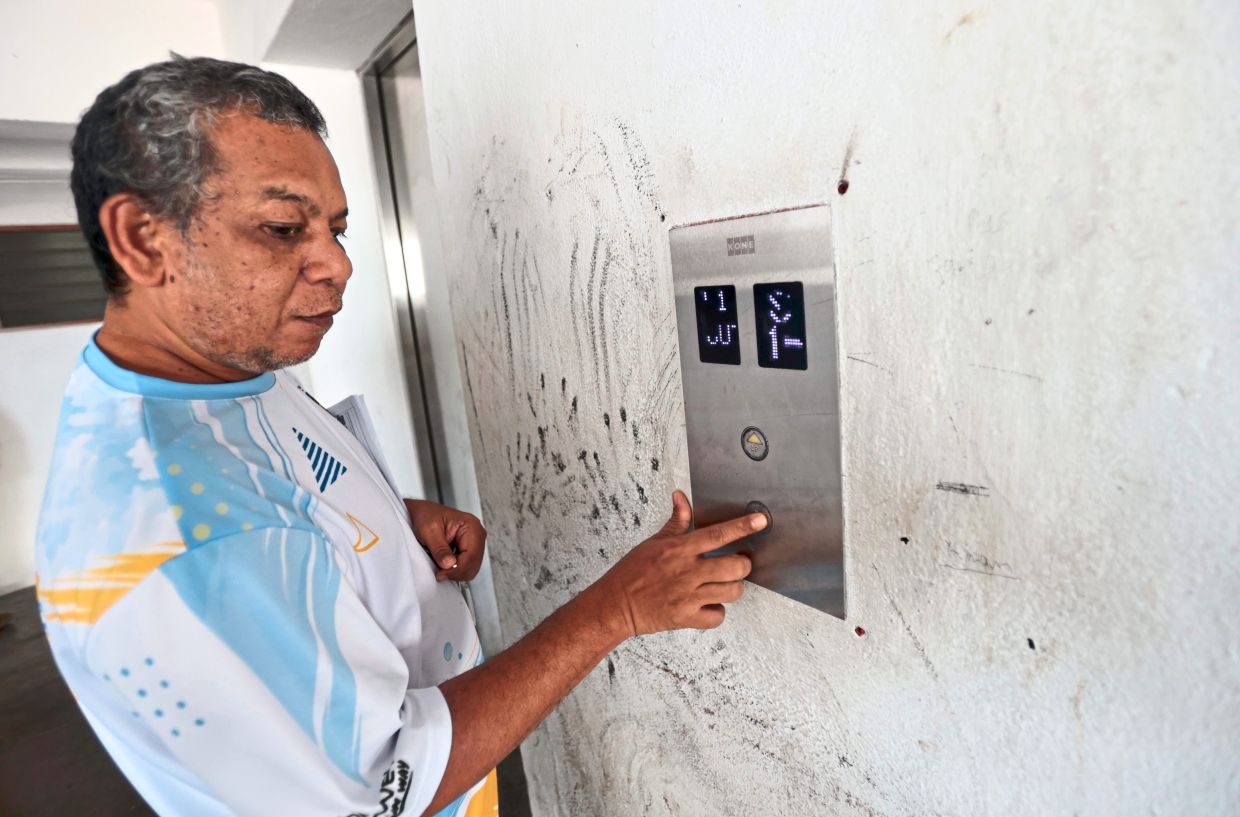
Another tenant, Abdul Halim Hamid, 53, who is visually impaired, has lived at the PPR for three years.
He has been living alone since his wife passed away after suffering a stroke early this year.
He earns between RM600 and RM700 a month providing traditional massage services from home.
“I also receive RM400 in monthly assistance from the Welfare Department (JKM). It is enough for me to get by on my own,” he said.
Abdul Halim hopes the state government will improve accessibility for visually impaired residents and other persons with disabilities at the PPR.
There are currently eight families with visually impaired members living at PPR Taman Manggis.
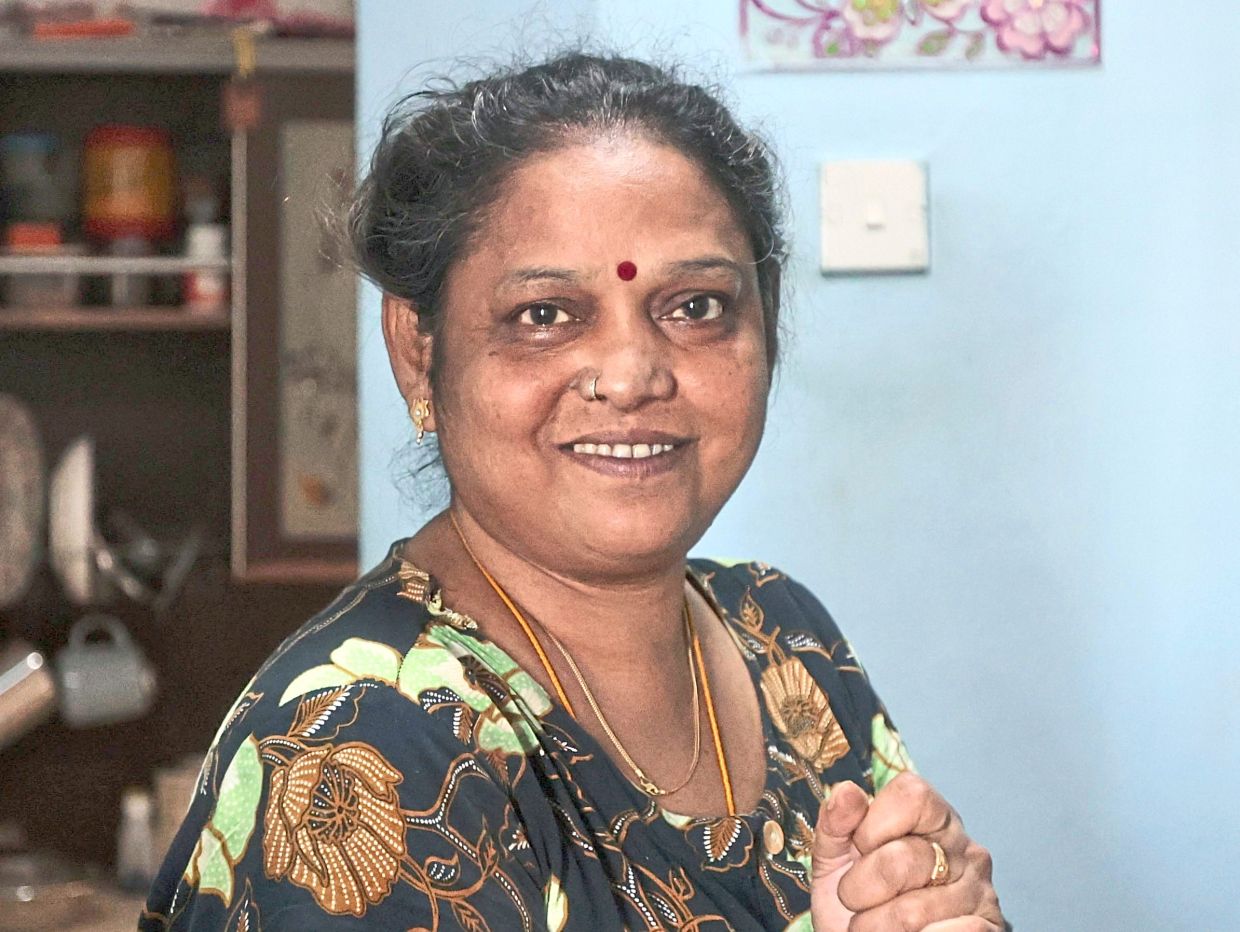
Housewife R. Mages, 55, said owning a home in Penang was out of reach as her family was dependent on her husband’s modest income.
“I am a housewife, so how can I expect my husband tobuy a house for us? Property prices are simply too high,” she said.
Having lived in a PPR unit for about 20 years, Mages said she was grateful to the state government for providing her family with a roof over their heads.
Mages, who has nine grandchildren, hopes LPNPP will allow her family to remain there until her husband can afford a home of their own, as finding affordable accommodation elsewhere will be difficult.
She urged the authorities to review PPR eligibility criteria, including the minimum household income threshold, to ensure the scheme continued to benefit people most in need.
Another housewife, Yeoh Ah Choo, 64, also finds it hard to seek alternative accommodation as her husband is recovering from a stroke.
The couple have been residing at the PPR for the past 19 years.
Yeoh asked the authorities to consider circumstances of elderly residents and those caring for ailing spouses, before making decisions that could affect their housing security.
“We follow the imposed rules, as long as we can stay here.
“Where else can old people like us go?” she said.