Green policies and sustainable development goals must be translated into actionable, real-world solutions that address everyday urban challenges.
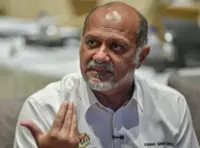
Petaling Jaya mayor Datuk Mohd Yazid Sairi stressed that town planners must actively listen to local communities whose ground-level knowledge of flooding, mobility, heritage and livelihoods was often missing from technical blueprints.
He was speaking alongside Sarawak Premier Tan Sri Abang Johari Openg at the closing of National Planning Congress (NPC) 2026 at Petaling Jaya Civic Centre in Selangor.
The congress in conjunction with World Town Planning Day brought together policymakers, local council representatives and industry practitioners to formulate forward-thinking solutions for urban landscapes.
Mohd Yazid, who gave a speech in his capacity as mayor of the host city, emphasised the need for green and blue corridors – nature highways made of plants and waterways that cool cities, stop floods and give wildlife a safe path to travel.
“Green spaces should not be treated as isolated parks, but planned as a connected network that supports the environment, recreation, walking and cycling, as well as climate resilience.”
To illustrate his point, Mohd Yazid highlighted plans by Petaling Jaya City Council (MBPJ) to strengthen links between Bukit Gasing Education Forest, Taman Aman and Kota Damansara Community Forest.
Other proposed projects include a linear park in Kampung Sungai Kayu Ara, a monsoon drain corridor in Sungai Penchala and public spaces beneath the Light Rail Transit (LRT) line between the Asia Jaya and Taman Jaya stations.
“This initiative is not just a landscape beautification project,” he said.
“It is a long-term investment to improve environmental quality, strengthen climate resilience and open more opportunities for the community to enjoy easily accessible green spaces.”
He said MBPJ would also use its Green Fund Trust Account for design studies which are expected to begin in March 2027.
On pedestrian access, Mohd Yazid said MBPJ was proposing a six-month walkability study to identify areas that needed better pedestrian facilities.
The study will assess walkability levels, map priority locations and recommend improvements such as safer road crossings, shaded walkways, better access for persons with disabilities and links to public transport.
“We can provide modern transit stations and efficient transport systems.
“However, if residents still face difficulties walking from their homes to stations, crossing roads safely or accessing public facilities, then that mobility system is not yet truly comprehensive,” he said.
Mohd Yazid added that a well-designed city should serve everyone, including children, senior citizens and persons with disabilities.
“For me, a good city is not just a city that allows vehicles to move smoothly, but one that allows a child to walk to school safely, an elderly person to access daily facilities comfortably and a person with a disability to move independently and with dignity.”
In his closing keynote speech, Abang Johari said green and blue networks must be recognised as essential infrastructure, not residual spaces after development.
“Human settlements depend upon land, water, climate and natural systems.
“The way we use these resources will determine whether our development can be sustained for future generations.”
He said a city’s success should not be judged only by its physical development but by the harmony it creates between people, institutions and nature.
In view of this, he urged planners and local authorities to consider land suitability, environmental risks, infrastructure costs, accessibility and community needs before approving development.
He said climate resilience must be built into planning from the start, especially as communities faced heavier rainfall, floods, rising temperatures and environmental degradation.
Addressing housing issues, Abang Johari said the true cost of a home included the hidden costs of living in its location.
“An affordable purchase price alone is not enough if the home is far from jobs, public transport, schools and healthcare,” he said.
The congress, now in its 11th edition, was organised by Malaysian Institute of Planners (MIP).
Present were Town and Country Planning Department director-general Datuk Dr Alias Rameli and deputy director-general (Development) Saidin Lateh, and MIP president Mazrina Abdul Khalid.