Choosing a name for baby can be a complicated process involving extended family members, while some parents may refer to a book to help in their selection process.
Punan National Association co-founder Calvin Jemarang distinctly recalled his nephew’s naming ceremony at the Punan Mina longhouse in the Tatau district of Sarawak.
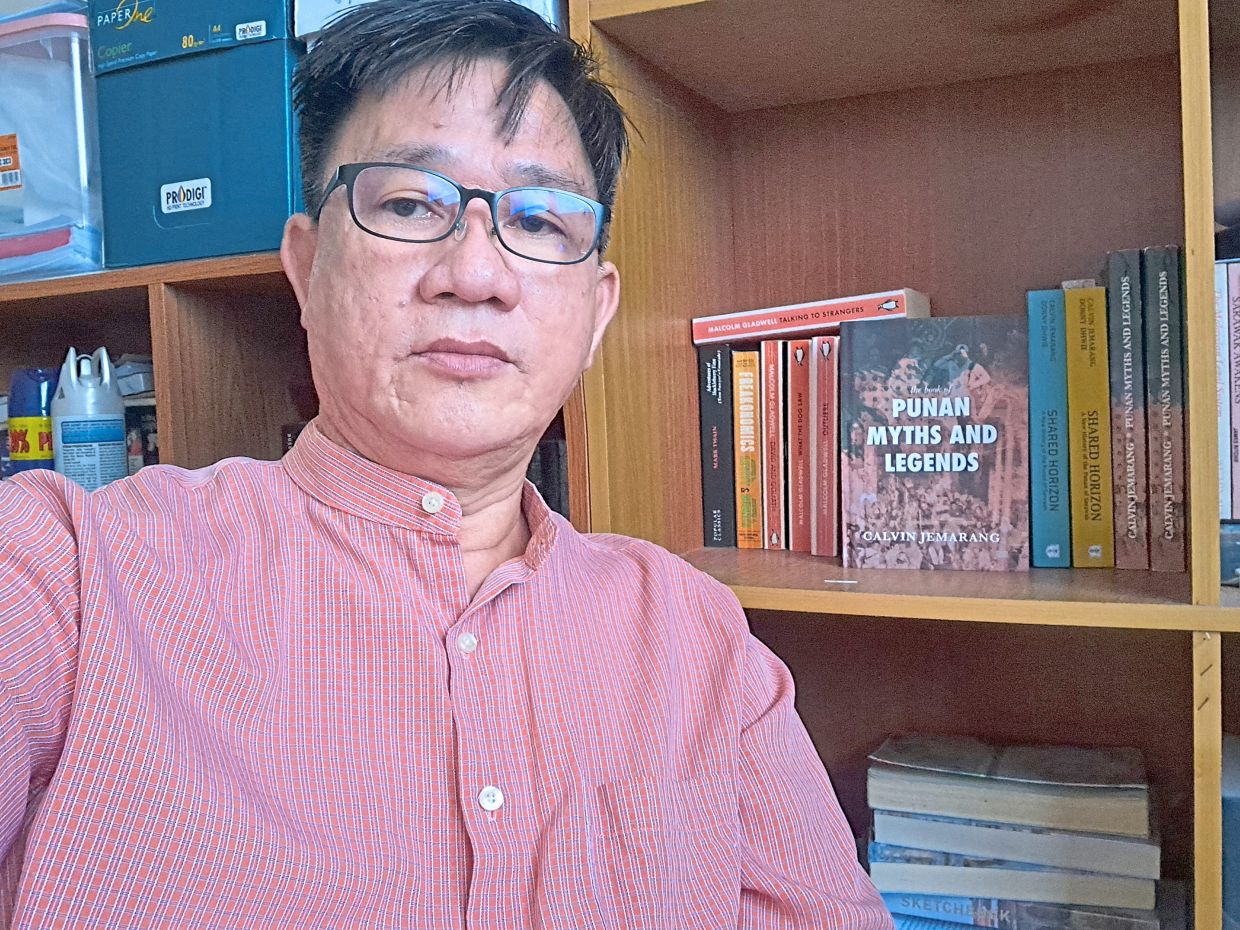
The Punans call this ritual “Menenung Ngaro”.
An informal census in 2020 estimated that there were only about 6,000 Punans in Malaysia.
“This ritual requires a shaman (linou muud) to balance a raw egg at the tip of an upright machete (ilang) as the name is mentioned. If the egg falls, it is a sign that the name is not suitable for the child,” said Calvin.
The ritual evokes awe and suspense because of the gravity-defying feat.
Calvin said it was not a feat that could simply be performed by anyone, as only a linou muud would have this capability.
“On the day of the ritual, I witnessed nine eggs falling. It was only when the name “Gong”, which was the name of the boy’s paternal great-grandfather, was mentioned that the egg remained on the tip,” said Calvin.
His nephew now has children of his own.
Although Calvin is Catholic, he believes the blessings of his nephew’s ancestor have played a part in enabling him to grow up healthy and strong.
An occasion to remember
For Dr Indrakaran Thambiah Karthigesu, 73, the naming ceremonies for his children were momentous family occasions.
It is called “Peyar Suttum Vizha” or “Namakaranam” in Tamil.
“I come from a big family, so their naming ceremonies were held on a big scale,” said Indrakaran.
“For each child, we hosted up to 100 people – all our siblings, their children and the whole neighbourhood.
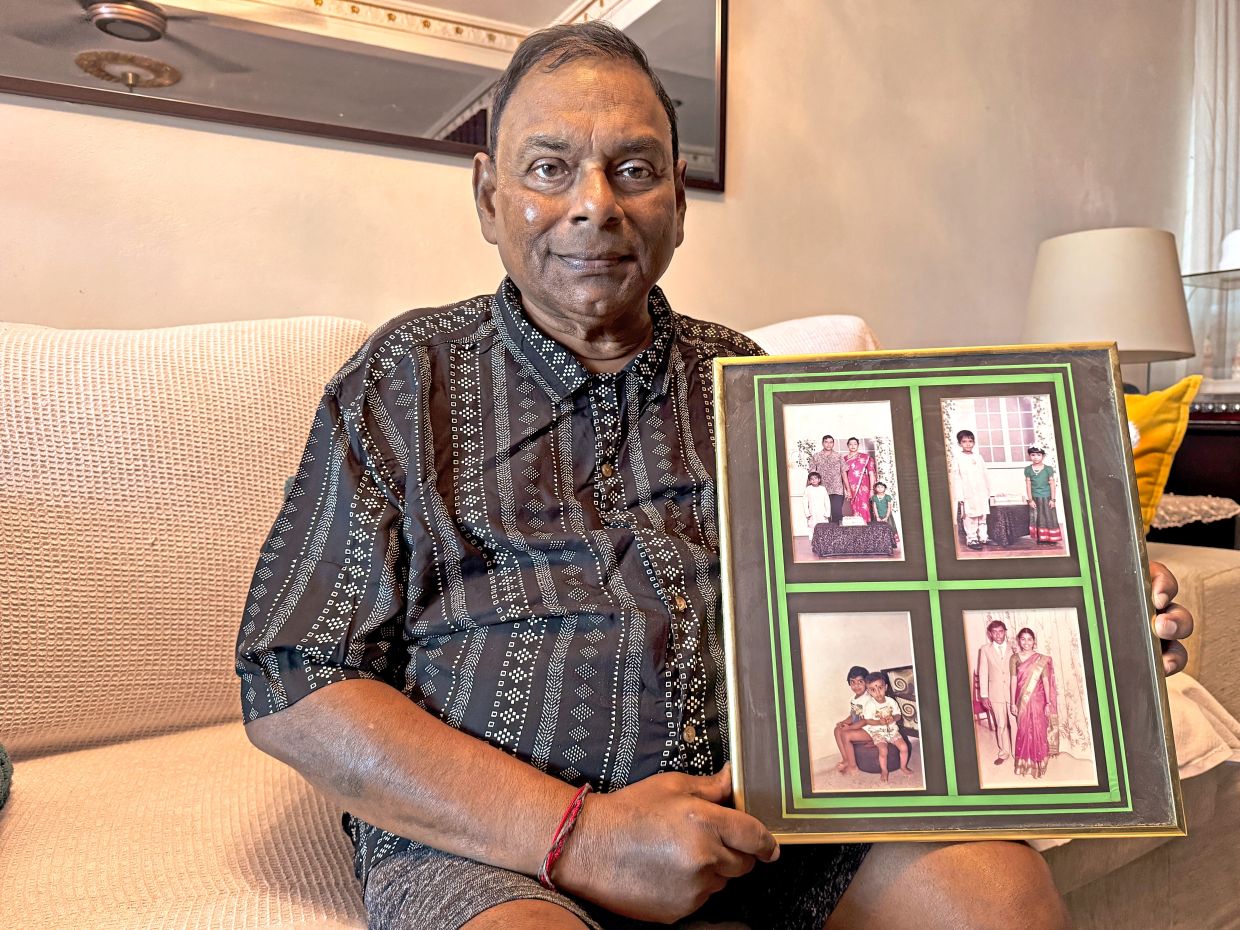
“My children wore smocks my mother had specially sewn for them.
“My siblings all gave gifts of gold, such as rings and bangles.
I bought gold chains and lockets for each child as well.
“By the end of each ceremony, the child was covered from head to toe in gold jewellery. “
A separate ceremony for ear piercing took place when the children were a year old, he said.
“My children’s official names were registered on their birth certificates, but were only made known to everybody during the naming ceremony held 31 days after they were born,” said Indrakaran.
“During the ceremony, my wife and I whispered their names into their ears three times. Before then, they were given nicknames, which are still used to this day,” he said.
He consulted a Hindu temple priest to advise him on choosing his children’s names, based on their birth dates and times.
He said the naming ceremonies made clear how precious and loved his children were to the whole family.
“I believe the effort we put into the naming ceremonies has served my children well.
“Today, my children are all grown up and successful. My son is working at Berklee College of Music in Boston, the United States, while my daughter is a chartered accountant,” he added.
Selecting Chinese names
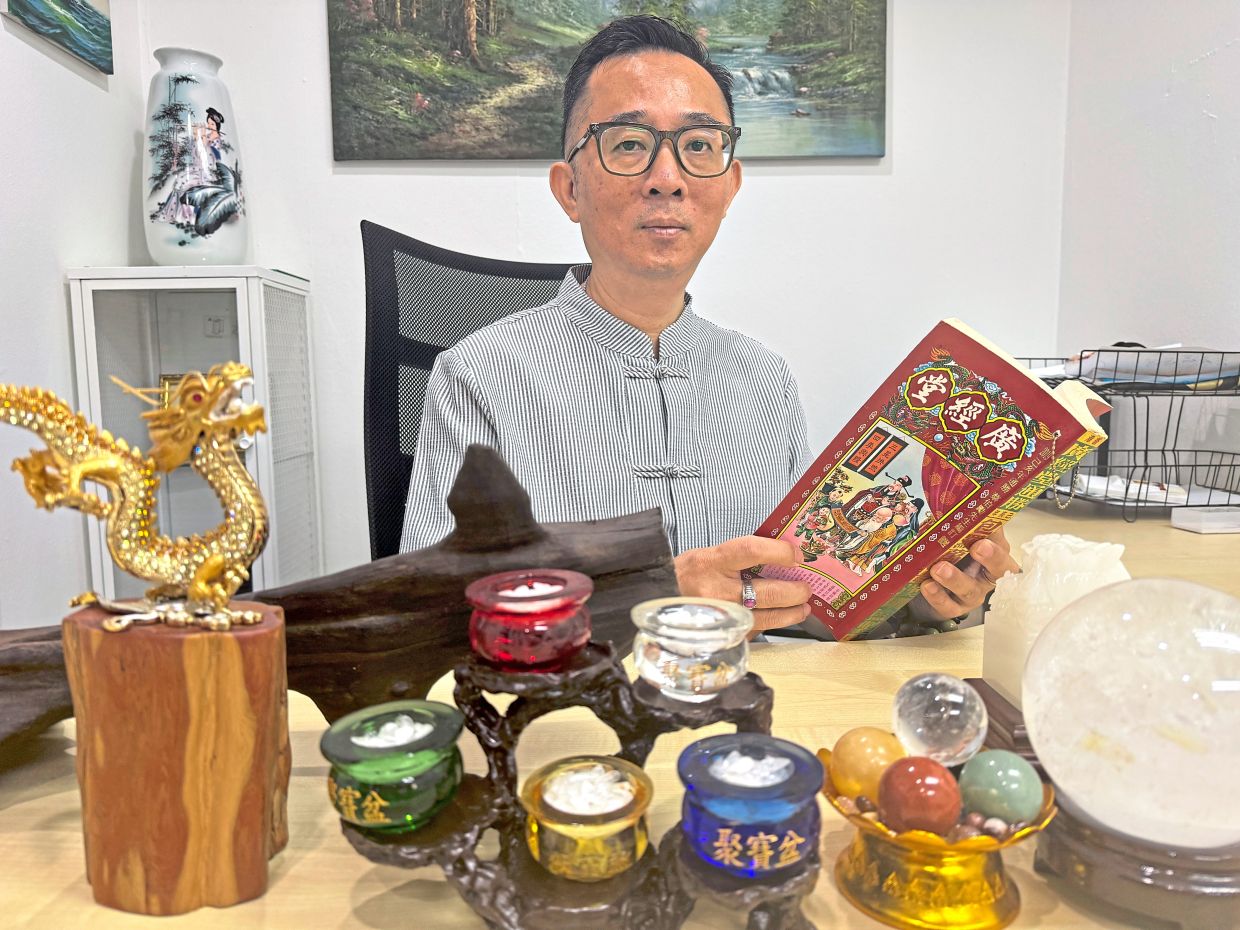
The traditional Chinese naming system is most commonly made up of either two, three or, at most, four characters, said Edward Liow, a Chinese astrological system (Bazi) consultant and father of three.
“The first character is the family surname, followed by the generational character and then the given name chosen by the parents,” said Liow.
“The generational character will come from a verse from a poem that has been penned by a family patriarch and placed in the family ancestral hall. Each generation is to take a character according to sequential order from the poem.
“In the olden days, when there were no identity cards, let alone birth certificates, this was how people would know which generation of a family you were from.”
He said the Chinese would never name their children after their ancestors because it would cause confusion and be regarded as disrespectful.
“In Chinese culture, elders must be addressed by their kinship titles. To call an elder by name is akin to trampling on the family hierarchy,” said Liow.
As for surnames, the child would automatically have the father’s family name, he said.
“To imply otherwise would be an insult to the father, no matter how wealthy or prominent the wife’s side is,” he added.
In choosing a name, the older generation would refer to the “Tung Sing”, the traditional Chinese almanac and divination guide.
Based on the date and time of the child’s birth, an analysis would be done on the child’s elemental strengths.
“If a child has too many ‘fierce’ traits in their Bazi element, then names that are intended to soften and balance the temperament will be chosen,” said Liow.
“A simple name helps. This is so that young children can write their own names easily,” he said.
For a better start in life
For fortune teller Mandy Lim, who is also a mother of two, the bestowing of a name is the first gift a parent gives to a child.
“Many parents regard the name of a child as a foundational blessing, a form of hidden help for a better start in life,” she said.
Unlike the older generation, parents today may opt for more unique names.
“I place great importance on family values, so when I named my children, I deliberately included the word ‘jia’ in their names,” said Lim.
“‘Jia’ means home and family in Mandarin. It represents our roots, our foundation and the place where we always belong. No matter where they go in life or what they experience, family will always be their roots.”
Unusual names
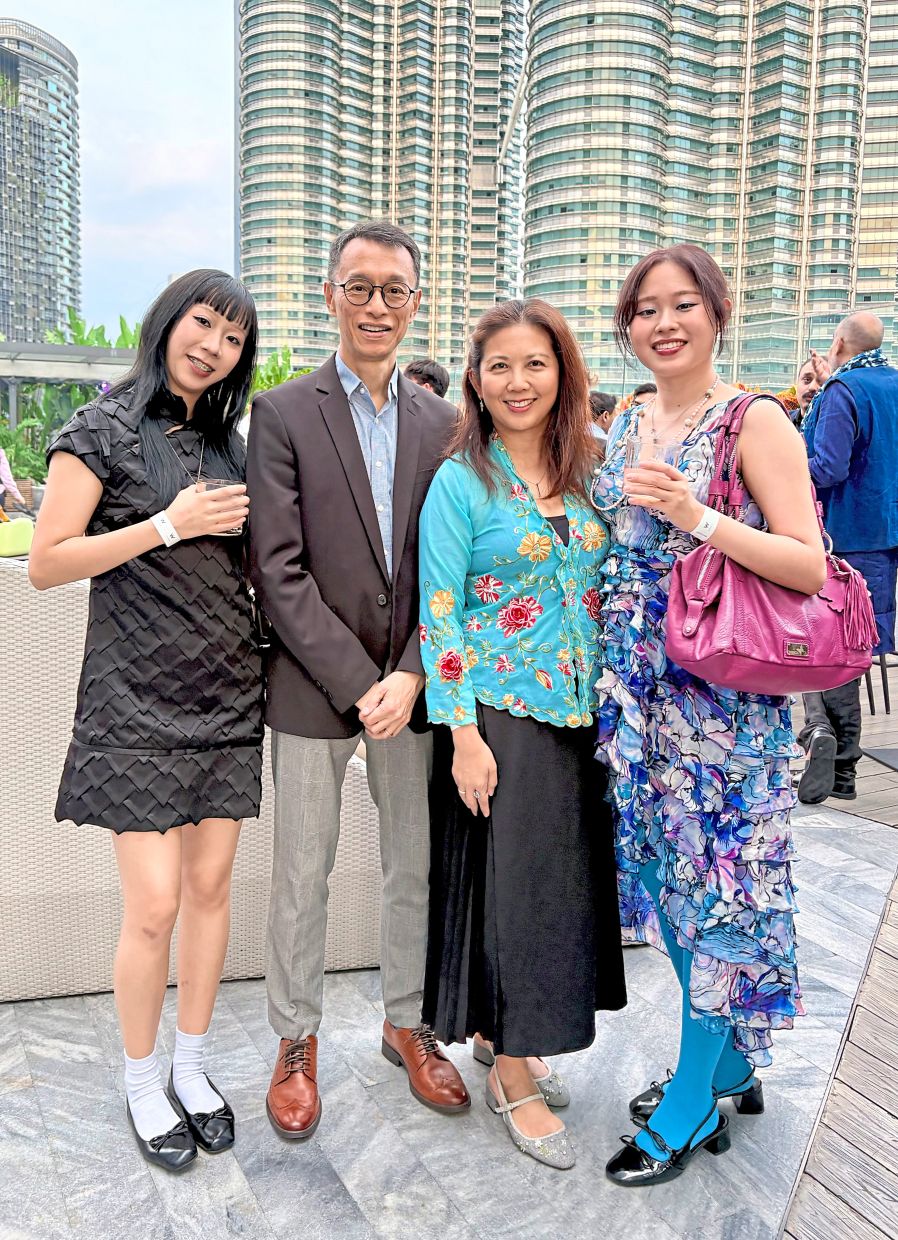
Moonlake Love Lee, who was born in Batu Pahat, Johor, was named that by her parents.
According to her, among the explanations for her name was that she was born in the year that man went to the moon and that her paternal grandmother and grandaunts all had the word “moon” in their names.
Lee also said that during a lakeside date, her parents had been awed by the view of the moon reflected in the water.
“My father told me that I was born under the sign of Gemini, the two moons, one illusory and the other real. To him, the celestial twins were also symbolic of the yin and yang elements,” she said.
As for Lee’s middle name, it was given by her godfather, who used to work in advertising.
Lee was also made to understand that initially, her father, who was into the “Flower Power” movement, did not want her to have a surname.
“He wanted to show that I was a child of the universe, but since births were registered at the police station, they wouldn’t allow it,” she said.
“In the end, the words ‘love’ and ‘lee’ which together sound like ‘lovely’, have worked out quite well for me,” she added.
Interestingly, Lee’s spouse also has an unusual name.
She is married to Dr Ansgar Cheng, a prosthodontist.
She said what initially drew her to Dr Cheng was his unusual name.
Their two daughters, Hana and Alisa have the same middle name, “Grace”.
Both the girls’ first names mean “happiness” in the Arabic and Hebrew languages respectively.
Although she has a unique name, Lee admitted she was
not always thrilled with her moniker.
“Honestly, kids can be cruel. I got teased a lot,” said Lee.
The Mid-Autumn Festival celebrations, in particular, were when jokes revolving around her name would peak. For instance, she would be called things like “mooncake”.
“At university, when we had to write our names on a tag so the lecturer knew who was in the classroom, I’d get called on more often,” said Lee.
“It wasn’t because I was the most outspoken person, but because my name stood out.
“There was just more attention on me. And not everyone wants that, especially when they are not prepared for class,” she said.
But over time, the former student of Bukit Bintang Girls’ School in Kuala Lumpur learned to reframe her identity.
Today, Lee uses her name as a conversation starter.
“My unique name does help people remember me,” said Lee, the founder and chief executive officer of a social enterprise in Singapore that focuses on capability development and psychoeducation for neurodivergent individuals.