
WHITE radish cake began in China as humble winter food.
Rice did not grow well in cold, hilly regions, but white radish thrived.
Teochews grated it, mixed it with rice flour slurry and steamed the mixture into cakes that kept well in the cold and were lightly pan-fried, since oil was precious.
When Teochew immigrants arrived in Malaya in the mid-1800s, they adapted the recipe.
White radish did not grow well in the tropics, while rice arrived by the gunny sack from Kedah.
George Town was a port city, full of coolies burning calories by the hour.
They needed fast, high-energy food, and Teochew hawkers met that demand by transforming the radish cake.
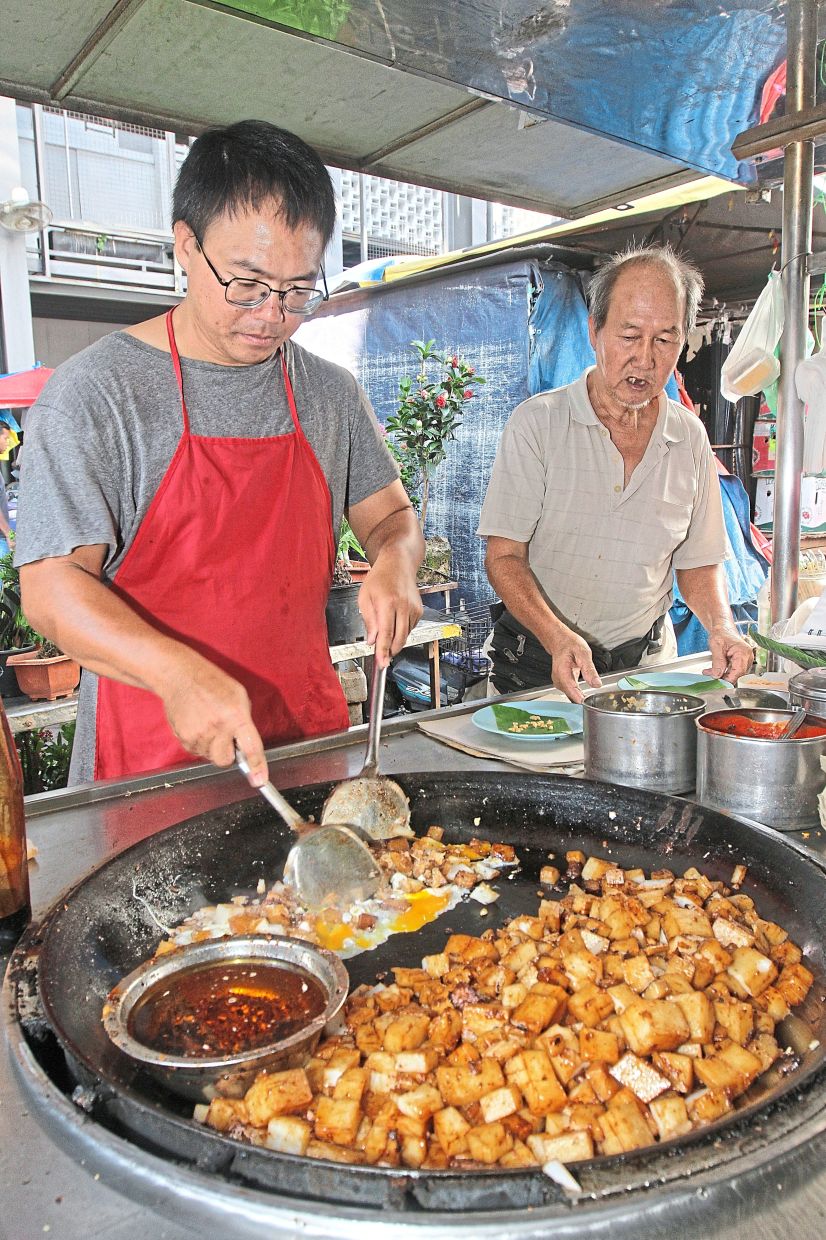
The cakes were chopped up and fried in generous amounts of oil to increase the calorie count.
More char was added. Flavour was pushed hard with dark soy sauce and chilli to overwhelm tongues.
Seafood, cheap and plentiful in old George Town, was thrown in.
That was how char kue kak came to be.
You can eat it in many other towns today, but the historical record points to George Town as the place where this version took shape.
I have been reading food history since Penang government announced it would gazette 10 foods as part of the state’s intangible cultural heritage.
Some choices are obvious.
Roti benggali, for one, has a well-documented history of being first baked by Indian-Muslim immigrants in George Town in the 1920s.
Others were unexpected; mee jawa surprised me.
Despite its presence in food courts nationwide, it was created by Jawa Peranakan or Chinese-Javanese communities in Penang.
This plate of yellow noodles in sweet-savoury, potato-starch gravy with cuttlefish, sometimes shrimp, bean sprouts, fried tofu and sambal did not come from Java at all.
Penang oh chien (fried oyster omelette) proved a tougher subject, and appears to be a heritage Penang shares with Muar, Johor.
Records suggest it began as famine food among the Teochew and Hokkien in China, when rice failed but sweet potato starch and oysters were abundant.
Then came Muar oh chien. Muar has existed since the 1300s, even before the Melaka Sultanate.
Sungai Muar, more than 300m wide near its estuary, is ideal for brackish-water oysters, which grow much larger than marine varieties.
Muar oysters were a delicacy, with records going back 160 years.
After Singapore progressed, Muar oyster harvesters built a thriving trade supplying the island.
When Teochew and Hokkien migrants reached Muar and saw those plump oysters, they knew exactly what to do.
To this day, Singaporeans flock to Muar every weekend for it.
Malay mee udang is rarely found in George Town.
One has to travel to Balik Pulau or kampung areas in Seberang Perai.
The dish centres on freshly caught XL sea prawns supplied by Penang’s 5,000-odd inshore fishermen.
The gravy is savoury and mildly spicy, thin but not a soup.
It may resemble Muar’s mee bandung, but Penang Malays cook mee udang with a gentler, more soothing flavour.
The other foods that made the list are kerabu bihun, mee sotong, nasi kandar, pasembor and Hokkien mee.
I am still studying their histories, partly out of curiosity and partly to understand the socio-cultural markers that shape Penang.
I note with a smile that the state chose the spelling “char kue kak”.
On the streets, it appears as “char kuih kak”, “char koay kak” and other variations.
The state government’s choice of “kue”, phonetically aligns closer to how the dish is called in Penang Hokkien.