



HE WAS envied, he was feared, he was admired, but most of all he was respected.
He was Datuk M. Chandran, one of the most treasured, if not the most treasured sons of Malaysian football who died on Sept 28. He was 77.
Even during his final days, when fans and friends knew he was gravely ill, they came from all walks of life to visit him at his home.
They hugged him and silently shed a tear.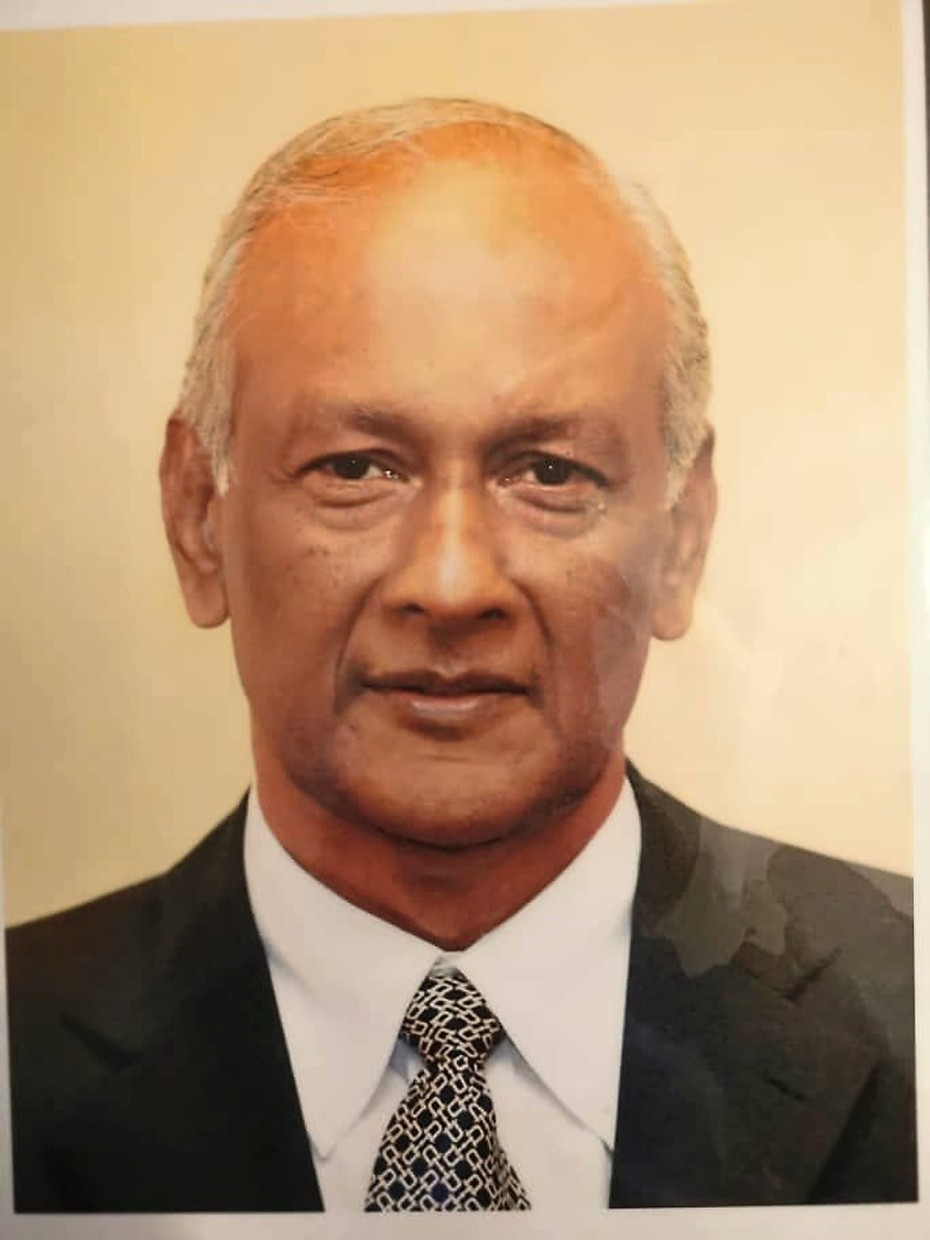
Chandran was a man of few words, but did his talking on the field and, through his actions, showed he cared.
One of the most admired footballers who graced stadiums throughout Asia and on occasion Europe, with his gritty and stout defending, the legendary Chandran captained Selangor and Malaysia on numerous occasions.
He went on to guide his beloved Merah Kuning to a number of Malaysia Cup victories.
The name M. Chandran may not ring a bell with the younger set of Malaysian footballers and fans but for those who followed football in the 1960s, 1970s and early 1980s, it brings memories of a steely, tough-tackling centreback, who went on to become not only Malaysia’s but also Asia’s best sweeper.
Whenever Chandran’s name was on the team list, the fans would rest easy knowing Malaysia had a reliable centreback,
Chandran was born in Sungai Siput, Perak, on May 4,1942, but surprisingly, he was always a diehard Selangor player.
From the first day he donned a Selangor jersey, he was hooked and never played for any other state throughout his footballing career.
The year 1961 was when Chandran caught the eye of selectors and was picked for national youth team training. He was also picked for the Selangor Indian Association (SIA) team that competed in the inter-club league of the Selangor Football Association.
During those days, crowds would gather in the evenings to watch inter-club matches involving the league’s big names such as Rangers, Sentul Railways, Tamilian Physical Culture Association (TPCA), Police, Selangor Chinese Recreation Club (SCRC) and SIA. Matches were played at venues like the SIA ground (Kampong Attap), TPCA Stadium (Jalan Raja Muda), Postals ground (Jalan Imbi), Malayan Railway ground (Jalan Sentul, Jalan Ipoh and Jalan Brickfields), PWD ground (Jalan Cheras) and the SCRC ground (Jalan Pudu), where crowds numbering several hundreds would stand just outside the byline to watch the keenly contested Selangor FA inter-club league matches.
Two years later in 1963, Chandran joined the Selangor camp and trained with seasoned players like goalkeeper Teh Cheng Lee, defenders Abdullah Noordin and Edwin Dutton and forwards Stanley Gabrielle, Arthur Koh, Abdul Ghani Minhat and M. Govindarajoo. These players were already established members of the national team.
The period from 1968 to 1974 was a golden era for Malaysian football and Chandran was at the heart of it, dictating play from the centre of the pitch. This era of changing tides started in 1968 when Malaysia emerged Merdeka tournament champions by beating Burma 3-0 in the final.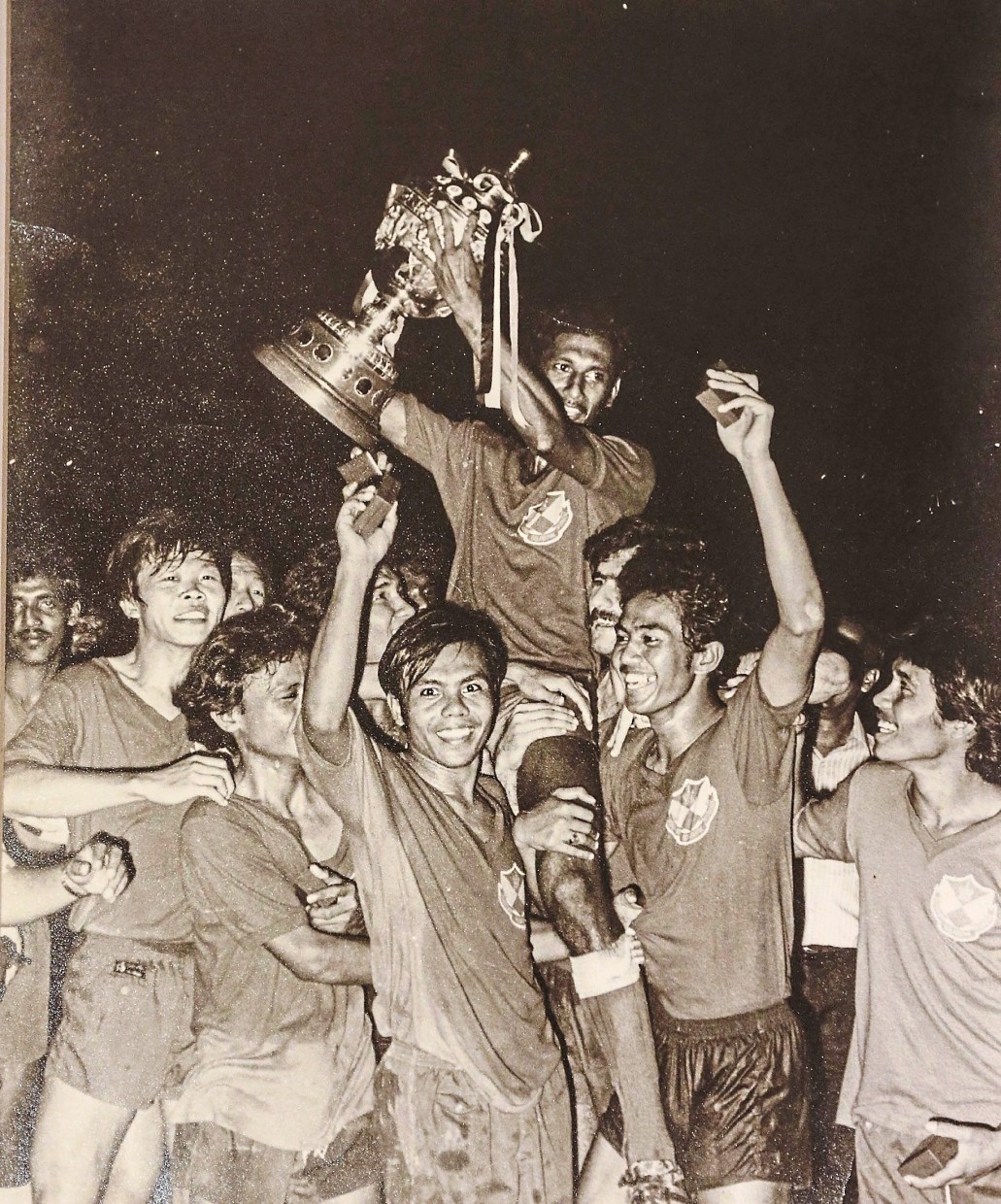
That year, Chandran had one of his best Merdeka tournaments. His undisputed defending capabilities was a major factor for Malaysia in keeping a clean sheet en route to clinching the title.
Malaysia winning the 1968 Merdeka tournament where Chandran contributed so much, fortified the relationship between himself and team manager Harun Idris, who in football jargon was renowned as a “players” manager.
It was no surprise that Chandran became Harun’s choice as national captain as he knew how to lead by example without showing off his authority. Throw into this mix Dave McLaren, a coach with imagination, and you had a recipe for success which was proven on numerous occasions.
Qualifying for the 1972 Munich Olympics was Malaysian football’s finest hour and Chandran was in the thick of things.
The fans were pleasantly stunned by national team’s achievement. On their return, the players, officials and members of the contingent were given a welcome normally reserved for warriors returning in triumph from battle.
Chandran, the captain, was driven in an open-topped car which led the parade from Subang International Airport to the Selangor Menteri Besar’s residence in Jalan Raja Muda, Kuala Lumpur, a journey of some 30km where he did little else but wave to throngs of people who lined the route to hail their conquering heroes.
In the 1974 Asian Games in Tehran, Chandran returned to captain the team and brought his playing career to a fitting end by leading Malaysia to a first-ever football bronze medal in the quadrennial Games.
Malaysia edged North Korea 1-0 in the third-fourth placing match. In earlier pool matches, Malaysia lost to Iran 1-0, drew with Japan 0-0 and beat South Korea 3-2.
Former FA of Malaysia general secretary and ex-international Datuk Dell Akbar Khan could not hide his feelings when asked about Chandran’s demise.
In a voiced tinged with sadness, Dell said: “I came to know Chandran through my late brother Sadar Khan. Both were attached to (Standard) Chartered Bank and were like brothers. In fact, both played for the country. I was playing for PDRM and Chandran was playing for SIA.
“I already knew him when he joined the Selangor squad and thereon, a special relationship started. He was the centreback and I was the rightback and we played together even in qualifying for the Olympics. Chandran was very much like me.
“We meant business during matches so there was no messing around. I guess that’s why we got along so well.
“I remember a Business League match when we were on opposite sides. I tackled Chandran and accidentally caught his ankle. My brother came on as a substitute for Chandran and from that moment onwards, I became a victim.
“My late brother never left me alone, he was waiting to break my leg, that’s how close all his teammates were to him.”
Dell, who is former Kuala Lumpur police chief, added: “Chandran was a great captain and we all looked up to him. You cannot beat Chandran in a five-metre or 10-metre dash for the ball because he was super fast. He was not as skilful as (Soh) Chin Aun but he was fast.
“I lost my brother in 2009 so I know what it’s like to lose someone so close. Now, losing Chandran indeed it’s very sad.”
Asian Football Confederation general secretary Datuk Windsor Paul, and a close friend to the late Chandran, said: “I would say our friendship was one of deep respect and admiration for who he was as a person and former national captain.”
Clinching the Asian Games bronze medal was all the more remarkable because it was achieved despite the team lacking the services of a coach.
The senior players, led by Chandran, plotted the tactics and oversaw the execution.
Between his emergence as a youth international in 1962 and his retirement as a senior international in 1974, Chandran had a 12-year run at the top of the game.
During this time, his career was distinguished by his captaincy of the national team in the 1971 Merdeka Tournament, a first-ever Olympic qualification the following year and an Asian Games bronze medal.
These achievements stamped him as the most accomplished footballer the country had ever produced in its 62-year history as an independent nation.
Close friend and former colleague Mervin Nevis, said: “I first met Datuk Chandran in 1973. We were then working with Chartered Bank (now Standard Chartered Bank) and somehow both of us clicked and became good friends.
“We were more like brothers and each other’s trusted confidant. We always made it a point to keep in touch with each other either in person or by phone at least four times a week.”
In 1974, Chandran retired from the national team and the following year from Selangor.
As one door closed another opened and Chandran moved into coaching. As a coach, he proved to be a no-nonsense disciplinarian.
Datuk Soh Chin Aun, another member of the team which qualified for the Munich Olympics, said: “It’s a great loss to the country to lose someone like Chandran.
“We played for many years together, we fought for the country on the field. He was a great captain and always motivated his players and supported us. We will definitely miss him.”
Career-wise, Chandran moved from Chartered Bank to Arab Malaysian Bank where he retired in 1997, at age 55.
Chandran also served the Football Association of Malaysia technical committee for eight years and later worked under the late Datuk Seri Paul Mony Samuel at FIFA’s development office in Kuala Lumpur.
Chandran leaves behind wife Datin Pushpalata, sons Vicnaraj and Kumarason, daughter-in-law Adeline Chew and two grandchildren.
To conclude this eulogy for a dear friend, I have borrowed a few paragraphs from the poem If Tomorrow Starts Without Me by David Romano.
Rest in peace, Chandran.
Your sacrifices for your family and country will not be forgotten; forever etched in our hearts.
Christopher Raj is chief executive officer of a sports public relations agency. Send him a tweet to @chrisraj23
Already a subscriber? Log in
Get 20% OFF The Star Digital Access
Cancel anytime. Ad-free. Unlimited access with perks.
