Much like fashion’s embrace of individuality, the fragrance world is wagering that bespoke blends will become the next essential luxury.
This is witnessed in how more brands are adopting the term.
A one-of-a-kind scent in this context means a perfumer develops something new for a person, which is then archived and never replicated for anyone else.
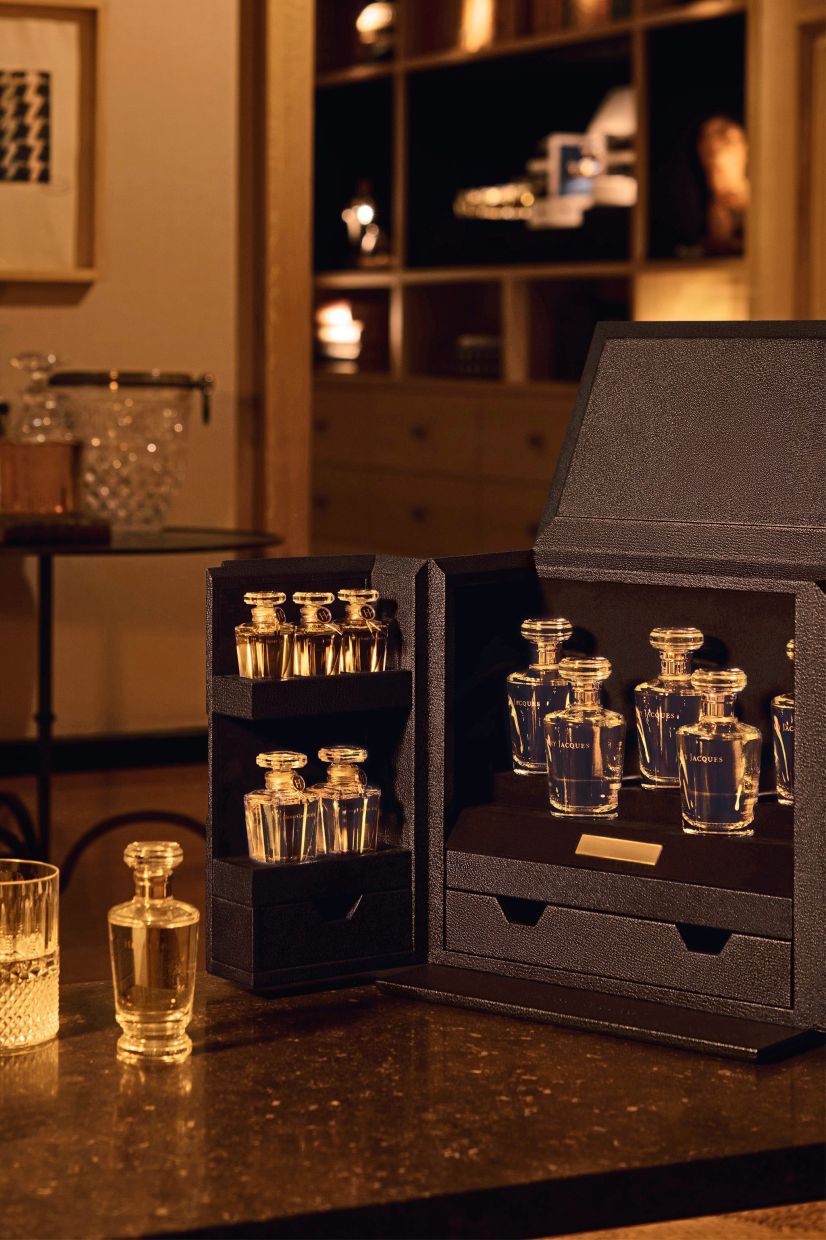
Bespoke fragrances are a signature for one perfume house, Henry Jacques.
Named Sur-Mesure (French for custom made), they are born from a highly personal, hands-on experience.
“Our process is a journey – often spanning months, during which the client participates in thoughtful exchanges and stages of refinement,” says Anne-Lise Cremona, CEO and daughter of the founder, Henry Jacques Cremona himself.
“If you are offered a ‘made-to-measure’ service that promises results in three weeks, be prepared to be disappointed!”
According to her, there are many elements to consider when creating a unique perfume.
“It’s about the pH of the skin, memories becoming more detailed, and sometimes, the freedom to change your mind,” she notes.
Cremona believes that Henry Jacques is the only brand that delivers a genuine bespoke experience.
“The result is never a variation of an existing fragrance, but a completely unique composition that belongs to one person alone, with its own formula, narrative and soul,” she stresses.
The perceived bespoke trend could be a response to the fragrance world’s increasingly aggressive marketing.
“Today’s clients are no longer satisfied with simply aligning with a brand or following celebrity endorsements,” Cremona adds.
She relates how Henry Jacques was once dedicated solely to bespoke creations.
In the 1970s, she says, bespoke perfumery experienced a decline in popularity as mass-produced fragrances emerged and were propelled by powerful branding.
Despite expanding into off-the-shelf fragrances, Henry Jacques has remained steadfast in upholding its core values.
She refers to shoppers deeply invested in the craft of scent-making as “perfumetellectuals”.
“Even very young connoisseurs now show remarkable olfactive knowledge, easily distinguishing complex, multilayered compositions from simplified mainstream offerings,” she adds.
The more pressing question, perhaps, is how much a bespoke fragrance actually costs – and whether it is within reach for most people.
Put simply, a customised creation from a storied house like Henry Jacques commands an eye-watering price, starting from hundreds of thousands of ringgit in Malaysia.
Read more: When it comes to perfume or scent, what appeals to the noses of Malaysians?
An already personalised artform
Perfumer Dr Mohd Azri Ab Rani confirms that the high price point remains a major barrier.
“I don’t recommend bespoke – it’s just too expensive,” he shares. “I can do it, but I would charge around RM20,000 for one bottle.”
Mohd Azri, a member of Universiti Teknologi Mara’s applied sciences faculty who also runs a research laboratory there, sells fragrances under his eponymous brand.
He acknowledges that the trend exists, but stresses that fragrance is already a deeply personal matter, bespoke or not.
“Even fragrances you find off the shelf are personalised – just not to you,” he explains.
“If Selena Gomez is the face of a fragrance, it would already be created in her image, likely with sweet notes, florals or even something chocolatey.”
He adds that if it were a world leader, the brief would naturally lean toward something bold, such as woody notes or oud.
“For a bespoke fragrance representing a country like Malaysia, I’d go for tropical scents that are gentle yet distinctive,” Mohd Azri remarks.
Speaking from a scientific standpoint, he says that crafting a bespoke perfume involves far more complexity than people assume.
It is not as simple as adding one scent note to another and mixing them together.
Combining the notes you like can lead to unpredictable interactions – sometimes creating nuances you never intended, or cancelling out the very elements you hoped to highlight.
Mohd Azri adds that advancements in AI technology have helped make fragrance selection more personalised to individual preferences.
Still, he emphasises that perfumery remains a profoundly subjective field.
“I see it as art, which is also why you can never create something that pleases everyone. In a way, that’s what drives the appeal of bespoke.”

Read more: Fashion finds its true self? Why authenticity now matters more than trends
Unique in other ways
Even if a brand does not offer a bespoke fragrance, there are still ways to create a somewhat unique scent.
Layering fragrances – spraying different ones on top of each other – can produce a combination that a single bottle alone cannot achieve. Similarly, combining a fragrance with scented body products, like lotions or scrubs, can add another feel of individuality.
Country manager of Luxasia Malaysia, Ajay Ramachandran, advises shoppers to explore niche fragrance brands.
While these cannot guarantee a truly one-of-a-kind scent, they do offer the reassurance that few people will have the same product.
In reality, a fragrance can vary across individuals. “It is unlikely that the same scent will smell identical on each person’s skin due to individual body chemistry,” Ajay points out.
“Everyone is uniquely beautiful in their own way, even in the bio-chemical aspects of one’s physiology.”
Luxasia manages a broad portfolio of fragrance brands, none of which currently offer bespoke services in Malaysia.
This, however, is not considered a limitation. Other elements can offer a similarly distinctive experience.
“In many of our boutiques and pop-ups, especially with the holiday season coming up, personalisation services are already available as a natural extension of that special touch of luxury for our consumers,” Ajay shares.
These include custom engraving or monogramming on bottles, specialised gift-wrapping, note-writing and even wax-stamping services.
He adds that scent profiling and mood-based fragrance advice are also integral to the luxury fragrance experience.
“Retail frontliners should be able to pull out relevant data from a database the moment a customer steps into our stores. This allows curation of personalised recommendations.”
Ajay believes the buzz around bespoke fragrances should be seen as a positive for the industry.
“It shows an elevated demand for scents and an increased sophistication in consumer preferences,” he explains.
To him, it also signifies a broad desire for individualisation and personal branding through fragrances.
Whether bespoke fragrances will become a steady, lasting feature in the industry still remains to be seen.
“Right now, bespoke fragrances are growing, but there is still a chance this is just a rising novelty,” Ajay concludes.