It is a way of dressing built like so: something old, something new, a trucker hat and bluejeans too.
This sensibility, defined by aged Levi’s, cowboy boots and moustaches, has roots in workwear and Americana.
The aim is to look masculine and uncomplicated, like Brad Pitt in Thelma & Louise, or one of the 1980s baseball players in the film Everybody Wants Some.
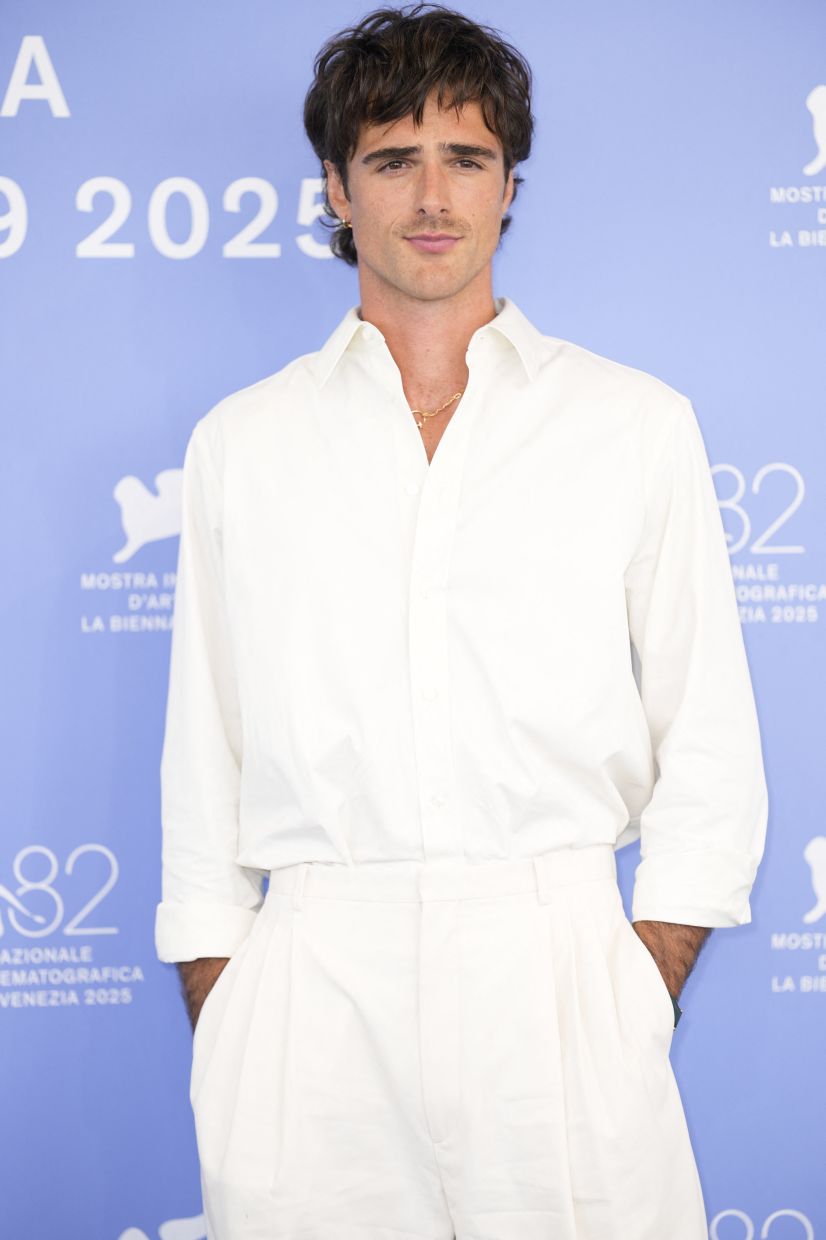
Actors like Jacob Elordi and Austin Butler are the poster boys of this new sterile Americana – let’s call it “James Clean”.
It’s a look that evokes James Dean in his unbuttoned chambray shirt in Giant. It could have been called “the Redford”, in the 70s, with Robert Redford’s inclination toward rugged suede jackets.
On 90s television, it was typified by gooey-centred bad boys like Dylan McKay (played by Luke Perry) on Beverly Hills 90210.
Today it’s popular from Pittsburgh to the Palisades, where Butler has been photographed in hint-of-a-heel cowboy boots and holey jeans.
“It’s in the South, it’s in New York, it’s in LA (Los Angeles),” said Chris Black, a podcast host in New York, who claims to have spotted Elordi look-alikes in mesh-backed trucker caps as far away as Berlin.
“Everybody’s seeing the same stuff,” Black said. “It’s all on Instagram.”
For that we can credit guys like Albert Muzquiz, 30, in Los Angeles, who since around 2021 has posted style videos on the social media platform.
Muzquiz wears picnic-plaid flannel shirts and cropped jean jackets. He smiles a lot. He brandishes a push-broom moustache, which makes him look (as many of his 394,000 followers have noted) like Tom Selleck’s body double.
If Elordi and Butler are the tip of the pyramid, men like Muzquiz are the propagators.
As often as four times a week he uploads videos dispensing advice on buying vintage Levi’s on eBay (501s preferred, so that the back pocket sits “right on the butt cheek”) or which trucker hats to search for online (he suggests the King Louie brand).
Sometimes it doesn’t even seem as if his followers bother watching the clips. They just want an answer to know where his shirts are from.
“Most male shoppers are trying to optimise their wardrobe,” Muzquiz said.
A big shift
It was not long ago that millennial men could be lulled into credit card debt with a feel-good story of suits hand-stitched by Italian nonnas in Tuscany.
Brands marketed denim that would wear just like it did back in the 1880s.
“Detail fetishism” was how Luke Harris, 40, a creative director and filmmaker in Santa Barbara, California, described the way he and many men he knows shopped for years.
That obsessive, narrative-driven shopping may be unfamiliar, even ludicrous, to 20-somethings now who just see something online and expect to replicate it quickly.
“It’s not about the garments so much – it’s about how you’re wearing it,” said Jon Alan, 34, a community manager at the high-street heritage label Buck Mason, who, like Muzquiz, has amassed an impressive Instagram audience, won over by his wardrobe of cropped mechanics jackets and trucker hats.
He, too, has a moustache that makes him look as if he’s backing up Magnum, PI.
“I don’t want, like, such a crazy rare, heady wardrobe,” he said. “I just want some classic silhouettes and pieces.”
Indeed, this image – one might call it basic, though not as a pejorative – is extremely easy to replicate.
What could be simpler than a cotton T-shirt and chinos?
“You’re honouring conventions of shape and style,” said Loren Fizer, 28, a graphic designer and content creator, with a follower count of 41,500, eager to know where his jeans are from.
His is an unruffled wardrobe full of clay-coloured chinos (from a Japanese brand that is called Ordinary Fits) and two-pocket work shirts.
He prefers colours no more intrepid than olive green. He could be out of 2025 or 1975.
Read more: Why double-breasted suits are making a fresh comeback in menswear fashion
“We’re referencing clothing that is historically American,” said Cameron Golshani, 30, an energy efficiency consultant in Oklahoma City, who is very Sundance Kid in his pale bluejeans and yoked Western shirts from Buck Mason.
This “good old days” turn to menswear with a capital M comes after years of a trend toward more androgynous clothing, at least within high fashion.
While the actors most associated with this look are white, it isn’t exclusive to them.
“I’m very well aware of the way me as a Black man, exists in this fashion space, wearing the clothes that I wear, and that’s part of the charm,” said Fizer, who takes pleasure in scrambling the notion that this style is siloed to a particular demographic.
“Anybody can be in it. Anybody can wear it.”
Perhaps though, this is one fashion fad that can be explained more plainly.
“What we’re really talking about is trying to get a piece of a guy that the internet is swooning over,” Black said, alluding to Elordi and Butler.
This is the alluring transitive theory of style. If Elordi is considered attractive, then dressing like him will make you attractive as well.
“Guys want to be sexy and they want to look cool,” Muzquiz said. “Those are all really vulnerable and kind of dorky things to say out loud.”
But they are, in his experience, valid. – ©2025 The New York Times Company
This article originally appeared in The New York Times.