
The word “normal” recurs like a mantra in Still Bobbi, the new memoir by the beauty mogul Bobbi Brown.
“Normal is beautiful,” she writes. And the word pops up in a chapter title: “Be Normal.”
Although she has founded two successful beauty brands and was named one of Time magazine’s 100 most influential people of 2025, Brown would like you to know she’s just like you.
Over a matcha latte at Brasserie Fouquet’s, a restaurant in TriBeCa, she was quick to mention that she had flicked on a bit of makeup in the car.
“I haven’t looked in the mirror since,” she said.
She wore an all-purpose cream-tinted cardigan and carried a vintage Hermes garden bag. Her features were tinted in a faintly rosy glow.
“I’ve had three kids and I drink vodka,” she said, gesturing toward her midsection. “There’s a little roll going on there. But it’s okay.”
In a decades-long career of energetically flogging lipsticks and balms, Brown, 68, earned fame and the trust of millions of customers with a be-as-you-are approach that, at its inception in the early 1990s, upended the artificial beauty standards of the day.
Over time, she fashioned a reliable "everywoman" persona. Candor is her calling card, relatability her stock in trade.
In conversation, she conveyed a mix of toughness and vulnerability. An unlikely lady boss, she is five-feet tall, slight of frame and still prey to bouts of self-doubt.
Speaking of her book, available Sept. 23, she fretted: “Is it boring?”
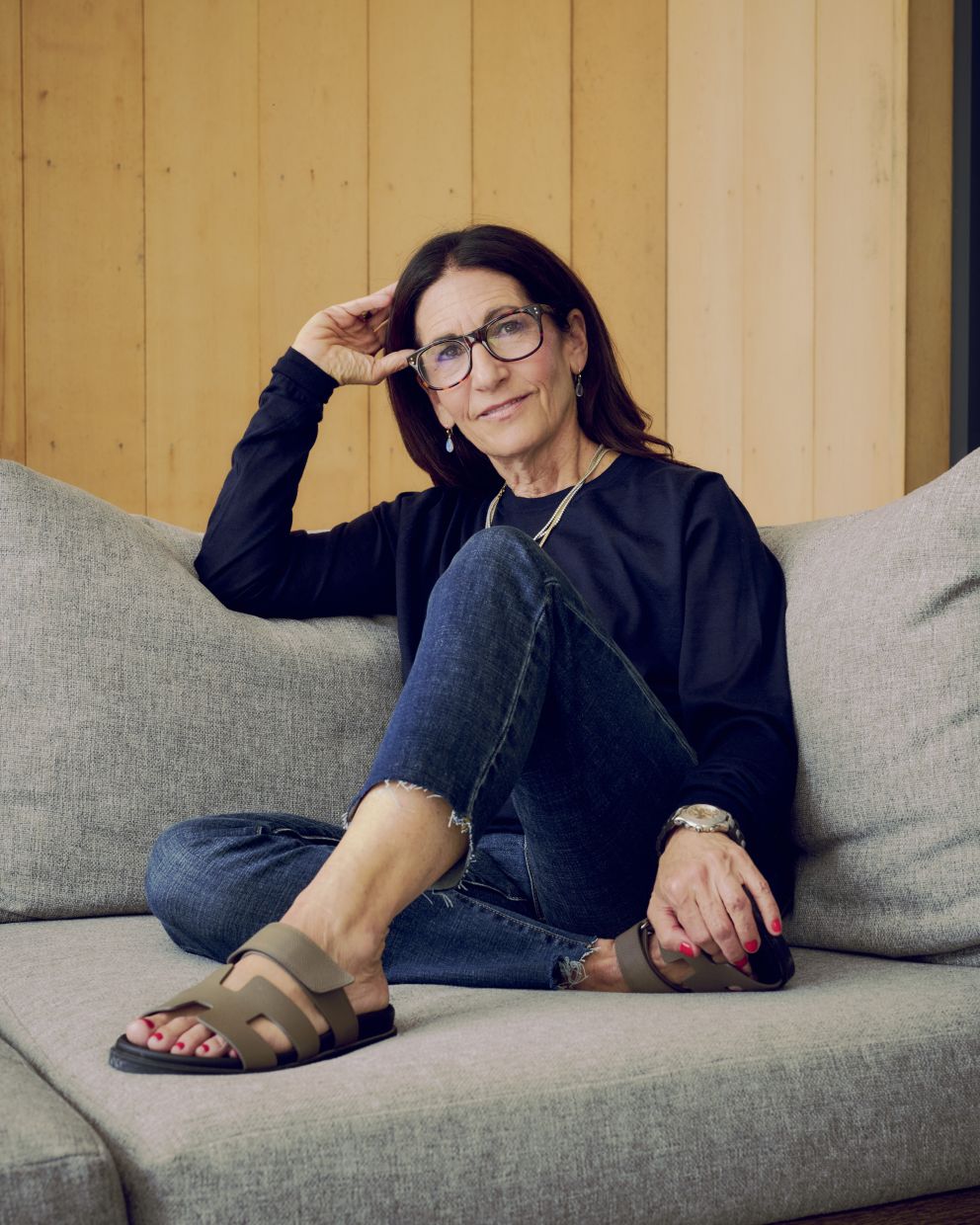
It also includes the story of how she made her fortune by selling her first brand, Bobbi Brown Essentials, to Estee Lauder, only to find that life in a giant corporation wasn’t for her. But the book stops short of being a tell-all.
“Believe me, I was strategic with my words,” she said.
Read more: How Robert Redford defined Hollywood cool – and men’s fashion for decades
A blend of pragmatism and inventiveness made her a unicorn in the beauty trade.
When she started Bobbi Brown Essentials in the early 1990s, it was built on 10 subtly toned lipsticks.
“At a time when the same big faceless brands owned the business, Bobbi was part of the first wave of beauty experts to found a company based on a singular vision,” said Ed Burstell, a beauty and retail consultant.
Her line sold so briskly that Leonard Lauder, the billionaire chief executive of Estee Lauder, decided he had to have it.
In the middle of the decade, Brown and her partners sold it for a hefty but undisclosed sum.
Given a promise of autonomy, she settled in as Estee Lauder’s creative head of Bobbi Brown Cosmetics and helped transform her indie brand into a billion-dollar global business.
Her name was as resonant as those of her high-profile clients, a roster that included Naomi Campbell and Jill Biden.
All went swimmingly, until it did not. Feeling thwarted by a loss of creative control, Brown finally left Estee Lauder in 2016.
Because of a noncompete agreement, she was supposed to stay away from the cosmetics business until 2020. Once she was free, she started a beauty company, Jones Road.
Digging in her heels
Brown grew up in Wilmette, Illinois, an affluent Chicago suburb, the child of a lawyer and homemaker.
Her formative years were conventional but hardly idyllic. Her mother, a fastidiously groomed manager of a perfectly ordered household, was hospitalised with bipolar disorder when Brown was in seventh grade.
After her mother’s death in 2023, Brown, her sister and her cousins would recall harrowing episodes – like the time she jumped out of a moving car – with a kind of gallows humour.
“We would reminisce and laugh hysterically,” Brown said. “But those things weren’t funny at the time.”
As a teenager, she refused to be defined by the nagging sense that she was somehow less-than, or, as she puts it in her memoir, “a short Jewish girl in a world of tall Barbies”.
When her mother suggested a nose job, she refused. A pivotal moment came when she saw Ali MacGraw in the 1970 movie Love Story.
“Here was this dark-haired girl, her hair parted in the middle, with dark brows and not a lot of makeup,” Brown said.
“I thought: ‘Wow, I don’t have to look like Barbie.’ I started seeing myself as pretty, realising that what I have is special, and I needed to figure out what that was.”
She earned a degree in theatrical makeup at Emerson College in Boston.
In 1980, she moved to New York. She got her big break working on magazine shoots for the photographer Bruce Weber, who appreciated her light touch with cosmetics.
Along the way she met Steven Plofker, a lawyer and real estate developer.
They married in 1988 and moved from Manhattan to the affluent but relatively low-key Montclair, New Jersey, where they still have their main residence and operate Jones Road and the George, a 32-room boutique hotel.
By the end of the 1980s, Brown had grown weary of hustling from gig to gig as a makeup artist.
She happened to meet a chemist during a shoot for Mademoiselle magazine and soon developed the prototypes of the neutral-toned shades of lipstick that would form the centrepiece of her brand.
It debuted at Bergdorf Goodman in 1991.
After some years at Estee Lauder, she found that the corporate life began to chafe.
She was uncomfortable in a business suit and high heels, and distressed, she writes, by “constant pressure from corporate" to make her brand look like every other brand.
The company released products without her approval, she writes, and she dug in her heels at the risk of being labelled “difficult”.
“At Lauder, I stuck to what I believed in,” Brown said. “By the way, if I’d been a man, they would say I was strong-minded.”
Read more: Christian Louboutin and Jaden Smith talk style, risk and their new partnership
No more clacking
For Brown, the writing of Still Bobbi, which was conceived with a writer she declined to name, was cathartic.
“There are always emotions, whether anger, angst, all these things, just putting them all together, talking about them, and understanding where your feelings came from,” she said.
“It’s kind of how you feel at night when you get home, take your clothes off and put your robe on.”
At one point, she writes in the book, she found herself at Costco, staring at the packages of diapers, baby wipes, Tampax and Depends.
She was crestfallen to realise that the wipes and Tampax stage of her life was well behind her.
As for adult diapers? “I’m not there yet,” she said with a laugh.
Retirement was never an option. After leaving Estee Lauder, she had a consultancy with Lord & Taylor and started a wellness company while hoping to return to the business she knew best.
The debut of Jones Road, named after a street near her summer home in the Hamptons, was timed to the day in October 2020 when her noncompete agreement expired.
There is no more pesky interference from above, and she speaks directly to her customers via social media.
Detractors have complained about the greasy textures and faint colour payout of some Jones Road products. But loyalists swear by the lightweight What the Foundation and Miracle Balm, a tinted unguent in a pot.
“The company is poised to generate US$200mil (RM844mil) in revenue later this year,” Plofker said, with 10 stand-alone stores from Montclair to Madison Avenue, from Chicago to Palm Beach.
Brown goes to the office these days in a white shirt, blazer, jeans and loafers. Gone are the days when she clacked down corporate corridors in stiletto heels.
“I don’t have to do that anymore,” she said. – ©2025 The New York Times Company
This article originally appeared in The New York Times.