It is a sunny morning and little seemed to stir outside the doors of a violin workshop in Bandar Sri Damansara, Selangor.
The place was still and quiet from the outside, offering zero clues to the activity taking place within.
Stepping inside and going up to the second floor of the building, you’ll find an atmosphere completely different from the outside.
The air is cool and there is a soft din of wood being carved and strings being plucked as an instrument is tested.
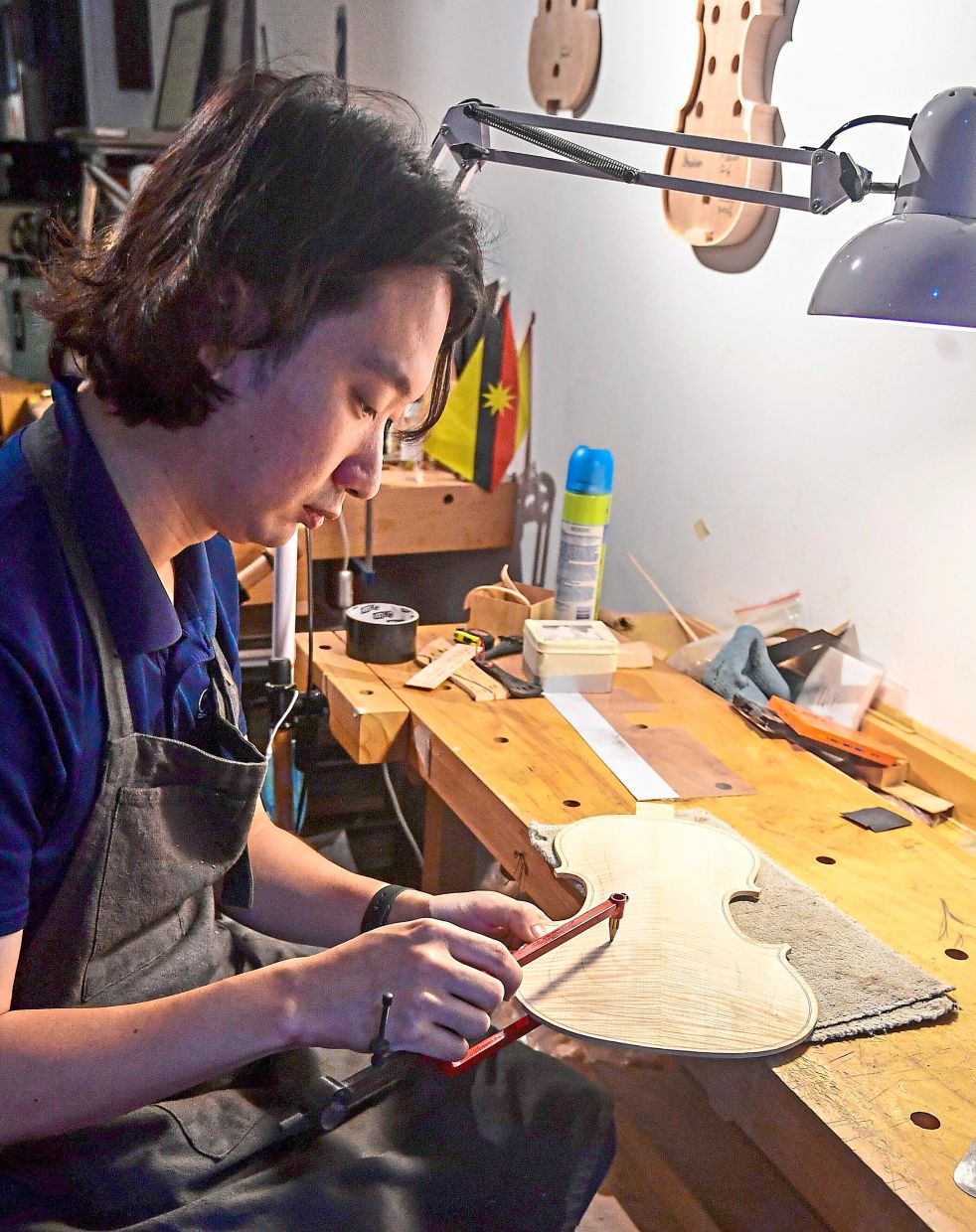
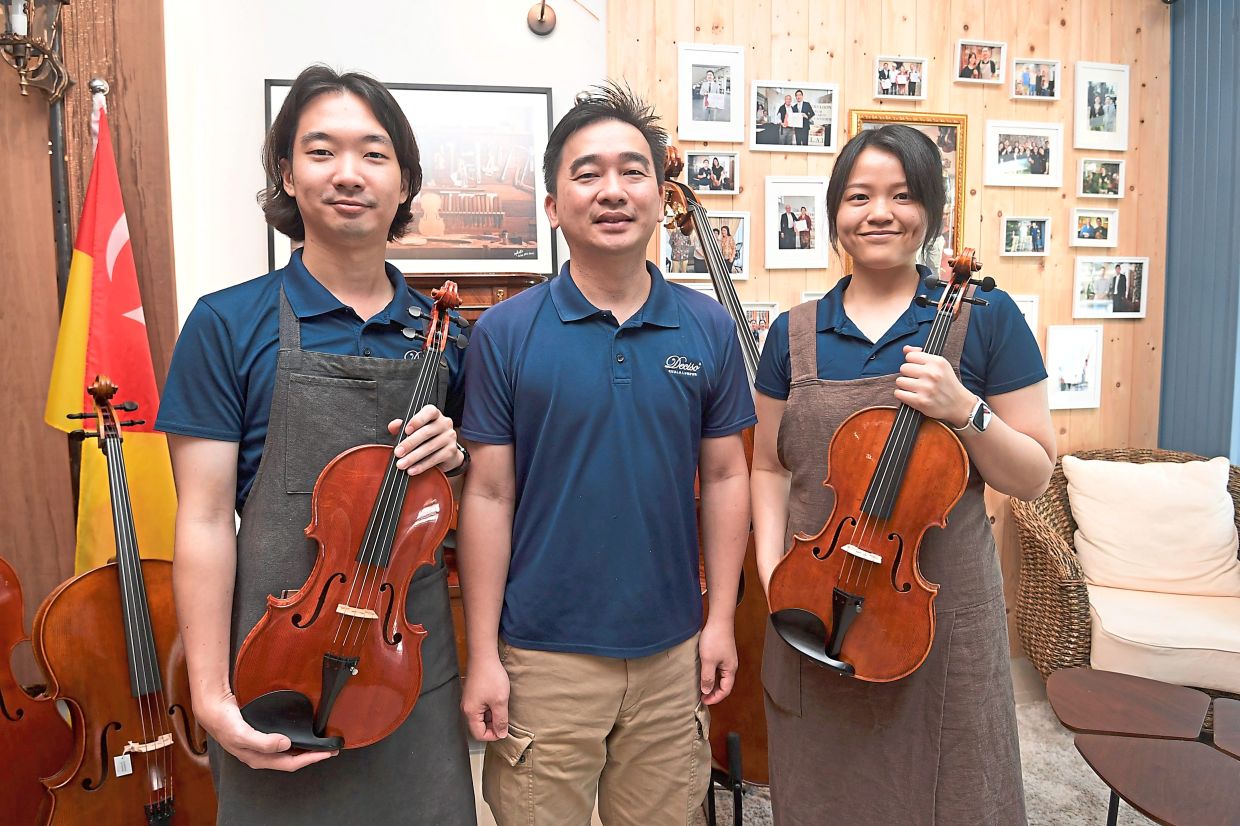
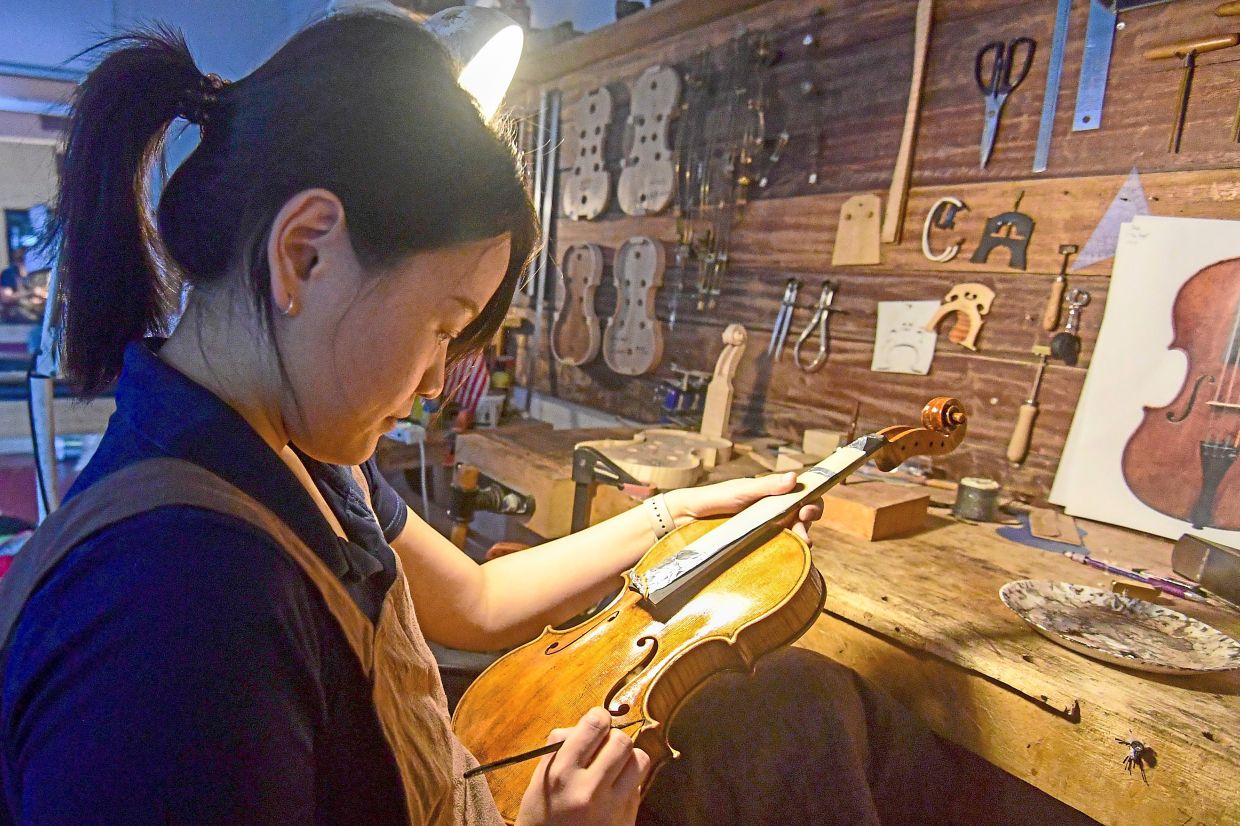
At their respective workbenches, luthiers Samuel Wong and Chang Song Jie are immersed in their work, aprons on and focused on transforming blocks of wood into instruments capable of producing beautiful music.
It’s a process that takes months and is a painstaking exercise in patience and precision. But that’s the real beauty of violin making for Chang and Wong.
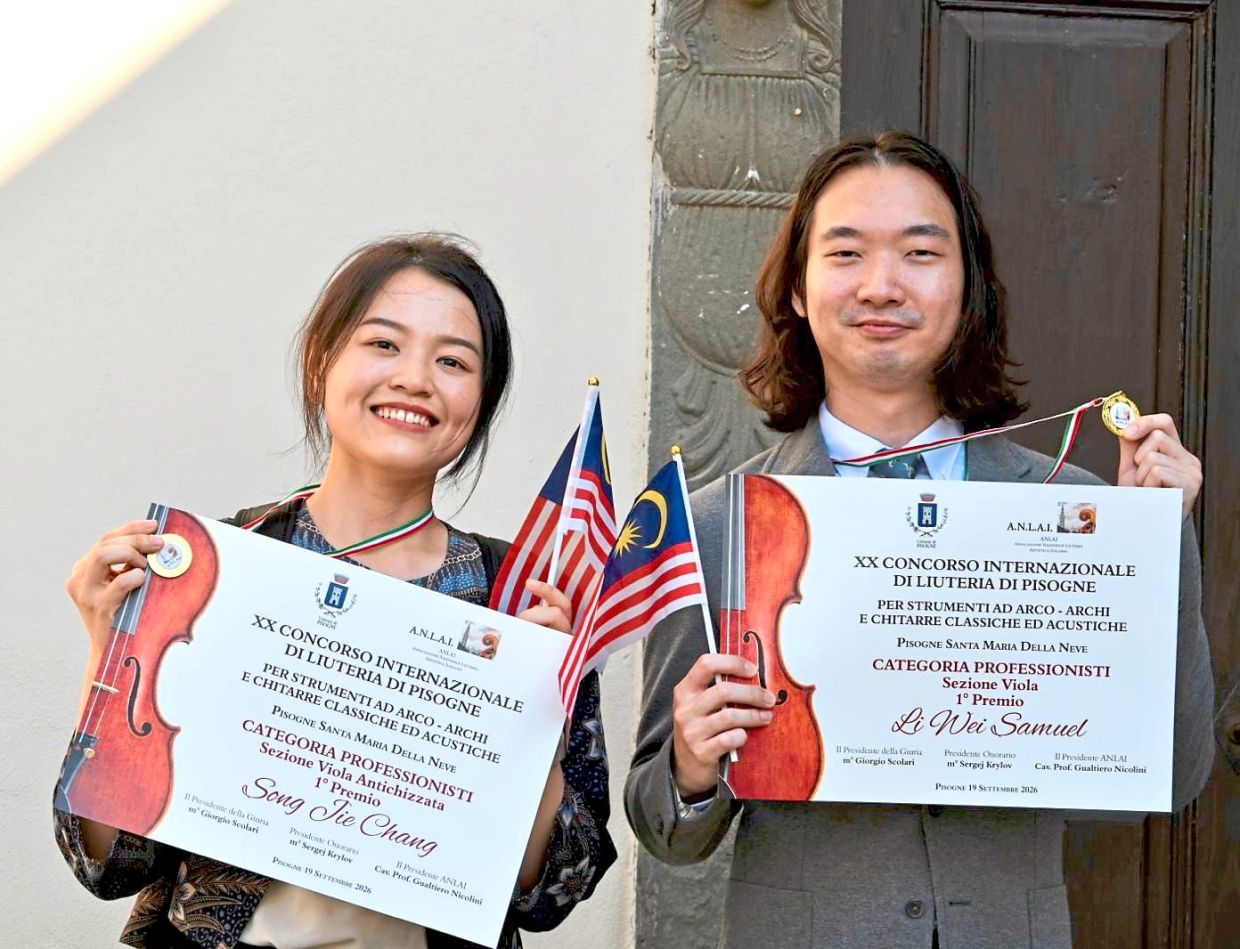
Both of them recently won gold medals at the 20th International Violin Making Competition organised by the National Association of Artistic Italian Lutherie (Anlai) in Pisogne, Italy.
The international recognition has brought the spotlight onto a specialised craft still relatively niche and obscure in Malaysia.
Getting in tune
Their journeys into becoming luthiers, however, were not quite what either of them had originally planned.
Hailing from Sibu, Sarawak, Wong’s interest in violin making started with his own foray into playing the instrument.
“I started playing the violin when I was seven, and I became curious about how violins were made when I was in secondary school,” he says, adding that from then on, he started watching videos and reading books about violin making and its history.
It was not until after graduating from Soochow University in Taiwan – where he studied violin performance – that he gave a serious thought about turning his interest into a profession.
The Covid-19 pandemic gave him time to reflect on his future, eventually leading him to give violin making a try.
Meanwhile, Chang, who’s from Kuantan, Pahang, stumbled into the craft while pursuing her music performance degree at the National Academy of Arts, Culture and Heritage (Aswara), where she majored in playing the cello.
Meeting Kuala Lumpur-based violin maker Tan Chin Seng introduced her to a different side of the musical world, one in which she would master.
“While pursuing my degree, I learnt violin making from scratch in Tan’s workshop. I would study during the weekdays and go to the workshop on weekends or semester breaks,” she explains.
“There were times that I struggled so much and spent so much time in the same process that I thought I would never finish it. I’ve never thought of giving up, and I realised I enjoyed the process very much.”
Both of them are now skilled at making the violin, viola and cello under Tan’s guidance.
Wong has made 15 instruments so far, while Chang is now working on her 15th piece.
A conversation with wood
Making a violin is as much about knowing and understanding the material well as it is about mastering the technical skills.
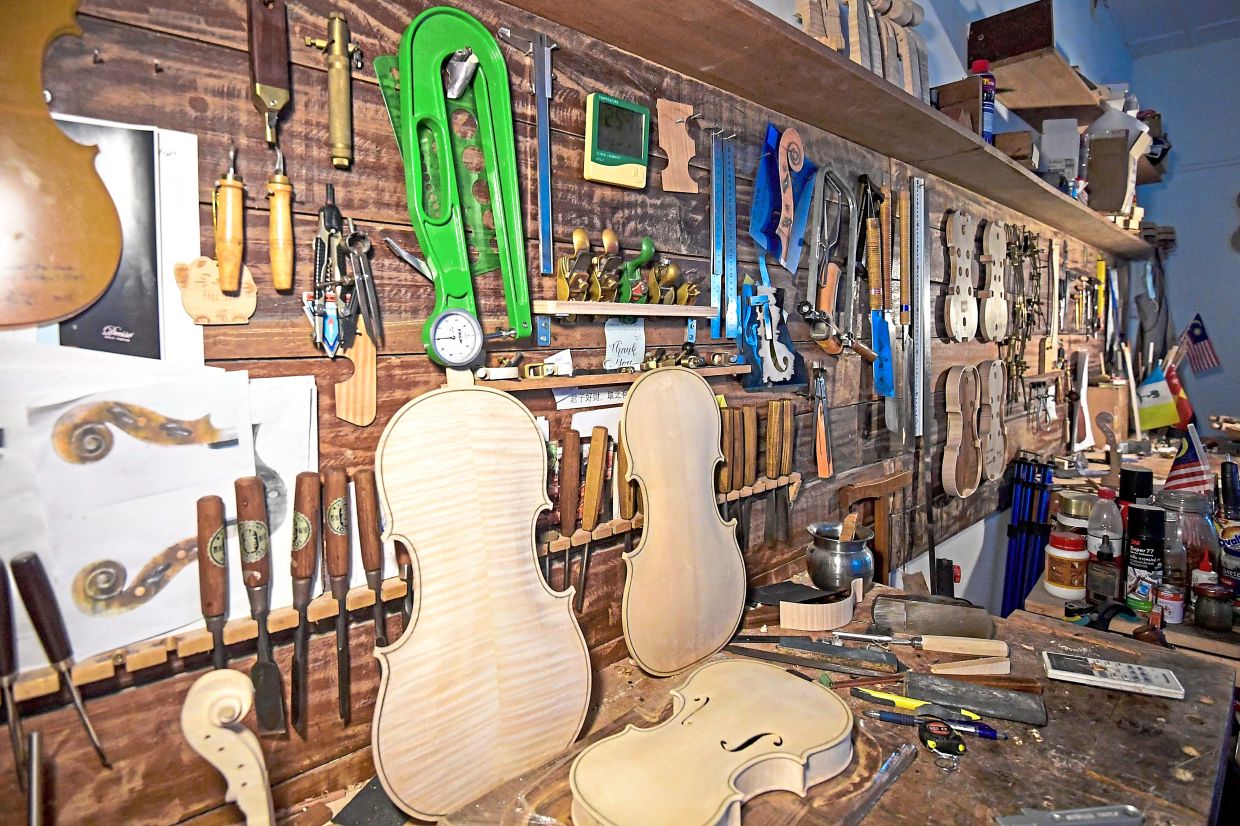
The two principal types of wood – considered the foundational life and soul of a luthier’s craft used in a violin – are spruce and maple.
A lot of consideration goes into selecting the woods, as grain patterns, density, stiffness and how well the wood has aged all influence how a maker approaches making an instrument.
Chang uses spruce imported from the northern mountains of Italy and maple from the European mountains. The wood is seasoned for at least seven years before it is used.
“Even when two pieces of wood come from the same species, or the same tree, every piece has its own unique characteristics,” she notes.
“As the maker, I’m the only person who understands that specific piece of wood the most, and it’s my responsibility to make its sound.”
Similarly, Wong is meticulous when selecting his materials. He always looks for well-aged wood with straight, clearly defined grain, while paying attention to its density and what these qualities might tell about the sound it will produce.
In terms of design, they would often draw inspiration from instruments made by historical makers such as Antonio Stradivari and Giuseppe Guarneri. A mould is then created based on the shape of the original piece.
“Throughout the making process, I keep observing and adjusting the details to gradually shape the instrument towards the sound I have in mind,” Wong says.
“Over time, I believe every luthier naturally develops their own style through repeated making, reflection and experience. It’s not always something you consciously try to create. It often grows from your own habits, judgment, and the way you approach the craft.”
That, he says, is what makes a style of violin truly the maker’s own.
But the process of carving the wood is where both of them find most satisfaction in.
Shaping the arching of the top and back plates of the violin and hollowing out their insides are among Wong’s favourite stages.
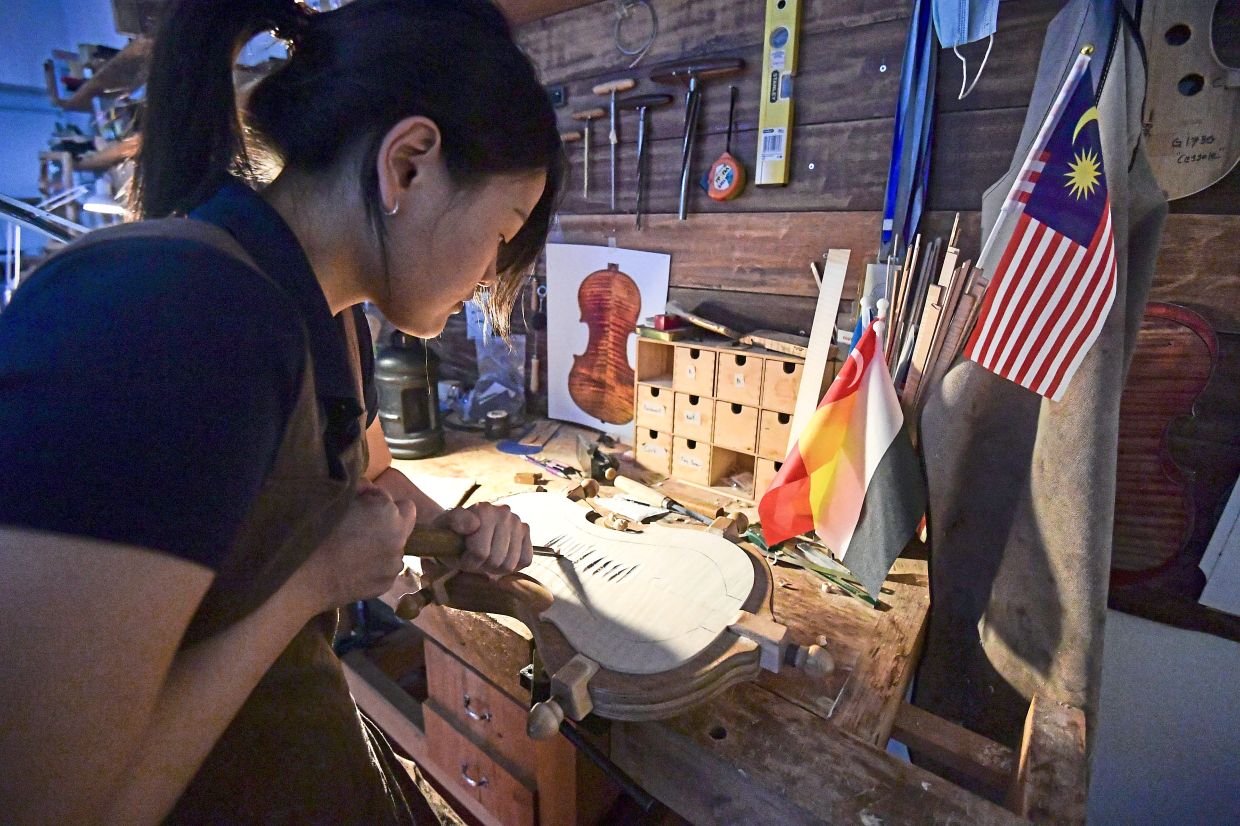
“I really like the sound of the blade cutting through the wood. It’s very therapeutic for me and helps me stay focused on the work.”
But he is mindful that no stage of the craft can be treated as less important than another, so he tries to enjoy every part of the process.
Chang also finds pleasure in the solitude and concentration while working on her material.
She describes the experience as a “long, intimate conversation between the wood and the maker”.
It’s a relationship that cannot be rushed or fiddled around with (no pun intended) as even the smallest detail will impact the quality of the finished instrument.
Instrumental feats
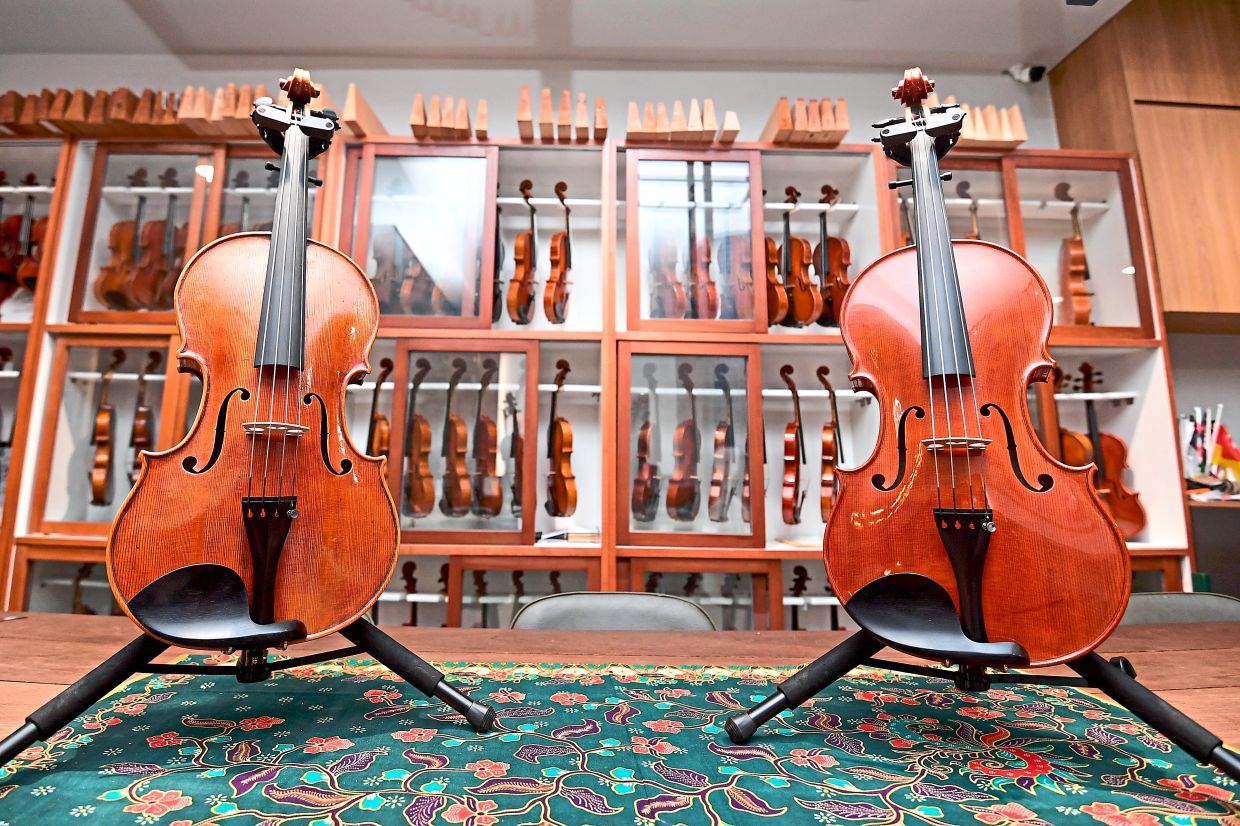
For the Anlai violin-making competition, both Chang and Wong submitted violas – an instrument with a sound that is larger and deeper than the violin.
Chang’s winning instrument, named “Ramlee”, was a tribute to the late Tan Sri P. Ramlee. The antique-style viola was completed in approximately four months.
“I first learnt to make an antique-style instrument last year, so this competition was a good opportunity to practise and try some of the new techniques,” she says.
Meanwhile, Wong’s winning entry is named “Solomon” and was based on a Brothers Amati model, interpreted through his own style.
He spent about five to six months creating it, choosing the name for its association with peace and wisdom. It reflects his hopes for peace in the world, as well as his own ongoing journey of learning and growing as a luthier.
Despite the months of work that went into their respective instruments, neither of them could anticipate what awaited them when they arrived in Italy for the awards ceremony.
“When I saw that ‘Solomon’ had won gold, it felt almost unreal,” Wong says.
“More than the award itself, it meant that the time and effort I put into making the instrument had been recognised internationally.”
Chang felt a sense of relief wash over her and an immense sense of gratitude when she discovered “Ramlee” had snatched gold.
“I have a lot of family, friends and musicians who have been supporting me from the start, and to me the gold medal showed that their support had paid off,” she says.
Chang is also the first Malaysian female luthier to triumph in an international violin- making competition.
Being recognised on the international level for their craft meant a whole lot more considering how small the community of professional violin makers in the country is.
While there is still demand for instrument repairs, maintenance, restoration and custom orders, handmade violin making is still an uncommon profession locally.
“I hope as more Malaysian makers gain international recognition, more people will appreciate this craft, and realise that high-quality string instruments are not only made in Europe, they can be made locally in Malaysia too,” says Wong.
Chang agrees, adding: “I got my calling to be a violin maker, but there are so many arts- related fields in Malaysia that deserve more attention, including our traditional arts. I hope my win can encourage more Malaysians – young and old – to explore the arts and contribute in their own ways.”
Making a lasting imprint
As technology and mass production have made things faster and more accessible, the assiduous nature of violin making can be seen as something unusual.
But both makers trust there will always be a place for the human hand in the creation of musical instruments.
They’re also quick not to completely reprimand mass-produced instruments as they serve their own purpose, which is to make music more affordable for those who need it.
But of course, nothing beats the “human touch” that goes into creating the instruments by hand.
“Every handmade instrument carries the maker’s ideas, skills and personal character, and it has its own history and artistic value. It becomes a lasting trace of the maker’s presence, dedication and creativity, even after the hands that made it are gone,” Wong says.
Each handmade violin fetches between RM10,000 and RM30,000 – higher if it’s custom-made – but the value is more than just the price.
This is what makes the craft so demanding and rewarding at the same time. A luthier spends months working on something that will eventually leave the workshop and be played by someone else, potentially for many years.
Both admit that the journey doesn’t become easier simply with experience as each instrument presents new challenges and there is always something to learn or improve.
“But I would love to see more people being interested in and aware of violin making, and hopefully, build a community of luthiers and makers here,” Chang says.
For now, surrounded by tools and blocks of wood waiting to become something more, Chang and Wong return to their workbenches.
Their award-winning violas may have taken a bow on the international stage, but the makers themselves are far from taking one.
There are still instruments to be made, and for these two luthiers, the music is far from over.