
AS darkness settled over New York City in the United States on a Sunday night, a hulking white van raced through lower Manhattan. Its driver, Christians Perez, peered through the windows, looking for the subtle signs of hidden life on city streets.
It’s something you can’t exactly teach: how to spot the homeless New Yorkers trying to blend into the night – people resting on bus stop benches, curled up on doorsteps, tucked into the shadows of scaffolding.
Perez and his team from NYC Health + Hospitals, the city’s public hospital system, have been doing it for weeks. Each time they spot somebody, they pull the van to a stop and jump out, arms piled with blankets and jackets and food.
There, on Second Avenue, stood Kristina Uspenskai, a fast talker with bleached blond bangs and a tangle of chunky necklaces. The outreach team ran toward her.
Madeline Reistroffer, a nurse, called out: “We’re here with New York City Health and Hospitals. We’re helping people on the street and – ”
“I know who you guys are,” Uspenskai interrupted with a wry smile.
“You have any unmet medical needs?” Reistroffer, 63, said. “Any frostbite? Any open sores?”
“I mean, I have frostbite on my toes,” Uspenskai, 40, replied.
“Honestly, this winter has been really scary.”
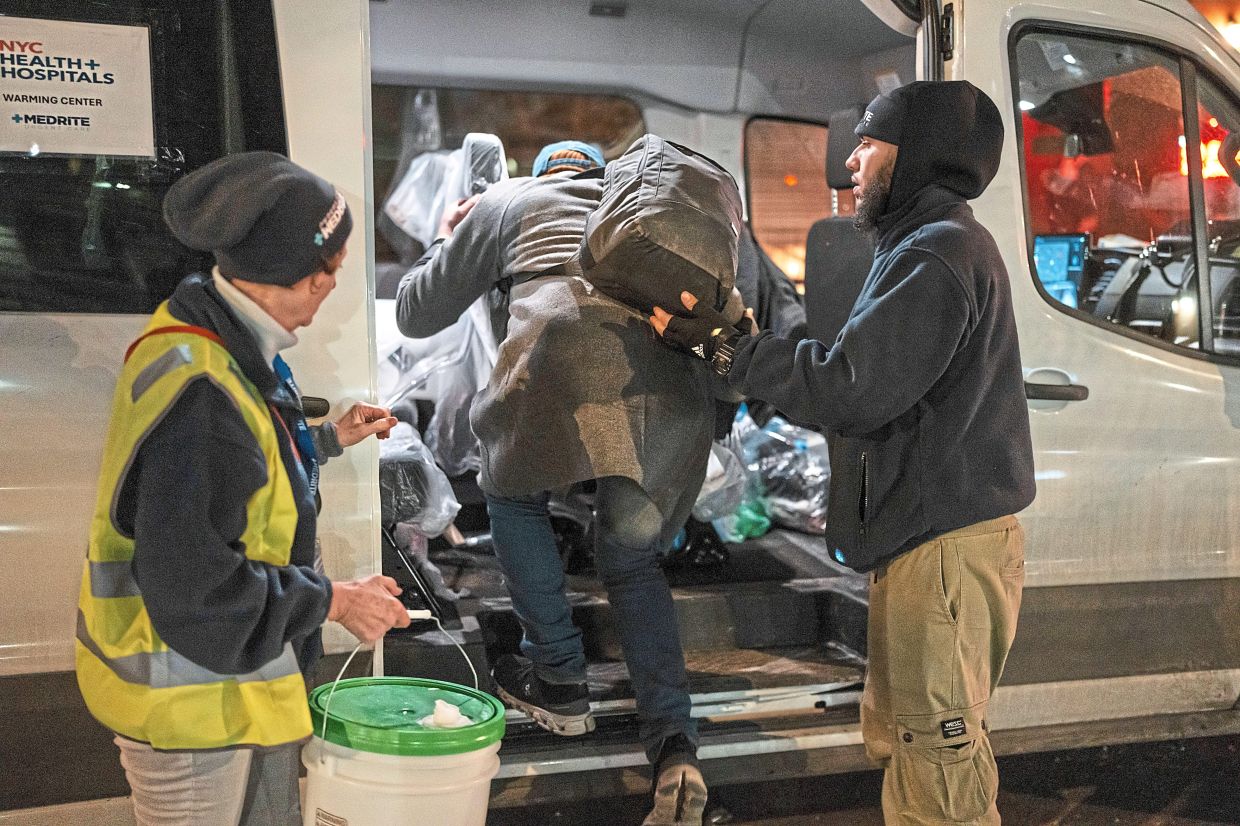
On Jan 29, with New York City plunging into a stretch of persistent, piercing, and ultimately fatal cold, NYC Health + Hospitals proposed a new outreach programme: Why not send out vans to find people sleeping on the street who were sick, instead of expecting those people to find their way to a hospital on their own?
The programme, initiated partly by the effectiveness of outreach teams that distributed coronavirus vaccines during the pandemic, has since sent out about 16 vans every night across every borough except Staten Island. The teams have had nearly 10,000 conversations with homeless New Yorkers and have given out supplies to about 90% of those people. The programme, called WARM (Winter Access, Relief and Medical), has cost the city US$3.6mil (RM14.2mil).
WARM is part of the city’s push to reach some of the 4,500 people sleeping on New York’s streets, especially during a brutal winter in which at least 20 people have died after exposure to the cold.
The recent cold snap was so severe that more than a dozen people died of hypothermia at private residences, in addition to those found outside, the city said on March 2.
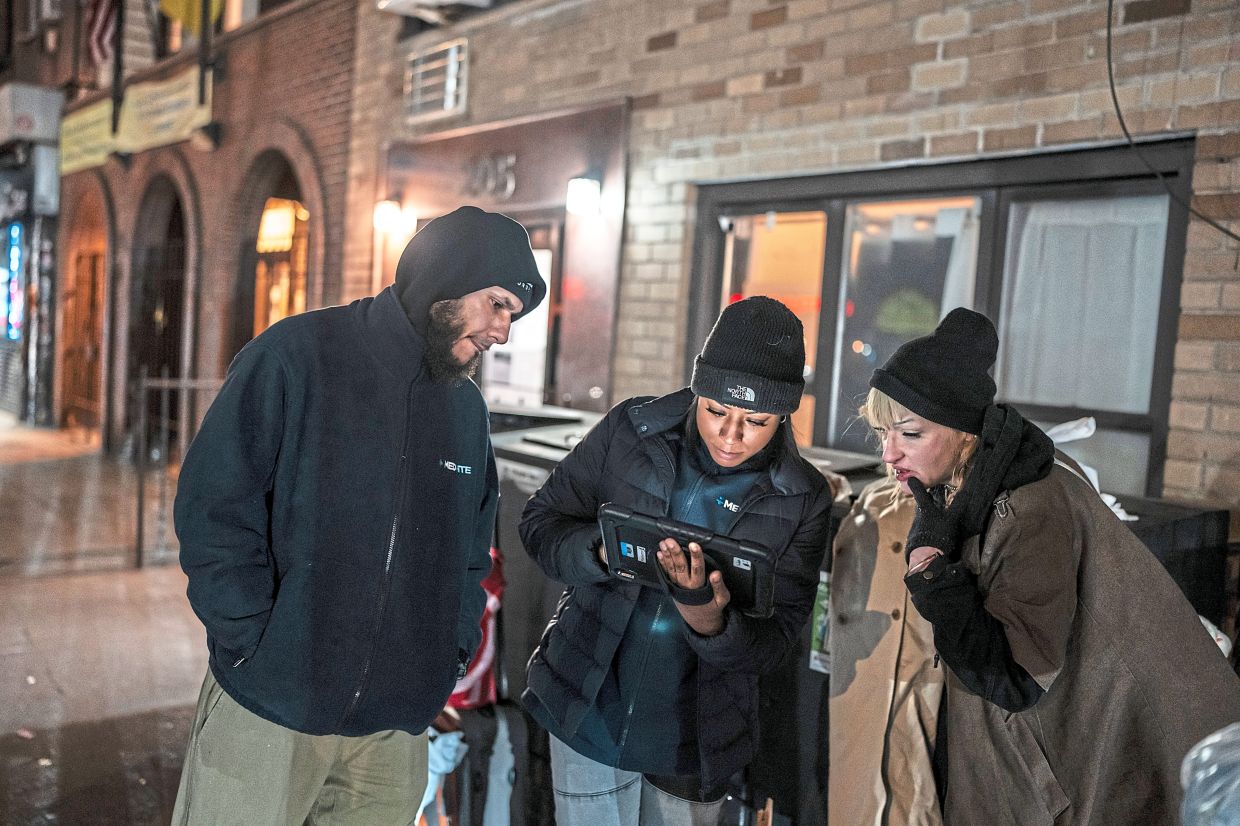
Helping people who live on the streets can be a hefty task. The WARM initiative supplements outreach by the Department of Homeless Services; every Health + Hospitals van has a clinical professional who can evaluate people’s medical needs.
These teams regularly encounter complicated questions: What do you do when people refuse help? How do you drive away from homeless New Yorkers who say they want to sleep outside?
“Our approach for the WARM programme is to flip the traditional script,” said Dr Ted Long, chief medical officer of clinical services and population health at NYC Health + Hospitals.
“Not to tell people what we want them to do, but ask people what we can do in the moment, to build trust.”
The outreach teams evaluate each person they encounter, looking for signs of hypothermia, frostbite, open wounds or mental illness. But if a person shows no such signs and doesn’t want to come inside, the team doesn’t push, instead handing over blankets and cartons of food to those who will accept them. Sometimes they also offer coats or socks.
Crisscrossing lower Manhattan on a Sunday night, the white van with three workers met a series of New Yorkers who explained why they were reluctant to come indoors, and some who were hesitant even to talk to city workers.
In the East Village, Vinny Torres was sleeping a few doors down from the Ray’s Pizza on St Marks Place, a busy thoroughfare with dozens of party-hopping 20-somethings passing by. His body and face were hidden under a blue sleeping bag.
When Reistroffer and her teammate, Margie Rivera, a case manager, approached him to offer food, Torres, 56, replied: “What’s for dinner?”
The workers handed Torres a white carton containing sandwiches, bananas, cereal and milk. Then they asked if he would be open to coming into their van so they could drive him somewhere warm, like a warming centre, shelter or Department of Homeless Services drop-in centre, where he could spend the night away from the bitter wind.
Torres had no interest. He explained that he had spent time in the city’s shelters before and had seen people violently attacked. Still, Torres said the city could be doing more to help people like him.
“What are your frustrations?” Rivera asked.
“We need more people like you coming by and seeing how we’re doing,” Torres said, his face still concealed by his sleeping bag.
Uspenskai, on Second Avenue, offered a different view: She has had more frequent and supportive interactions with outreach workers in recent weeks.
“The cops used to come and say, ‘Clean up, throw your stuff out’,” she said.
Rivera asked if she could schedule an appointment for Uspenskai at Bellevue Hospital, where she could be evaluated for her anxiety and her frostbite.
“I’m bad at keeping time,” Uspenskai said. “I’m bad at adulting.”
By New York’s municipal buildings downtown, more people tucked into sleeping bags declined to come indoors. They were sleeping in an encampment in a park near Lafayette Street.
The encampment appeared to have been cleared out recently; scattered around were cardboard boxes, heaps of sleeping bags, and haphazard structures that had been abandoned.
But three people remained, all of them uninterested in leaving the park that night.
“I feel safe here,” said Dawa Singh, his face and body hidden under a sleeping bag, though he accepted a white blanket from the outreach team. They placed it over his sleeping bag for an added layer of warmth.
Torres, in the East Village, finally poked his head out of his sleeping bag as the outreach team said goodbye. Then he burst out with something unexpected: “I love you!”
Reistroffer teared up as she turned away from him. Then Torres drew his head back under its cover, nestled against the building on Third Avenue, and settled down to sleep. – ©2026 The New York Times Company