Kennedy Odede knows what poverty is. He grew up in Kibera, the largest slum in the Kenyan capital Nairobi. It's a place filmmakers and aid organisations visit to capture images of extreme poverty.
A railway line runs past corrugated iron shacks, mountains of rubbish and well-trodden paths, but also past workshops, stores and children who turn whatever they can find into toys - a testament to the resilience and entrepreneurial spirit of Kibera's residents.
Now, at 40 years old, Odede says he never wanted to accept the assumption that poverty means hopelessness and that the people of Kibera and other urban slums need to be rescued from their plight by others.
"I also hated this idea of somebody coming from the global north to save us," he says. "They don't understand us. [...] We from this community in Kibera, we will save ourselves."
As a teenager, he organised football tournaments in the slum, and later he organised street cleaning, but also HIV and AIDS awareness campaigns.
Twenty years ago, he started a group called Shofco (Shining Hope for Communities). Its first official project was a girls' school in Kibera, says Odede, who was awarded the United Nations Nelson Mandela Prize this year.
The school was a success and led some of the students to New York and elsewhere.
"We have students, girls who are now in Columbia University," he says proudly. "talent is universal, but opportunity, no. [...] So we have to offer this opportunity."
It is not yet possible for Shofco to do without foreign donors. But Odede and his staff attach great importance to partnership and the personal responsibility of the slum dwellers.
Advocacy groups save money together, with membership fees of 100 shillings (RM3) per month.
The groups decide how to use the money they save and are networked with each other. There is now a community bank that grants loans to start-ups.
From street vendor to shop owner
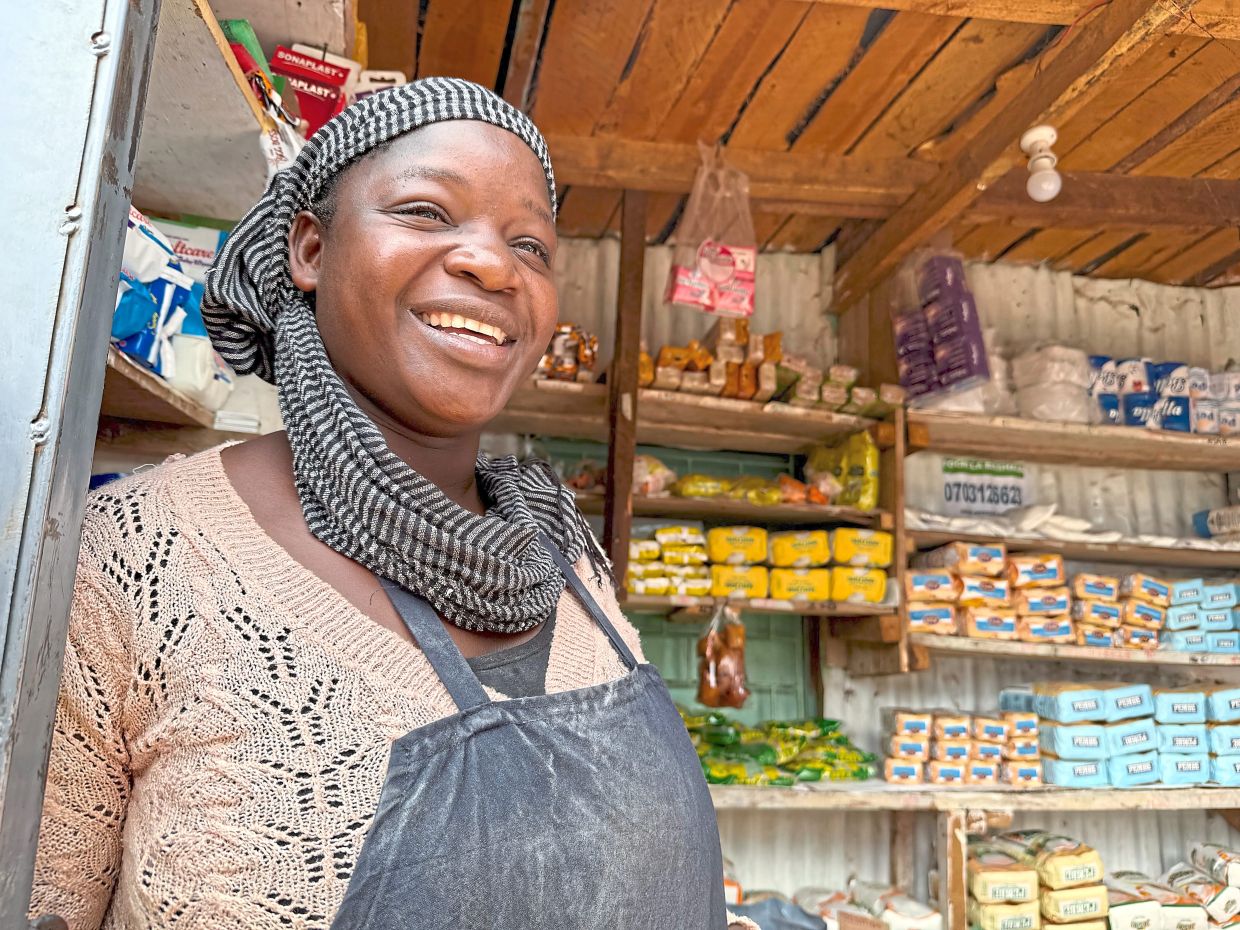
Mary Abongo is one such entrepreneur. A single mother, she once sold chapati, a type of flatbread and popular street food, for a meager income that barely covered rent or school uniforms.
Through Shofco's business courses - teaching basics of entrepreneurship, financial management and economic calculation - Abongo received a grant and a loan from the community bank.
She no longer needs to worry about rent when she goes to bed at night, she says as she weighs rice and beans in paper bags for her customers.
Packets of flour are stored on wooden shelves, while soap and other everyday items are stacked on others. There is even a light bulb hanging from the ceiling so that Abongo can keep the shop open in the evenings.
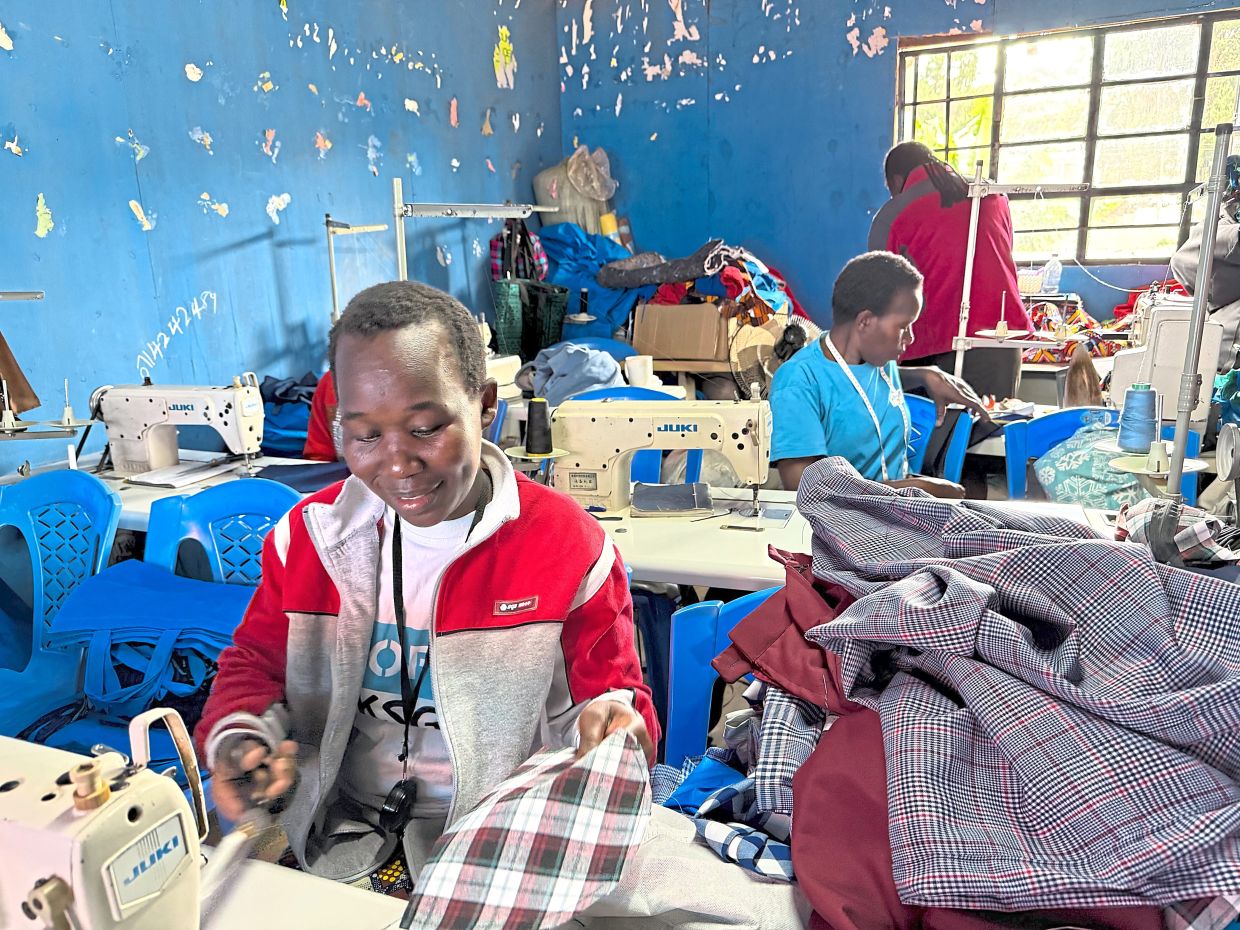
The promotion of women is a key focus of the work – in the past two years, more than 17,000 women have received training in sewing or handicrafts.
They can continue to use the sewing machines in the Shofco workshops after the courses to sew and sell clothes or school uniforms.
Over the past two years, more than 9,000 young people have received training or an internship through Shofco projects, and nearly 3,000 young people have been taught digital skills that will lead to online jobs.
Most of these jobs are in the informal sector, which makes up the majority of the Kenyan economy. But it means an income – and the hope of being able to work their way up to the next step.
The organisation's sky-blue logo is not only visible in workshops and educational institutions. Water tanks and a treatment plant for clean drinking water are designed to help prevent diseases caused by contaminated water.
Most families in Kibera live in extremely cramped conditions, and many have no electricity or running water.
Without connection to the sewage system, slum dwellers have to buy their water in large canisters – at a price that is higher than that of tap water in the more affluent parts of the city.

Libraries as safe places
The libraries that Shofco has built in Kibera and at 22 other locations are intended to help improve the situation.
In the room on the second floor of a building in the middle of Kibera, schoolbooks are stacked tightly together. Despite the school holidays that have been going on for weeks, the reading room is full.
Two girls sit next to each other in front of an open schoolbook and eagerly take notes, while a little girl leafs through a picture book.
A young man has his elbows propped on the table and his hoodie pulled low over his face, completely detached from the outside world and engrossed in his book.
The libraries are also safe places for children and young people, says Julius Mutundu, one of the Shofco organisers in Kibera who also lives in the community.
Creating opportunities
The lack of opportunities for young people is a huge social problem in this East African country, given the high youth unemployment rate.
Even middle-class university graduates often struggle to find work, and the challenge is even greater for young people raised in urban slums or underprivileged rural areas.
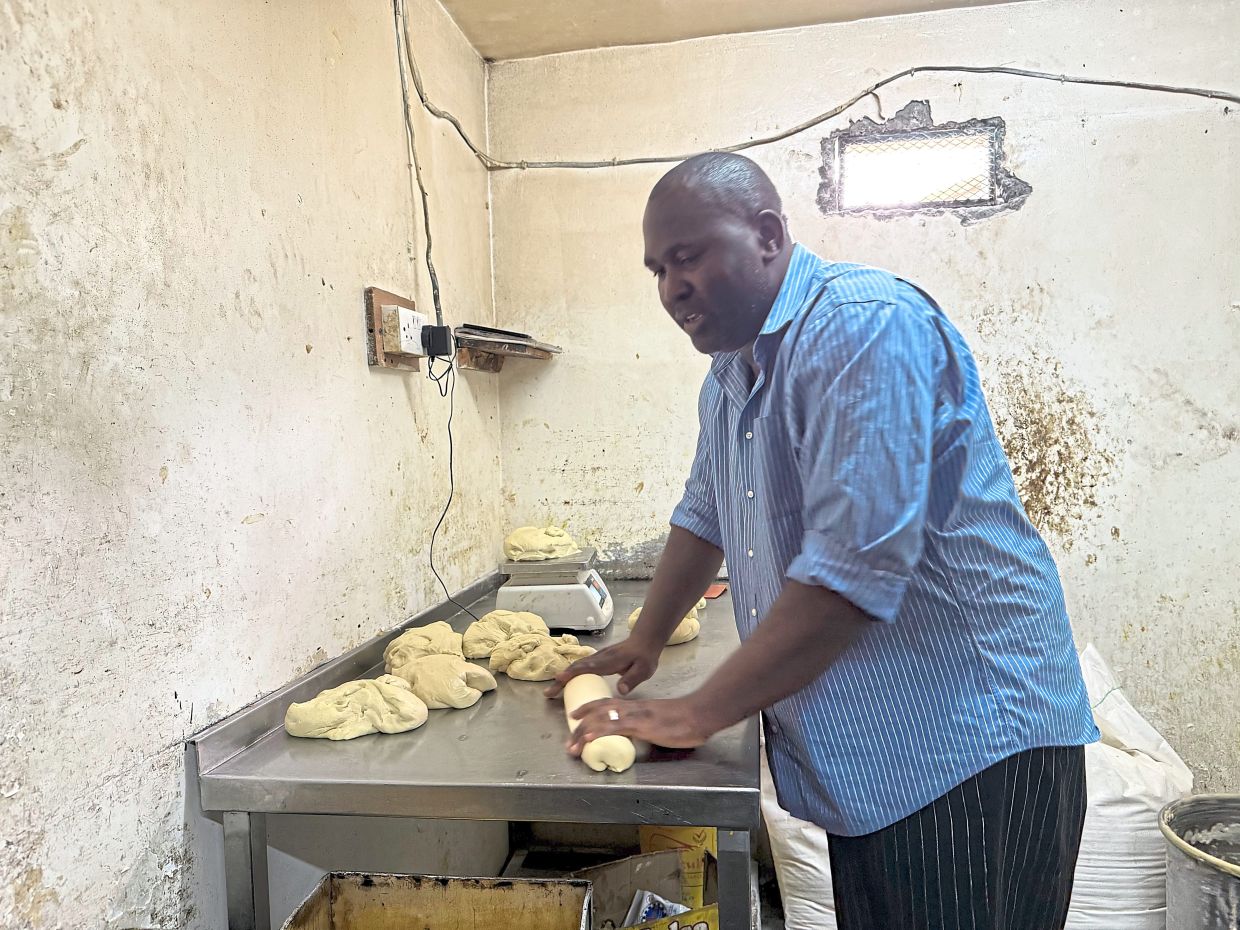
Greyson Nyenze is one of those making a difference. The extremely tall baker with a deep, infectious laugh regularly welcomes young people to his bakery, where he teaches them his craft over a period of three months.
While this may not resemble formal vocational training as it is understood in some Western countries, for these youths it is a gateway to the working world.
Nyenze slaps dough onto the worktop and shapes loaves of bread as he speaks.
It's not just the craft or baking recipes, he says. Young people also have to learn that it's not enough to work well one day, but every day.
Many young people hung around on the streets after leaving school until they came to Nyenze's bakery. The baker not only teaches baking techniques, but also self-confidence and pride in a job well done.
Isn't he afraid that so many trainees will compete with him? Nyenze laughs again. No, he says. Some of the young people have opened their own bakeries - and customers think that he has a franchise. – dpa