
Basket the border collie seems to have a way with words. The seven-year-old dog, who resides on the Upper West Side of Manhattan, knows the names of at least 150 toys – “froggy,” “crayon box” and “Pop-Tart,” among them – and can retrieve them on command.
Basket built her vocabulary thanks to the dedicated efforts of one of her owners, Elle Baumgartel-Austin. She began the language lessons when Basket was a puppy.“I would play with her, say the name of the toy – say the name of the toy a lot of times,” Baumgartel-Austin said. She started with 10 toys, adding more as Basket mastered them.
“There never seemed to be a limit,” she said. “It’s basically like, how many toys could I feasibly store in my tiny apartment?”
Now, in a new study, scientists have found that Basket, and other dogs that share her advanced word-learning ability, have a skill that puts them functionally on par with 18-month-old children: They can learn the names of new toys not only through direct instruction but also by eavesdropping on the conversations of their owners.

Such sophisticated word learning appears to be rare among dogs, and recognising the labels for specific objects is a far cry from acquiring language.But the study’s findings add to evidence that the cognitive and social abilities that underpin certain kinds of language learning are not limited to humans – and highlight just how adept dogs are at reading human signals.
“They’re very good at picking up on these cues,” said Shany Dror, a postdoctoral researcher at the University of Veterinary Medicine, Vienna, and an author of the study. “They’re so good that they can pick up on them equally well when the cues are directed to the dog or when they’re directed to someone else.”
The study, which Dror conducted at Eotvos Lorand University in Budapest, was published in the journal Science.
Paying close attention
Although many dogs can understand simple commands, like “sit” or “stay,” picking up the names of specific objects – a skill known as label learning – appears to be a much tougher task. Scientists do not fully understand why.
But over the past two decades or so, scientists have identified a handful of outliers, canine prodigies that know the names for dozens or even hundreds of toys and can remember such labels for years. “They accumulate these huge vocabularies,” Dror said.
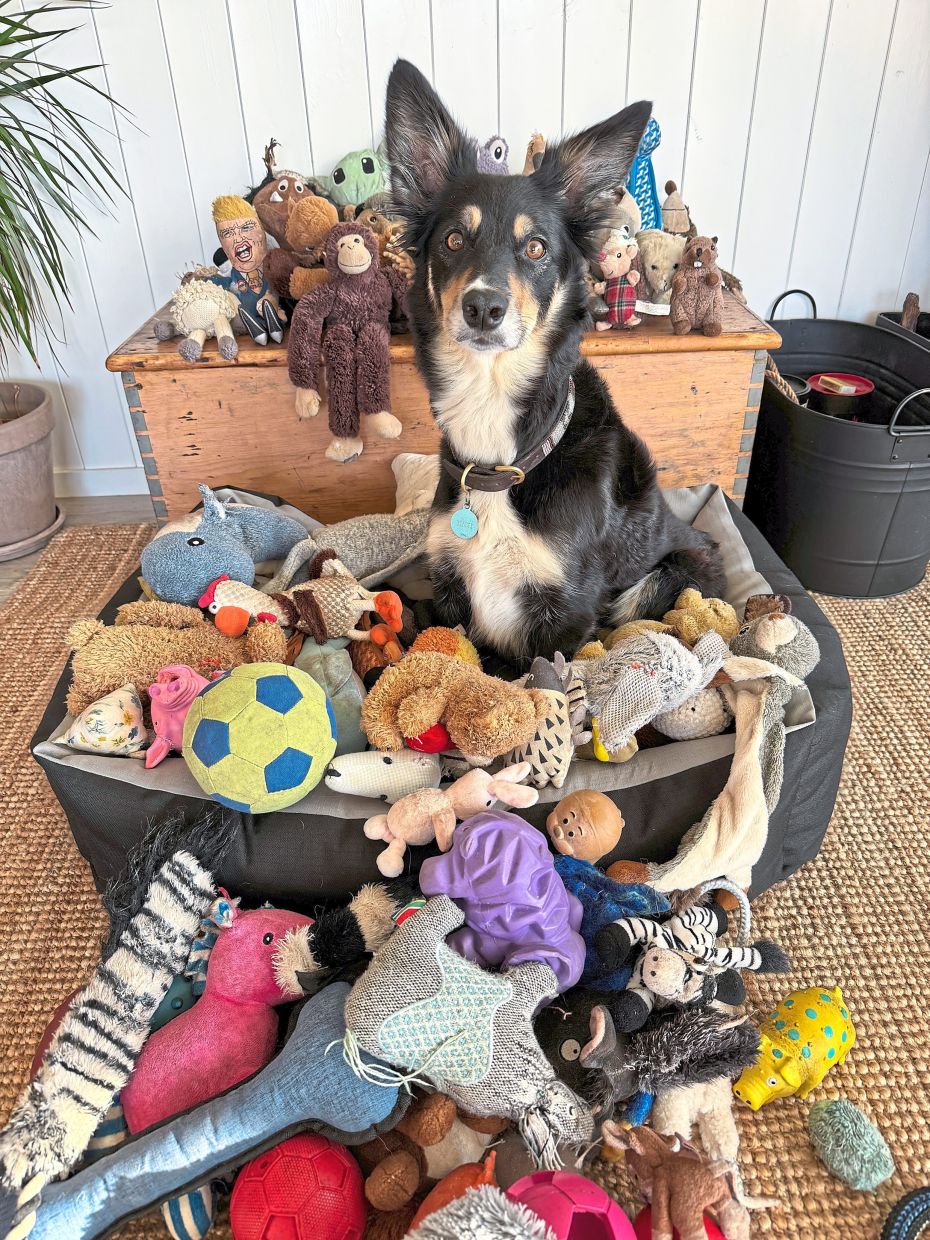
Herding dogs – and, in particular, border collies – seem to have a particular knack for this kind of word learning, perhaps because breeders once favoured animals that paid especially close attention to what their owners said and did. But even among these breeds, label learning appears to be rare.
When dogs do manage to amass large vocabularies, they tend to do so through direct interactions with their owners, such as play sessions or intentional training, Dror said. But some owners also reported that once their dogs had learned these labels, they seemed to pick up on them in overheard conversations.
Basket has been known to do that with the word “avocado,” which corresponds to one of her favourite dog toys. Baumgartel-Austin described Basket’s response to times she and her wife have casually discussed buying avocados – real ones – for themselves.
“She will bring over the avocado,” Baumgartel-Austin said. She adds that the dog (who is named after pets kept by Gertrude Stein and Alice B. Toklas) does the same with other toys that share a name with everyday items.
The researchers wondered whether dogs like Basket might not only recognise familiar labels in overheard conversation, but also learn new ones that way.
Children can pull off that feat as young as about 18 months old. But it’s a deceptively complex task, one that may involve following the gaze, tracking the attention and understanding the perspective of other people.
'Gifted word learners'
In the new study, Dror and her colleagues tested 10 individual dogs that had already been identified as “gifted word learners.” (Their subjects included seven border collies, one Labrador retriever, one mini Australian shepherd and one Australian shepherd/blue heeler cross.)
They asked the owners of these dogs to present a novel toy to another human family member while their dogs looked on. The human participants passed the toy back and forth, using its name in a series of simple sentences, such as, “This is a stingray,” and, “Do you want the stingray?” Throughout these short conversations, neither person addressed or looked at the dog.
Each dog was introduced to two new toys in this manner over the course of several short sessions spread across multiple days.
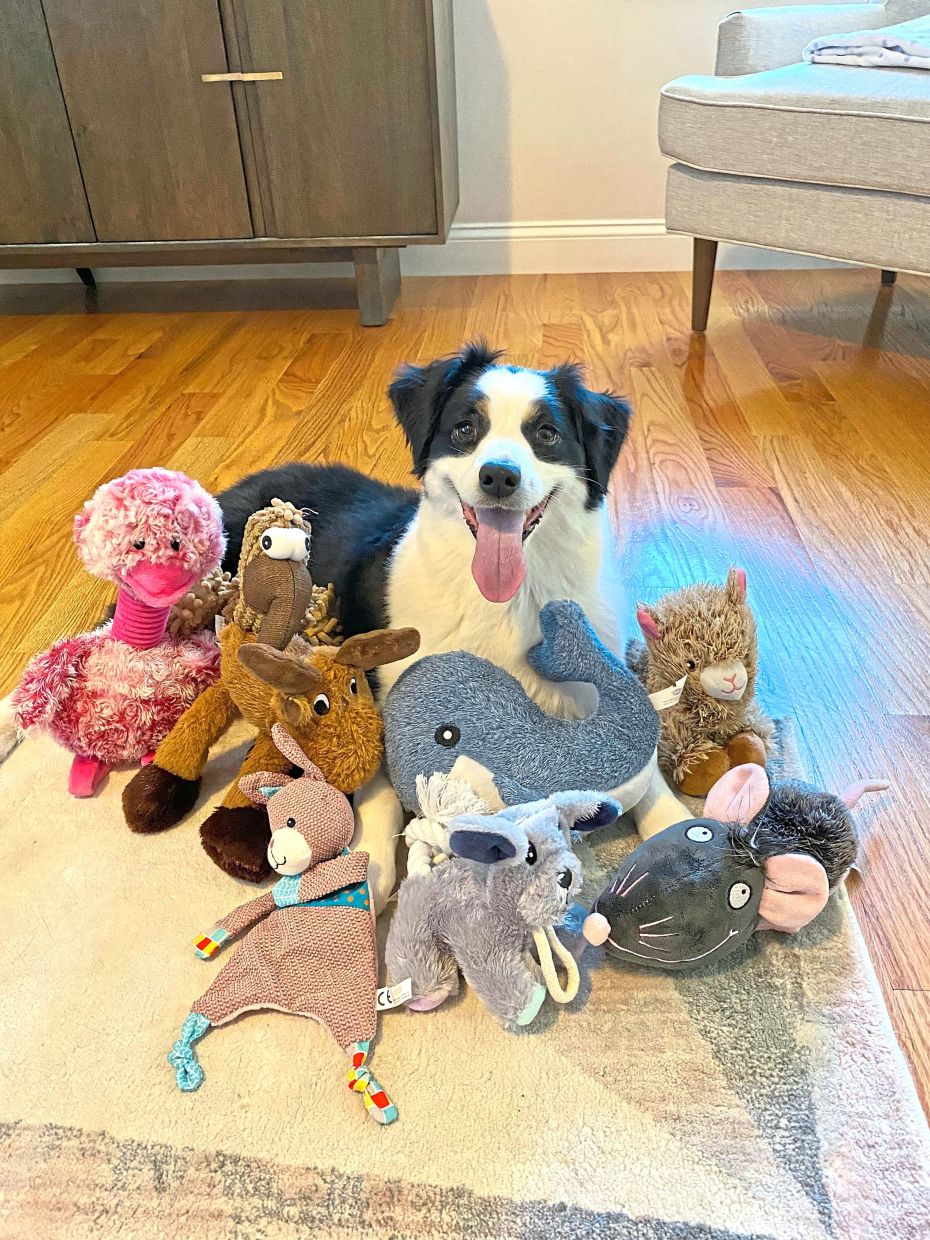
Several days later, the owners put the dogs’ knowledge to the test by placing the two new toys, plus nine familiar ones, in a room out of sight. Then they asked the dogs to retrieve various toys by name.
On average, the dogs retrieved the new toys approximately 80% of the time, a success rate equivalent to when the owners introduced new toys to the dogs directly. Individually, seven of the 10 dogs, including Basket, performed significantly above chance. (A control group of 10 border collies that had not demonstrated unusual word learning abilities did not seem to be able to learn labels from overheard speech.)
“I think these seven dogs might be doing something very impressive that indeed might be very similar to what young children do,” said Federico Rossano, a comparative cognition researcher at the University of California, San Diego, who was not involved in the research.
But he thinks the study could have benefitted from sending experimenters into owners’ homes to oversee the training.
“I am looking forward to seeing it replicated in maybe a little more controlled way,” he said.
Expected outcome
Juliane Kaminski, who directs the dog cognition centre at the University of Portsmouth in England, said that she found the results convincing but not surprising.Other studies have documented that dogs can learn object labels indirectly.
In 2004, for instance, Kaminski and her colleagues reported that Rico, a border collie, could learn the names of new objects through the process of elimination – essentially inferring that new, unfamiliar words must refer to new, unfamiliar toys.
Indeed, an additional experiment by Dror and her colleagues showcased these dogs’ ability to learn new words under a variety of conditions.Owners showed their dogs a new toy, put the toy inside a bucket and then lifted the bucket so that the toy was no longer visible.
Only then did they introduce the label for the toy, using it in short sentences as they looked back and forth between the bucket and the dog.After several such training sessions, the dogs were able to correctly retrieve the new toys by name nearly 80% of the time on average.
Exactly what cues the dogs are using to learn the new words remain unclear, and scientists still have a lot more work to do to learn what sets these gifted word learners apart. “We do not fully understand yet what rule these dogs have understood in order to be able to do this more readily than other dogs,” Kaminski said.
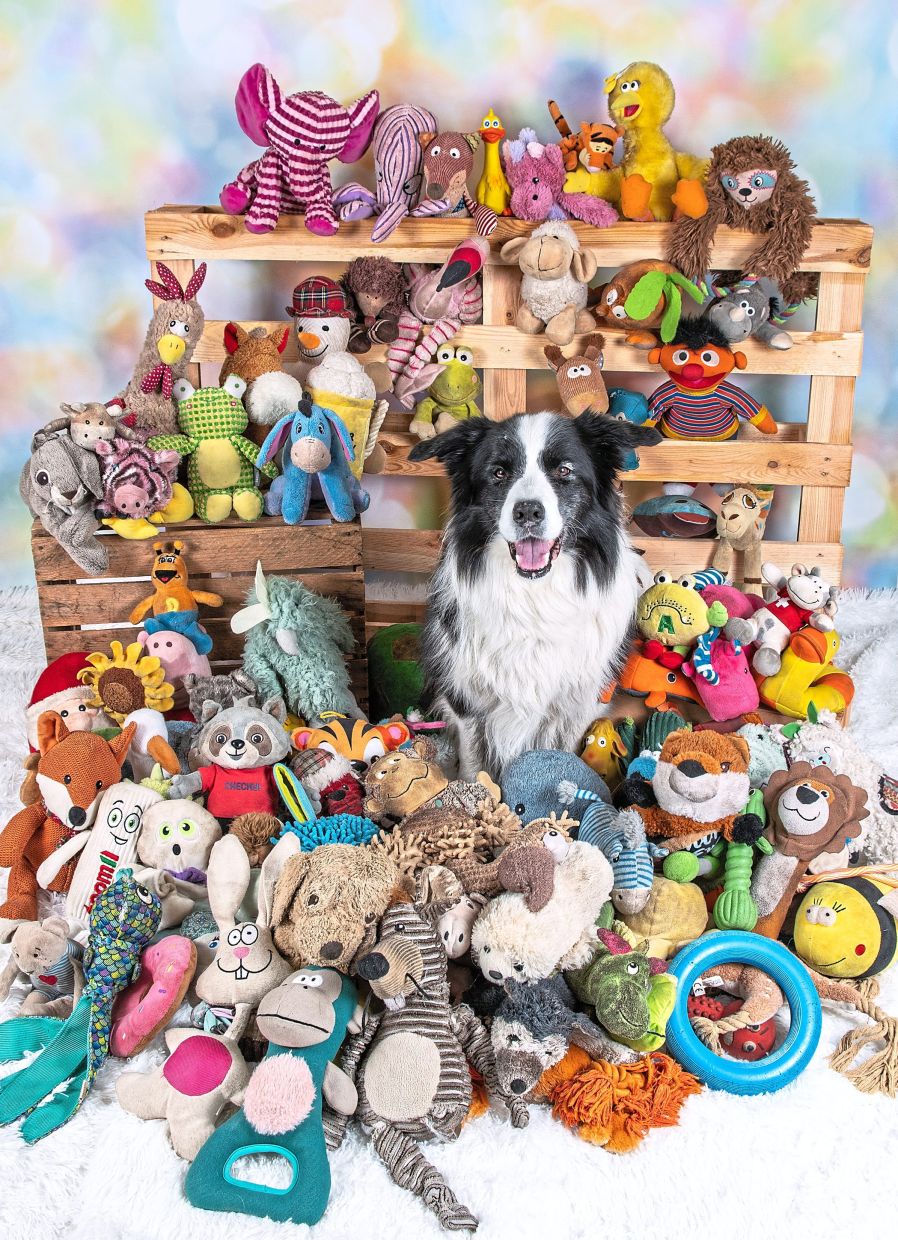
In a study published in the journal Scientific Reports last November, Kaminski and her colleagues found that compared with typical dogs, label learners were more interested in and focused on novel objects and exhibited better self-control.But it’s unclear what comes first, she noted. Do these traits allow dogs to learn the names of new toys? Or does learning and repeatedly practicing these object labels help dogs hone these skills?
One challenge is that label learning appears to be a rare enough skill in the canine kingdom that scientists don’t have many subjects to study.
“We’re always searching for more dogs,” Dror said. “We would be happy for any dog owner that thinks their dog knows the names of toys to reach out.” – ©2026 The New York Times Company