

It was over four centuries ago to the day on Oct 18 that Filipinos set foot on the North American continent for the first time. Now, Filipino Americans are working to sustain a cultural footprint.
During celebration of October's Filipino American History Month, many Filipinos are seeking their cities' acknowledgment of "Filipino Towns". This is a cultural district designation similar to Chinatowns, Japantowns and Koreatowns in the United States that highlights the contributions of expat and immigrant populations to a major city's overall identity.
That recognition can be through landmarks, event support or even permanent signage. Three years ago, Los Angeles' Historic Filipinotown – first designated as a neighbourhood in 2002 – constructed a gateway arch, and Little Manila in New York City's Queens borough debuted an official street sign.
Now, Las Vegas in Nevada has joined the club.An official "Filipino Town Cultural District” street sign was unveiled recently to great fanfare – six months after Clark County commissioners unanimously passed a resolution affirming the distinction.
"That was a great day,” Rozita Lee, the original Filipino Town Las Vegas board president, recalled about the county's approval.
"A great day because we realised that the government actually recognised us Filipinos as a valid, solid entity here in Nevada. We were all so happy.”
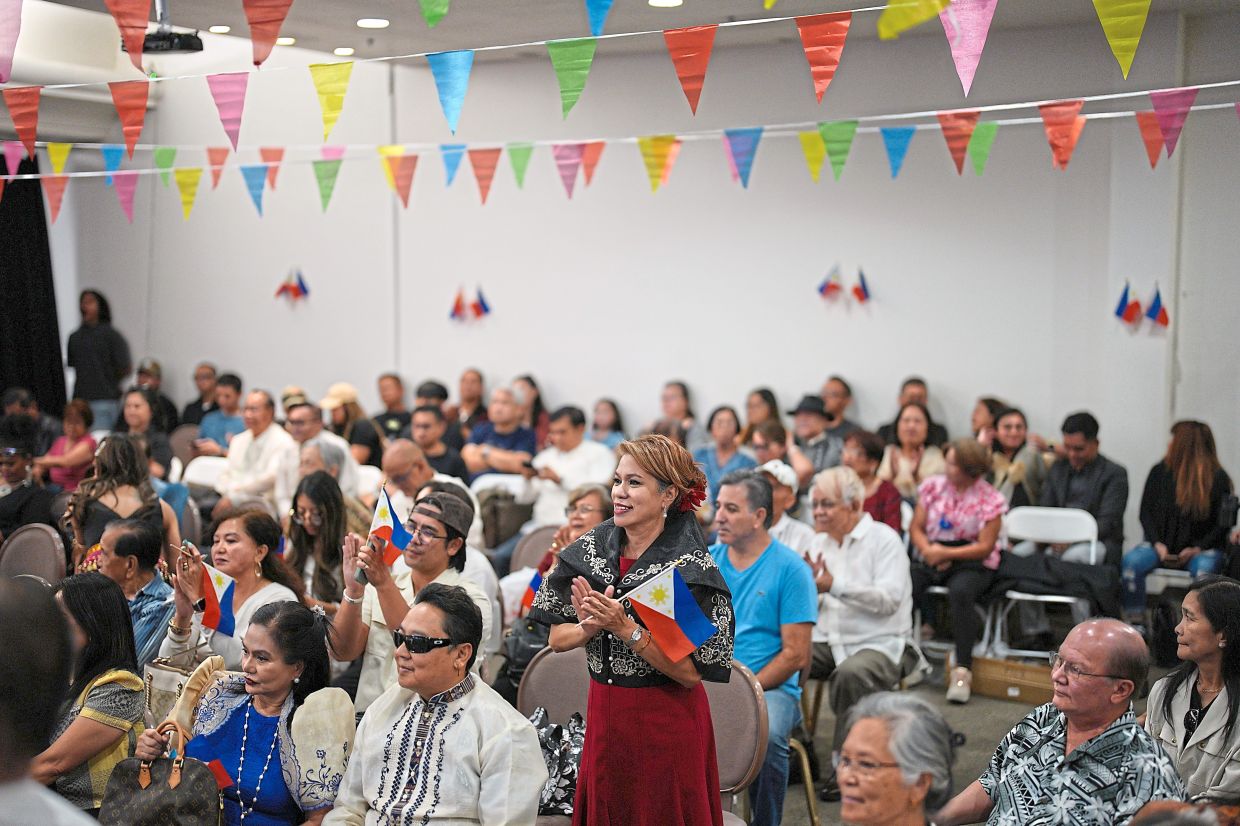
Lee, 90, has lived in Las Vegas for nearly 50 years. She has seen a 1.6km corridor east of the Las Vegas Strip blossom with Filipino small businesses, a radio station and chains like Seafood City supermarket, and Jollibee.
Last year, the Filipino Town board's first step was to gather data to bolster their proposal. Filipinos are the largest Asian group in metro Las Vegas with over 200,000 people.
They also spread the word among business owners."We visited the people that were in the area because we had to knock on doors and let them know of the possibility of this area being named Filipino Town, and (whether) they would support,” Lee said. "Everybody said yes.”
Now resigned from the board, Lee is currently planning a Filipino American Museum.
Current board president Bernie Benito is looking forward to making Filipino Town a site that tourists will consider.
"What we’re going to try to do is just to promote it culturally. We’re going to entice developers, investors to come into the area in order to set up their businesses,” Benito said.
The history
Filipino scouts on a Spanish galleon – a heavy, square-rigged sailing ship – landed on Oct 18, 1587, in Morro Bay, California, likely making them the first known Asian people to reach the US.
It would be nearly 200 years until Filipinos settled here starting in Louisiana and the West Coast.Pre-World War II, there were some Filipino enclaves made up mostly of single men.
They were not as prevalent as Chinatowns and Japantowns. A lot of them either were demolished or floundered as some men moved away, said Joseph Bernardo, an adjunct professor in Asian Pacific American Studies at Loyola Marymount University.
US colonial rule over the Philippines from 1898 to 1946 led to Filipinos studying English and assimilating to Western culture.
"They have a command of English that doesn’t necessarily tie them to an ethnic economy to survive in the US,” Bernardo said. "They can get jobs as nurses and accountants and lawyers and doctors with greater ease than other Asian immigrants.”
The US Census estimates 4.5 million Filipino people live in the US and less than half are immigrants. Registered nurse is the most common occupation, according to AAPI Data, a research and policy organisation.
"More Filipino Americans care about cultural pride and want a community space to reflect that,” said Bernardo.
Today, there are several Filipino Towns, some more active than others. Stockton, California's once vibrant Little Manila was torn down by a crosstown freeway in the 1970s.
But there are historic walking tours hosted by advocacy group Little Manila Rising. In San Francisco, an artist-driven Filipino Cultural Heritage District known as SOMA Pilipinas includes a community centre and public art works. Toronto, Canada, also has an active Little Manila.
Over two dozen residents excitedly posed for pictures in May in front of a brand new Seattle Streetcar outfitted in a Filipino Town-branded wrap. For them, it was a concrete symbol of their Filipino Town, which the Seattle City Council formally recognised in 2017. Devin Cabanilla, executive director of Filipino Town Seattle, applied to get the special streetcar.
"I think having that streetcar has really jump-started us because I mean to some extent the general public doesn’t care. So what if you have some law that says you’re Filipino Town? What are the visible markers of it?” Cabanilla said. "People do want something tangible.”
Cabanilla's great aunt and uncle, Dorothy and Fred Cordova, are credited with creating Filipino American History Month in 1992 through their organisation, the Filipino American National Historical Society.
Filipino Town is part of Seattle's Chinatown-International District. Besides restaurants and shops, Cabanilla hopes visitors stop to appreciate landmarks like the Dr Jose Rizal Bridge, named after the writer who advocated for Filipino independence. Or Uncle Bob’s Place, an affordable apartment building named for local Filipino American civil rights activist Bob Santos.
Future goals for Filipino Town include an official sign, events like poetry sessions and a summer block party.
"Our primary vision is to bring back the solidarity that we had when the International District was in its heyday and it was a multicultural place,” Cabanilla said. "I need people to understand it is not just Chinese, Japanese, East Asian stuff. It has always included Filipinos supporting and living in the district.” – AP
