
At the recent soft launch opening of Shibam Coffee in suburban Glendale Heights, customers swarmed in, lined the red-roped entrance area and stared in wonder at the lavishly decorated interior, with marble floors and Arabic calligraphy on the walls.
A few patrons started snapping photos even before getting to the main door. A teenager asked an employee setting up chairs if the Yemeni coffee shop was hiring.
What used to be a Chase Bank next to a Taco Bell in a busy plaza on North Avenue was now an immaculately designed cafe serving cardamom coffee and pistachio lattes to customers eager to become regulars.
“People kept asking (on social media) when we were opening and it took a long time, but we wanted it to be perfect,” said Moiz Baig, co-owner of the newly opened Shibam Coffee, the Dearborn, Michigan-based Yemeni coffee chain’s first-ever Illinois location. “The (Yemeni) coffee business is booming right now – no matter how many there are, people are still excited.”
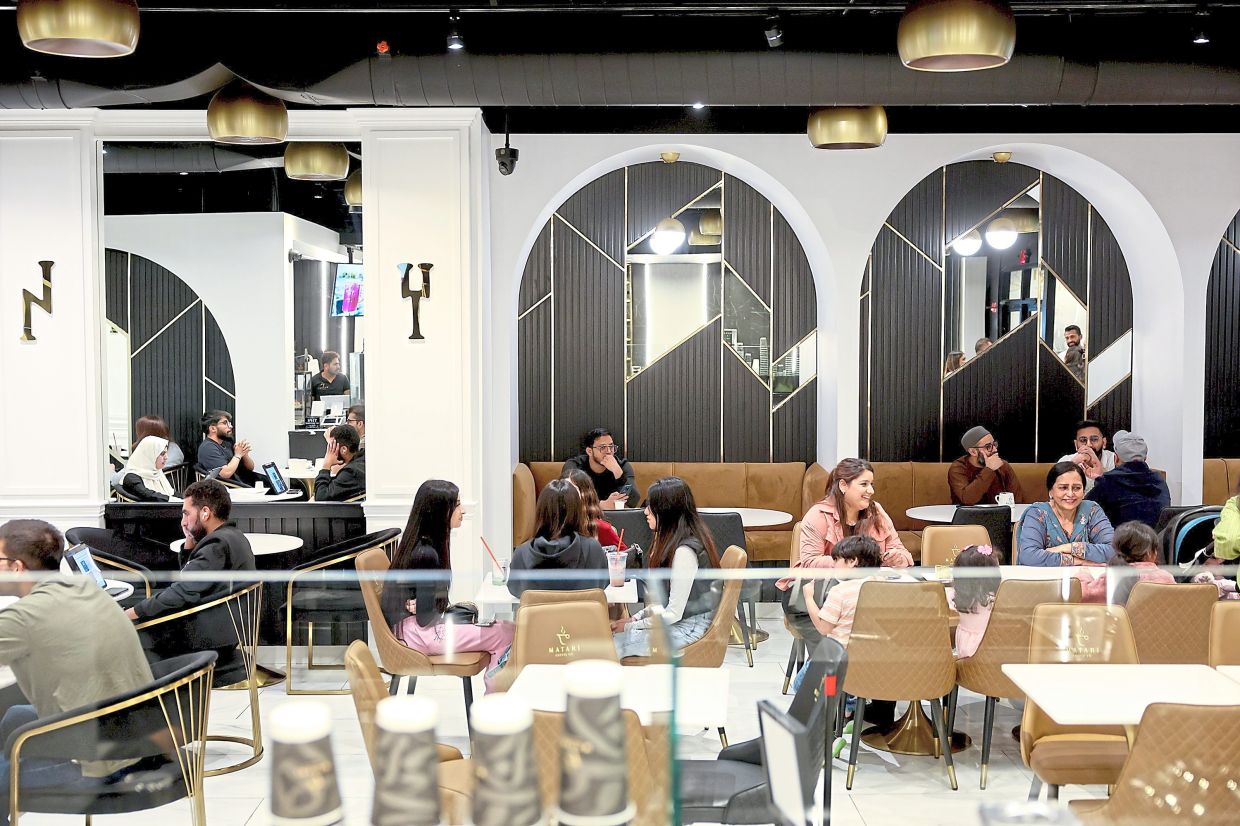
The recent boom in Yemeni coffee shops in the Chicago area, specifically in Lombard and other suburbs with a growing population of modern Muslim communities, underscores the rising demand for a place to socialise that isn’t tied to alcohol, but with a buzzy nightlife ambience.
“It’s a third place for people like us,” Baig said. “We don’t go to bars, but these coffee shops are booming because they are like ‘halal bars.’”
The recently popularised term “third place” was coined by American sociologist Ray Oldenburg to describe locations outside of the home and the workplace where people go to connect with one another.
While use of the phrase to describe Yemeni coffeehouses may be newer, the concept isn’t surprising: People just want a nice place to hang out, a place that feels safe. Great coffee and chai is the bonus.
“People feel like they belong because of the experience — it’s for families with kids, it’s for people who want to bring their laptop to work, it’s for young people (meeting friends),” Baig said. “No one feels out of place.”
Baig said he wanted his cafe to “bring something that was missing from the market,” with both a spacious interior and parking lot big enough to support the influx of customers. Shibam also offers a prayer room, and an area to wash up for those who want to pray. There’s also reservable rooms for large parties.
“That is something nobody has and it’s something that’s very unique,” Baig said. “People are booking these rooms for birthdays, for conferences, for meetings. (Shibam) is kind of becoming a home for a lot of people.”
The maximum occupancy limit for inside Shibam is 120, with space for nearly 100 more outside. Baig joked that even that might not be enough.
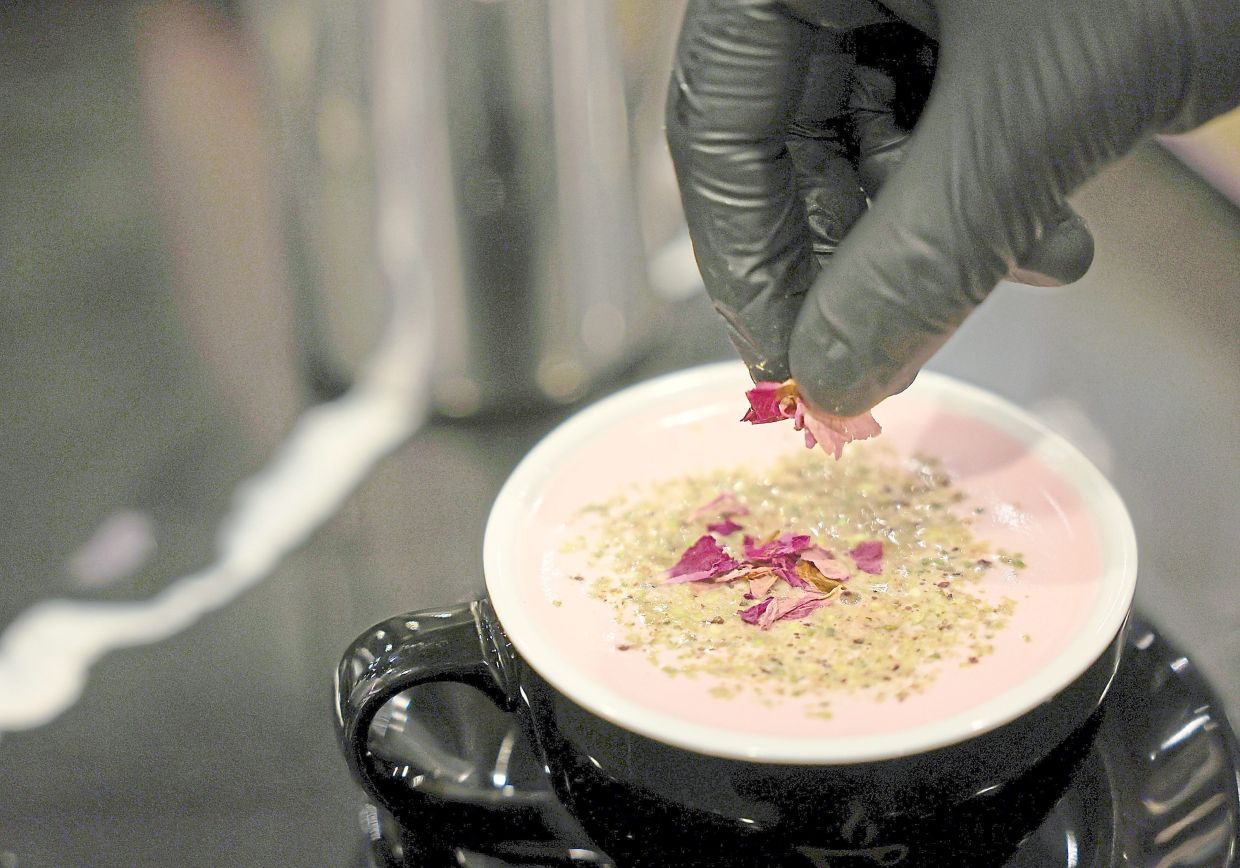
Irshad Khanlodhi, Baig’s father-in-law and co-owner of Shibam in Glendale Heights, said he revels in seeing young faces and older adults sitting back and feeling at ease in the space he spent so much time creating. He feels a sense of fulfillment for having provided a refuge for the community.
On most Friday and Saturday evenings when Yemeni coffeehouses particularly thrive, it’s usually a mix of all those groups, and then some. Urdu, Arabic and English fill the air, alongside the clanking of cups and whooshing of espresso machines.
“I love seeing this — can you believe there are almost 200 people here, inside and out?” Khanlodhi said on a recent Saturday night, or early Sunday morning. It was 1:30am, and there was an illuminating glow from the outside, where everything else was quiet and closed.
“It feels like we are somewhere else,” Khanlodhi said.
Yemeni coffeehouses have especially resonated in immigrant communities where people want to go out at night, but not to a bar or a club. They still want aesthetics and ambiance and music, but not so loud that conversations are hard to hold.
In the daylight hours, places like Shibam shift gears.
“This is the calmest it gets,” said barista Yamana Kurbi on a Thursday afternoon. “In the beginning it was crazy, I don’t know how I had the energy to keep up with it.”
The constant chatter and order numbers being called out were replaced by college students on holiday, a group of young girls snapping a photo of the bright pink dragonfruit refresher and remote workers enjoying a change of scenery, sipping a mufawaar in a beautifully lit cafe. There were people in street clothes, suits, salwar kameez and prayer thobes.
Kurbi is Yemeni, but was born and raised in Hyderabad, India. That crossover is not uncommon. She said she was surprised to see the amount of Yemeni, Muslim-owned coffee shops in the Chicago suburbs, something she didn’t see much of in India.
“I used to love going to cafes in Hyderabad, there are a lot of really good ones, but I don’t even think I can remember one that was Yemeni,” she said. “When I learned that (Shibam) was opening, I was so excited — my bloodline is Yemeni, so I am very proud to see that there are so many people who love these places.”
What started the boom: The “OG” Qahwah House and its quest to take coffee back to its roots
Yemeni coffeehouses like Shibam appeal to a diverse group of customers, not just immigrants who can relate to the culture. People of all ethnic backgrounds enjoy the same space. And despite the proliferation, there remains a strong demand for new ones. But the central idea behind each one goes back to coffee’s roots, something first pulled off by Qahwah House, a Yemeni coffee shop often referred to by customers and competitors as the “OG.”
Ibrahim Alhasbani, founder and owner of Qahwah House, said when the cafe opened in Dearborn, Michigan, in 2017, it was the first Yemeni coffee shop of its kind in the U.S., serving traditional Yemeni-style farm-to-cup coffee. Qahwah House now has more than 23 locations across seven states, and Alhasbani said he gets several requests a day from people interested in a franchise opportunity (though he’s set a high standard for which ones he accepts).
Since Qahwah House’s second location landed in Lombard in 2021, it set off a wave of new Yemeni coffee shops across the Chicago area.
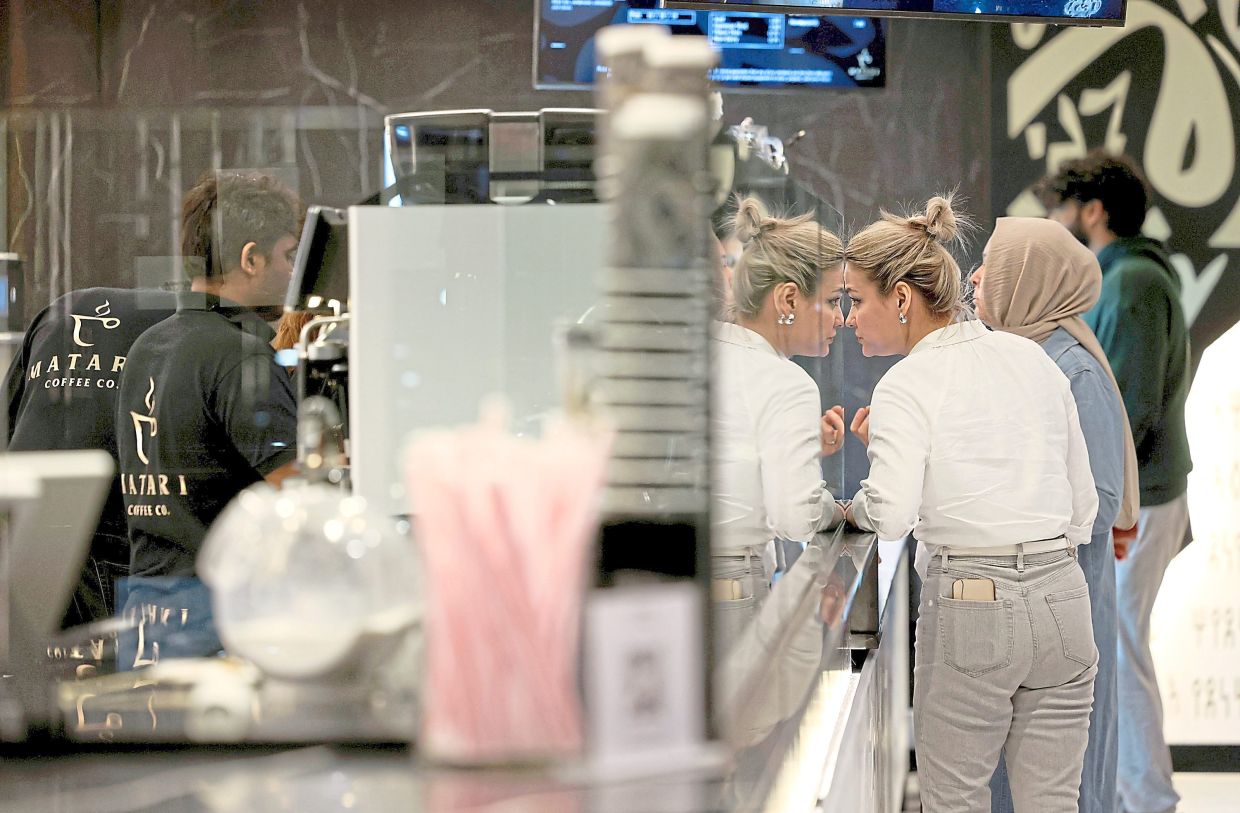
Haraz Coffee House is one that’s embracing the late-night, alcohol-free third space approach with a franchise model. There are locations in Niles and Orland Park and another soon opening in Aurora, with likely more to come.
Alhasbani said he’s “very proud” to have pioneered a new style of business that opened up the market to others, and is graceful about his competitors creating menus almost identical to Qahwah House.
“Our plan from the beginning was to bring Yemeni coffee and Yemeni coffee history to the forefront,” Alhasbani said. “This is where coffee comes from and this is how we can share our culture with different people from different backgrounds. Of course, we cannot do it only by ourselves.”
Coffee is a deeply personal topic for Alhasbani, who comes from a family with eight generations of coffee farmers. When Qahwah House first opened, he hoped to put Yemen on the map and educate people about the rich history of something so integral to people’s daily life. Yemen is known to coffee connoisseurs as the birthplace of coffee — the origin of coffee culture, with centuries-old brewing methods.
“We know what coffee means to us — it’s not from 2017 when we opened our first coffee shop or from yesterday, we have 300 years of knowing coffee, knowing the quality and the soil and the process,” Alhasbani said.
He said he’s proud to see that the cultural significance of the land and its coffee remains intact at each new cafe. He hopes all the new Yemeni coffee shop owners stay true to the farm-to-cup concept.
“You have to bring your coffee from Yemen,” Alhasbani said. “We need to help the farmers back home. If there are more Yemeni coffee shops open, that means we will need more coffee. We’re going to help the economy over there, we’re going to help create job opportunities. This is our plan from the beginning.”
Beyond Yemeni coffee, the recent surge in Lombard includes other Muslim-owned coffee shops embracing cafe culture, each with its own approach. – Chicago Tribune/TNS