
Some dolphins in Australia have a special technique to flush fish from the seafloor.
They hunt with a sponge on their beak, like a clown nose.
Using the sponge to protect from sharp rocks, the dolphins swim with their beaks covered, shovelling through rubble at the bottom of sandy channels and stirring up barred sandperch for a meal.
But this behaviour – passed down through generations – is trickier than it looks, according to new research published recently in the journal Royal Society Open Science.
Hunting with a sponge on their face interferes with bottlenose dolphins’ finely tuned sense of echolocation, of emitting sounds and listening for echoes to navigate.
“It has a muffling effect in the way that a mask might,” said co-author Ellen Rose Jacobs, a marine biologist at the University of Aarhus in Denmark. “Everything looks a little bit weird, but you can still learn how to compensate.”
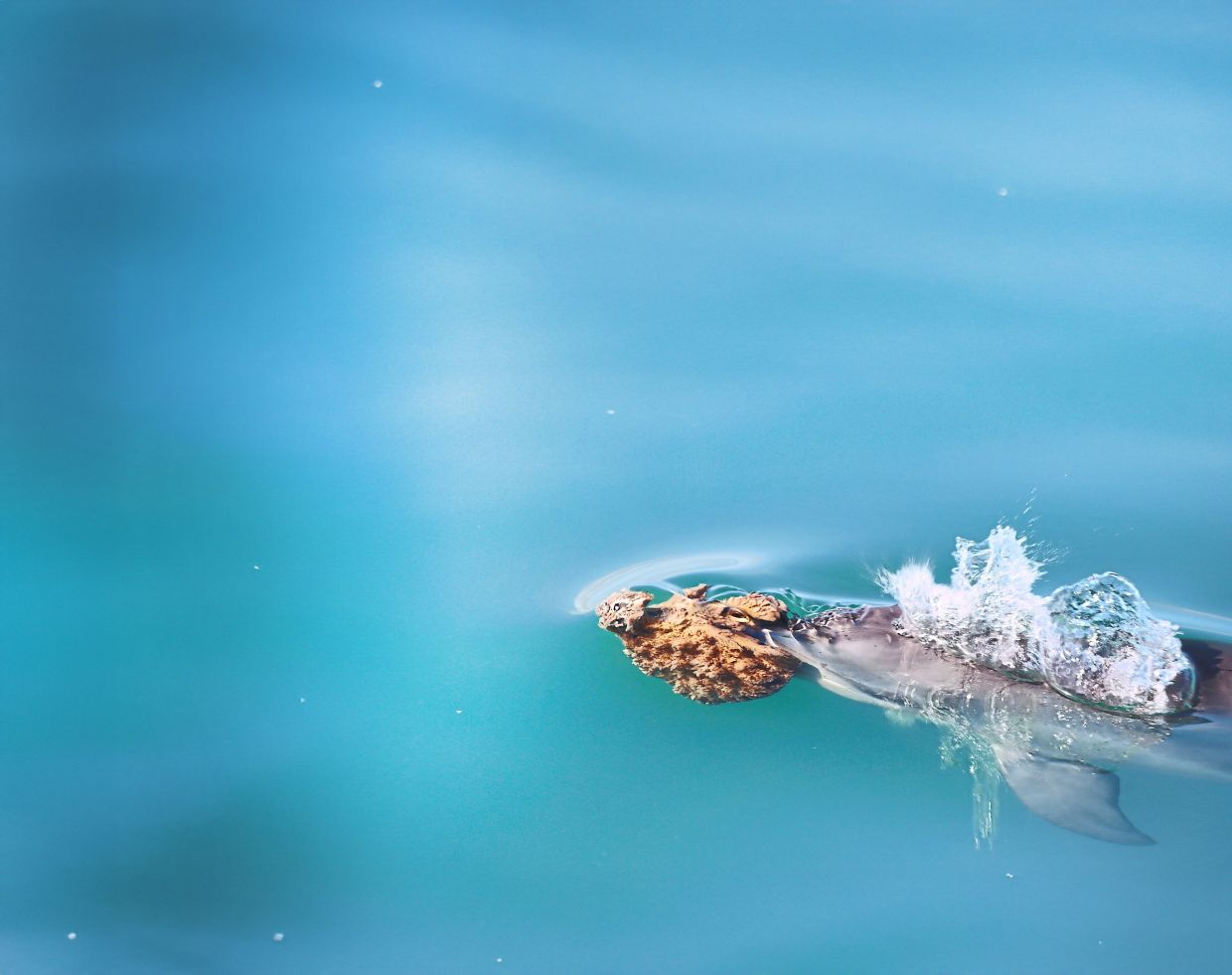
Jacobs used an underwater microphone to confirm that the “sponging” dolphins in Shark Bay, Australia, were still using echolocation clicks to guide them.
Then she modelled the extent of the sound wave distortion from the sponges.
Efficient technique
For those wild dolphins that have mastered foraging with nose sponges, scientists say it’s a very efficient way to catch fish. The wild marine sponges vary from the size of a softball to a cantaloupe.
Sponge hunting is “like hunting when you’re blindfolded – you’ve got to be very good, very well-trained to pull it off,” said Mauricio Cantor, a marine biologist at Oregon State University, who was not involved in the study.

That difficulty may explain why it’s rare – with only about 5% of the dolphin population studied by the researchers in Shark Bay doing it. That’s about 30 dolphins total, said Jacobs.
“It takes them many years to learn this special hunting skill – not everybody sticks with it,” said marine ecologist Boris Worm at Dalhousie University in Canada, who was not involved in the study.
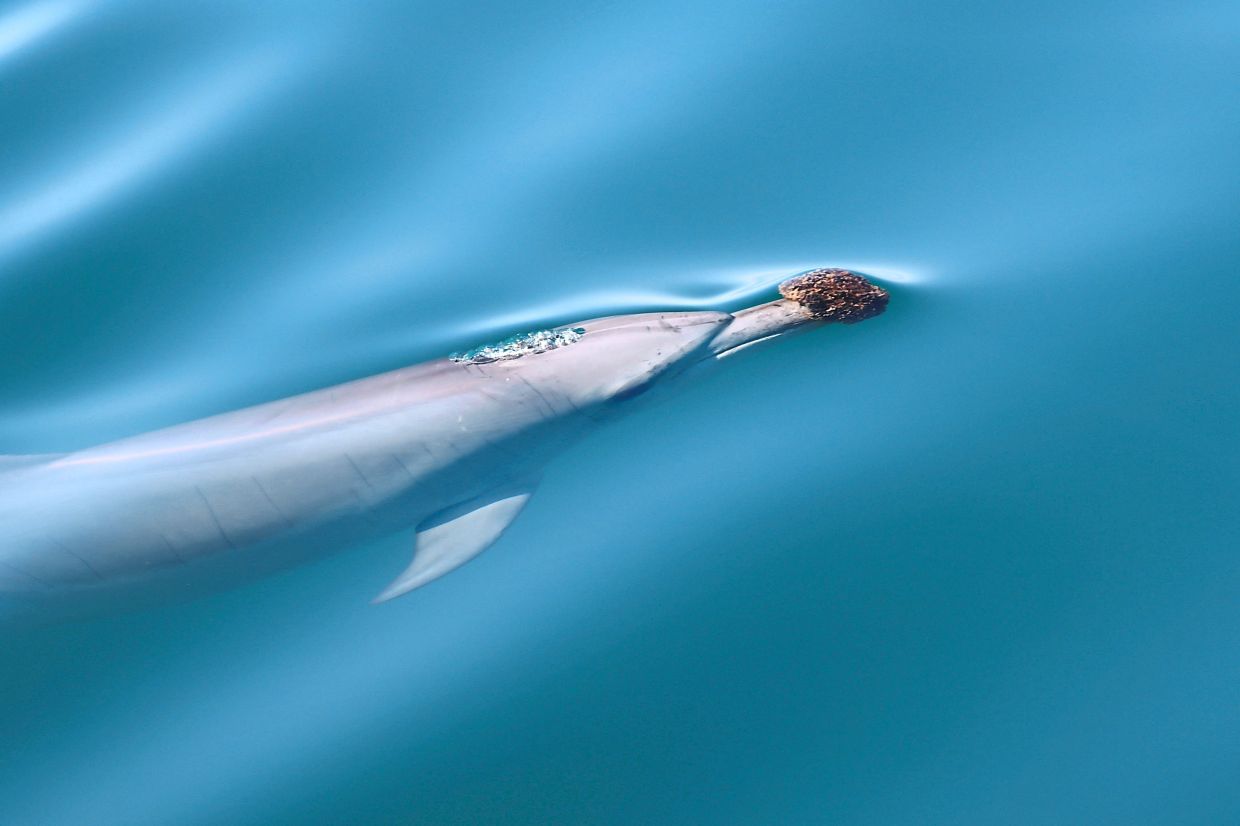
Dolphin calves usually spend around three or four years with their mothers, observing and learning crucial life skills.
The delicate art of sponge hunting is “only ever passed down from mother to offspring,” said co-author and Georgetown marine biologist Janet Mann. – AP