Completely unfazed by camera clicks and luring calls, Baraka munches on the grass of the savannah. With his massive body, thick grey skin and the pointed horn, the black rhino appears invincible.
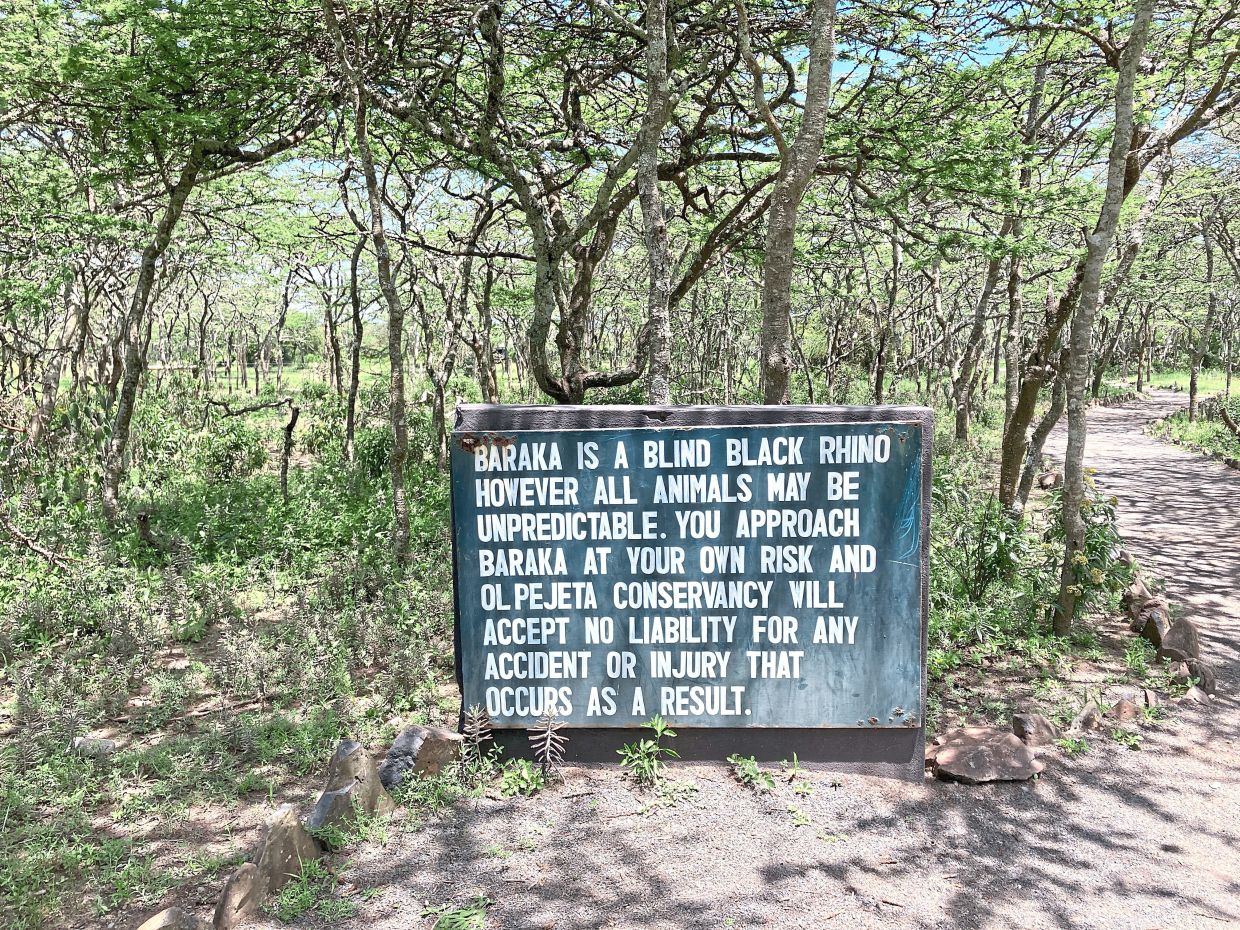
But life for Baraka, whose name means “the blessed one” in Swahili, is challenging. The 30-year-old rhino bull is blind, after he lost one eye in a fight with another rhino in 2008, and the other due to a cataract.
If Baraka were to roam freely through the savannah of the Kenyan highlands, he would be an easy target – in clashes with rival rhinos, or for poachers.
In the private sanctuary Ol Pejeta in the Mount Kenya region, however, the black rhino lives in the safety of a 100-acre (40.5 hectares) compound, protected by caretakers.
He is not the only rhino celebrity of the sanctuary. Ol Pejeta is also home to the last two remaining northern white rhinos in the world. After the death of the male Sultan in 2018, the species is functionally extinct.
The two remaining females, Najin and Fatu, are protected around the clock by armed rangers.
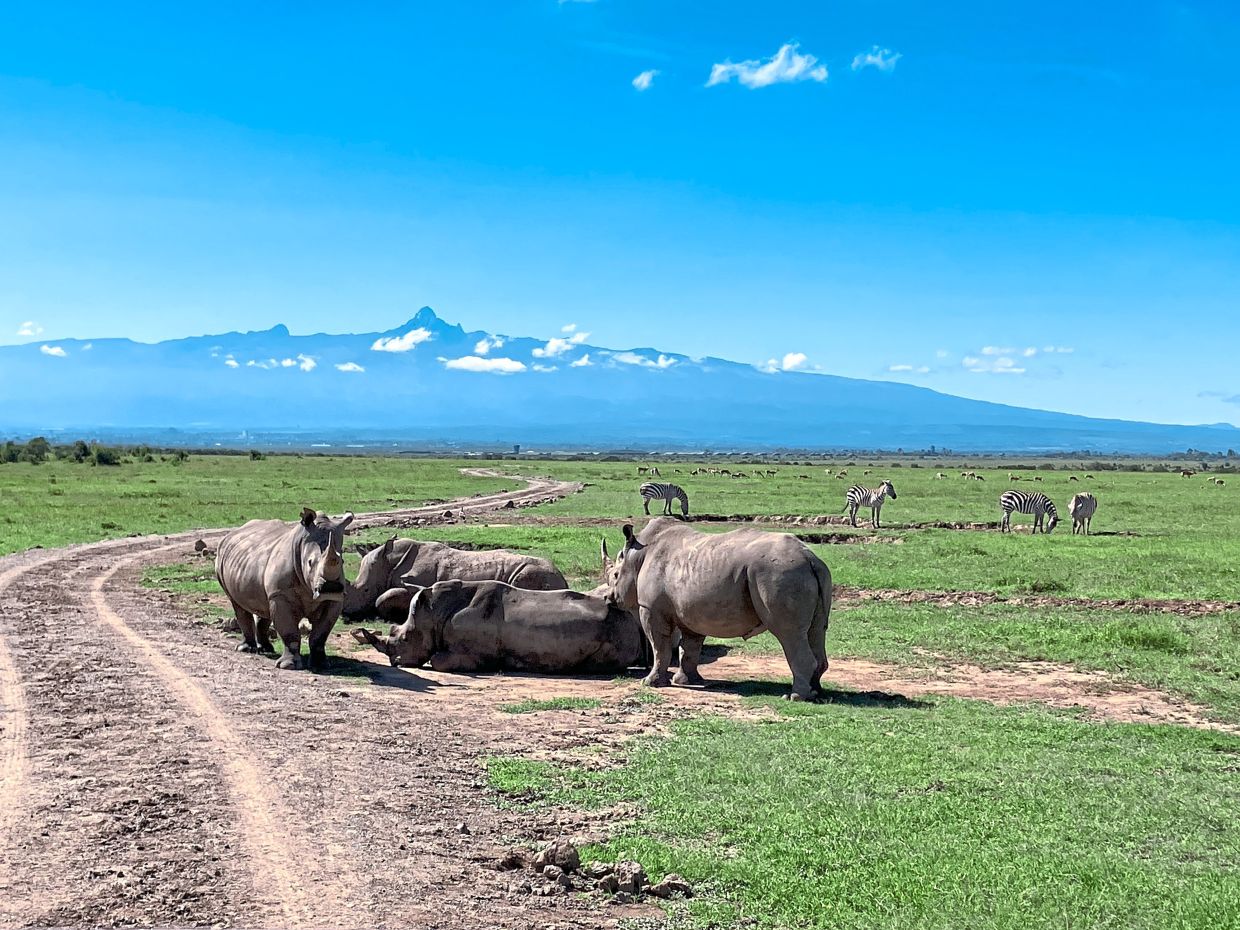
Efforts to ensure the survival of the northern white rhino include attempts to facilitate reproduction through IVF.
Yet while scientists have successfully created northern white rhino embryos, there have been challenges in implanting these embryos into surrogate southern white rhino mothers. Hope, however, dies last.
Baraka, on the other hand, is a kind of ambassador for his critically endangered species. Almost 200 black rhinos live in Ol Pejeta, the largest population in Kenya.
Unlike their slightly larger relatives, the white rhinos, black rhinos are very shy and are rarely found in the open savannah – they prefer forest areas for browsing.
Thanks to Baraka, visitors to Ol Pejeta are guaranteed to see a black rhino. His caretakers know how to lure the rhino to the fence of his enclosure with a piece of sugar cane or some carrots.
By scent and markings
Even though he is blind, Baraka isn’t helpless. He orients himself primarily by scent and markings from urine or faeces, says Grace, one of the rhino’s keepers.
“Sometimes, when he gets bored in his enclosure, he does an escape run,” she says about the adventurous heavyweight with a smile on her face. “We’ve even found him at the other end of the sanctuary. He just follows his nose whenever something smells interesting.”
There are only about 6,000 black rhinos and about 18,000 white rhinos left in all of Africa. Therefore, security is as important in Ol Pejeta as it is in state national parks.
In Ol Pejeta, around 260 employees are responsible for protecting the wildlife. The rangers of the Rhino Patrol Unit track and record rhino sightings. Every black rhino must be sighted at least once every three years by the rangers who roam the sanctuary with binoculars and notebooks.
Armed rangers with paramilitarytraining and a dog unit are also deployed in the area to deter poachers.
Rhinos are the second largest mammals living on earth, who were once hunted for sport and meat.
Today, poachers kill them to meet demand from Asia and the Middle East, where rhino horn is considered to have medicinal properties and is used to make ornamental dagger handles. A kilogramme of rhino horn can fetch up to US$60,000 (RM255,000) on the black market.
Yet while elephants are poached because of their ivory tusks, rhino horn is just made of the same substance as human fingernails – keratin. – dpa