
Each year, World Malaria Day on April 25 serves as a powerful reminder that malaria remains one of the world’s most persistent public health challenges.
Malaria is no longer confined to isolated rural settings.
It is a dynamic, evolving threat that transcends boundaries, demanding coordinated, adaptive and unified responses at both national and international levels.
Indeed, the 2026 theme, “Driven to End Malaria: Now We Can. Now We Must”, underscores the urgent need for coordinated global action, sustained commitment and shared responsibility across nations, disciplines and communities to defeat malaria.
While remarkable progress has been made in reducing conventional human malaria in many regions, new challenges are emerging that threaten to reverse these gains.
Among these emerging challenges is zoonotic malaria, an increasingly significant public health concern in South-East Asia, particularly in Malaysia.
The theme calls not only for renewed political will and sustained funding, but also for stronger integration of science, policy and community engagement.
Indeed, it underscores the need for collaboration not only within institutions and agencies at the national level, but also across borders among neighbouring countries facing similar challenges.
More factors involved
Malaysia has long been recognised for its success in controlling indigenous human malaria cases caused by parasites such as Plasmodium falciparum and Plasmodium vivax since 2018.
However, zoonotic malaria, particularly infections caused by Plasmodium knowlesi, presents a different and more complex challenge.
Unlike conventional malaria parasites that circulate exclusively among humans, zoonotic malaria involves transmission from macaques to humans via Anopheles mosquito vectors.
Over the past decade, zoonotic malaria has become the predominant form of malaria reported in Malaysia.
In 2024, Malaysia reported 1,927 cases, representing a 33% decline in indigenous P. knowlesi cases compared to 2023, along with three deaths (down from 14 in 2023).
Despite this improvement, Malaysia continues to record the highest number of P. knowlesi cases in South-East Asia.
Cases are especially concentrated in regions with significant forest cover and human interaction with wildlife, such as Sabah, Sarawak and parts of Peninsular Malaysia such as Kelantan and Pahang.
What makes zoonotic malaria particularly concerning is its ecological complexity.
The transmission cycle involves not just humans and mosquitoes, but also animal reservoirs and environmental factors that are difficult to control.
This shift in malaria epidemiology presents new challenges for surveillance, prevention and control.
Traditional malaria strategies, which focused on treating human cases and controlling indoor mosquito vectors, are often insufficient when dealing with a disease that is deeply embedded in forest ecosystems and wildlife dynamics.
ALSO READ: Malaria threat in Malaysia currently comes from macaques
No respect for borders
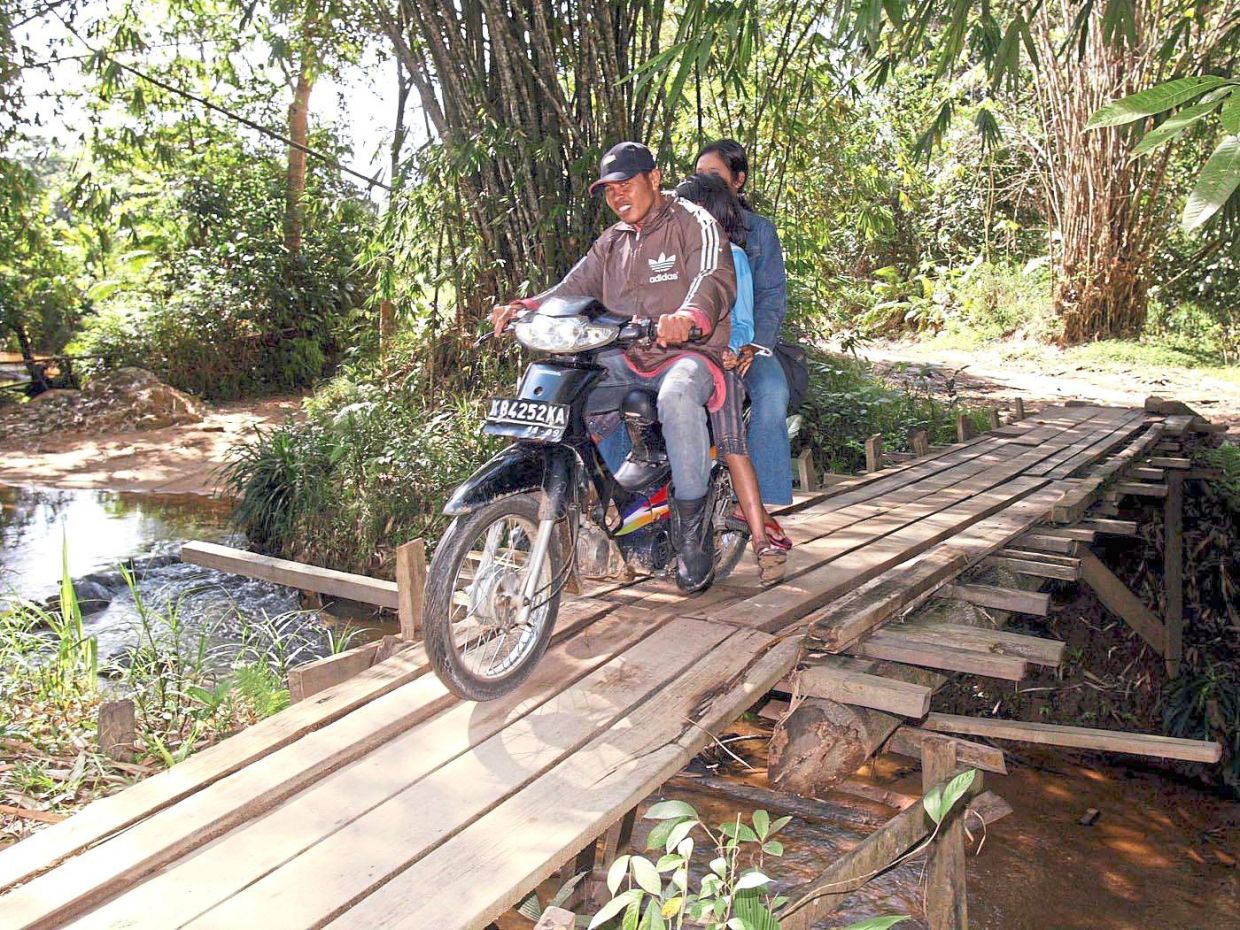
In addition to zoonotic transmission, border malaria remains a significant concern in Malaysia.
This is particularly so in regions that share porous boundaries with our neighbouring countries Thailand and Indonesia.
Border areas often experience high population mobility, including migrant workers, traders and indigenous communities who frequently cross borders for economic and social activities.
This movement can facilitate the importation and reintroduction of malaria cases, further complicating national elimination efforts.
Differences in healthcare access, surveillance systems and malaria control strategies between neighbouring countries also exacerbate the challenge, creating gaps that allow transmission to persist.
Addressing border malaria requires strong cross-border collaboration and harmonised control strategies.
Joint surveillance, data sharing and coordinated vector control initiatives are essential to effectively monitor and respond to malaria transmission in these regions.
Strengthening partnerships between health authorities, research institutions and local communities on both sides of the border can enhance early detection and timely intervention.
In line with the theme “Driven to End Malaria: Now We Can. Now We Must”, tackling border malaria underscores the critical importance of regional cooperation, as no single country can eliminate malaria in isolation.
Working across sectors
Addressing zoonotic malaria in Malaysia itself also requires a truly united approach – one that transcends institutional boundaries and brings together expertise from multiple sectors.
Indeed, a coordinated effort involving public health authorities, researchers, environmental agencies and local communities is essential to achieve the goal of becoming a malaria-free country by 2030.
For instance, ongoing research projects in Malaysia exemplify the importance of such collaboration.
In Gua Musang, Kelantan, a multidisciplinary project on zoonotic malaria is currently being conducted through a partnership involving Universiti Kebangsaan Malaysia (UKM), Universiti Malaya (UM), Mahidol University (Thailand), the Kelantan State Health Department and the Gua Musang District Health Office.
This collaboration integrates field surveillance, vector studies, molecular analysis and community engagement to better understand the disease’s transmission dynamics.
Similarly, research efforts in Sabah highlight another international collaboration, with partnerships between UKM, UM and Britain’s London School of Hygiene & Tropical Medicine.
These initiatives integrate global expertise with local knowledge to develop and implement targeted strategies for controlling zoonotic malaria across diverse ecological settings.
Such collaborations are crucial for several reasons.
First, they enable the sharing of resources, expertise and data, leading to more comprehensive and robust findings.
Second, they facilitate the development of context-specific interventions that are tailored to local transmission dynamics.
Third, they strengthen capacity building by training the next generation of scientists, public health professionals and field workers.
Community involvement must also not be overlooked.
Local communities are often the most affected and play a vital role in prevention efforts.
Engaging them through education, awareness campaigns and participatory approaches ensures that interventions are practical, accepted and sustainable.
Evolving with the disease
Looking ahead, Malaysia’s fight against zoonotic malaria must evolve in tandem with the changing nature of the disease.
Innovative strategies are needed, including improved surveillance systems that integrate human, animal and environmental health data – a concept aligned with the One Health approach.
Advances in molecular diagnostics, geospatial mapping and predictive modelling can enhance early detection and targeted interventions.
Vector control strategies must also adapt to outdoor and early-biting mosquitoes.
This may include the development of novel tools such as spatial repellents, attractive toxic sugar baits and personal protective measures suited for outdoor environments.
In addition, policies that address land-use planning and environmental conservation can help mitigate the ecological drivers of transmission.
Equally important is sustained investment in research and cross-border collaboration.
Zoonotic malaria is not confined by national boundaries, and regional cooperation will be key to managing its spread.
Strengthening partnerships between academia, government agencies and international institutions will ensure that Malaysia remains at the forefront of research and control efforts.
In the face of declining research funding within the country, strengthening collaborations with international universities and institutions has become increasingly important.
Such partnerships can enhance research capacity, facilitate access to international funding opportunities, and support the advancement of innovative studies aimed at reducing the burden of malaria.
Through sustained global and local collaboration, more effective and evidence-based strategies can be developed to address this evolving public health challenge.
In conclusion, the rise of zoonotic malaria in Malaysia is a stark reminder that progress against infectious diseases is never linear.
As new challenges emerge, so too must our responses.
The theme “Driven to End Malaria: Now We Can. Now We Must” is more than a slogan; it is a call to action.
By fostering collaboration, embracing innovation and engaging communities, Malaysia can rise to this challenge and continue its journey toward a malaria-free future.
Dr Nantha Kumar Jeyaprakasam is a senior lecturer of parasitology and medical entomology at UKM. For more information, email starhealth@thestar.com.my. The information provided is for educational and communication purposes only, and should not be considered as medical advice. The Star does not give any warranty on accuracy, completeness, functionality, usefulness or other assurances as to the content appearing in this article. The Star disclaims all responsibility for any losses, damage to property or personal injury suffered directly or indirectly from reliance on such information.
Already a subscriber? Log in
Get 20% OFF The Star Digital Access
Cancel anytime. Ad-free. Unlimited access with perks.