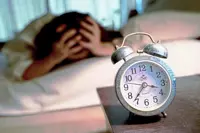
There're two types of people in the world: Those who wake up feeling instantly refreshed, and those hit the snooze button in the mornings and dread getting out of bed.
Sleeping in gets a bad reputation, and there’s a general myth that hitting the snooze button is unhealthy.
But it actually depends on how you use it.
“It’s very individualised,” says Professor Dr Kneginja Richter, who specialises in sleep at a clinic in southern Germany.
“If you just hit once or twice and then can smoothly start your day, it’s definitely not a problem,” she says.
“Actually, it can even be good in that you wake up not feeling stressed.”
The best use of that precious time between alarm bells is to slowly wake up and start thinking about what the day will bring, for example, according to the sleep expert.
The snooze button becomes more of a problem when someone is so tired that they fall right back asleep.
“Anyone who hits ‘snooze’ over and over – and thus, keeps yanking themselves in and out of slumber – is doing themselves no favours,” explains Prof Richter.
Such incidents beg for a little self-reflection: Why do you keep doing this?
“If someone wakes up rested on their own in the morning, they won’t consider snoozing so long,” she says.
To make sure you’re getting enough sleep, you should first figure out what kind of sleeper you are and structure your daily life around that schedule.
About 70-80% of people sleep between between 11:30pm and 7am.
The other 20-30% are part of the night owl club: people who prefer to stay awake late into the night and then sleep in during the day.
Younger people and men tend towards being night owls, while older people and women are more likely the opposite, i.e. morning larks.
One way to wean yourself off your snooze button is to not place your alarm clock or cellphone right next to your bed.
Place it such that in order to switch off the alarm, you’ll have to get out of bed. – dpa
Already a subscriber? Log in
Get 20% OFF The Star Digital Access
Cancel anytime. Ad-free. Unlimited access with perks.