The novel coronavirus (2019-nCoV) may have been declared a global health emergency, but your risk of catching influenza, or flu as we know it, is far greater.
Influenza viruses have symptoms similar to coronaviruses: they are contagious, come on suddenly and include a high fever, extreme exhaustion, severe muscle or body aches, a dry cough and chills.
“We were not really concerned about influenza, until recently, when there was a rise in influenza A cases.
“Less than 1% of our population get the flu vaccine because the awareness is very low.
“We encourage high risk groups to get vaccinated because we have seen a lot of these influenza cases leading to pneumonia, ” says senior consultant clinical microbiologist Professor Dr Zamberi Sekawi, who is the dean of the Faculty of Medicine and Health Sciences at Universiti Putra Malaysia.
The flu can spread from person to person before symptoms are apparent, as well as while you are actually sick.
People with the flu are most contagious in the first three to four days after their illness begins.
However, healthy adults may be able to infect others one day before symptoms develop and up to five to seven days after becoming sick.
Young children and people with weakened immune systems might be able to infect others for an even longer time.
“In the northern hemisphere, the peak (of flu season) is from November onwards, and in the southern hemisphere, it is around the middle of the year.
“Unlike western countries that peak in winter, we have no peak periods for the flu.
“It could be associated with the rainy season, but then again, this is not quite distinct, ” he says.
Influenza viruses in humans are categorised as strains A, B and C, and differ from the common cold.
When an outbreak of influenza A began in December, just before the novel coronavirus, people started rushing to get vaccinated, resulting in a shortage of flu vaccines.
Predicting strains

“The team analyses the data and meets every February and September to pick the top four strains that could dominate the next season.
“For example, they will pick two strains of A (i.e. H1N1 and H3N2) and another two strains of B (i.e. Victoria and Yamagata).
“The strain B names come from the country of origin; in this case, Australia and Japan, ” explains Prof Zamberi, who is also the chairman of the Malaysian Influenza Working Group.
More than 100 national influenza centres in over 100 countries conduct year-round surveillance for influenza and provide input into this decision.
Once the WHO has decided on the strains via educated guesses, information is conveyed to flu vaccine manufacturers who rush to produce the vaccine.
Sometimes, there’s no change in vaccine recommendations, but often, the WHO recommends a change from the prior year’s vaccine in one of the four strains.
Rarely does the WHO recommend a change in two of the four strains, but this was the case last year.
In addition to changes in two of the strains, the WHO also delayed its public health recommendations for one of the strains by one month, in order to have the best chance of producing the right match for a strain that mutates often from season to season, and sometimes, even within seasons.Since more people are seeking to protect themselves against the flu, demand for the vaccine was significantly increased compared with this time last year, resulting in the shortage.
Using chicken eggs
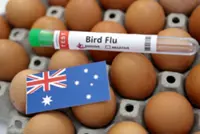
It’s always a rush against time as flu vaccine production is tedious because millions of chicken eggs are required.
These eggs are not from your ordinary chickens and are more expensive.
The quality of eggs needed for flu production can only be found at special farms, where the hens are kept under controlled conditions.
For example, at the sites of pharmaceutical company Sanofi Pasteur – the world’s largest flu vaccine manufacturer – in Val de Reuil in France, Swiftwater in the United States, Shenzhen in China and Ocoyoacac in Mexico, a fleet of trucks delivers a fragile cargo containing several hundred thousand chicken eggs for days.
Each egg receives a viral strain and is incubated to allow the virus to multiply.
Next, a liquid or serum of the virus is harvested, then purified in several stages, filtered and treated to fragment and “kill” the virus.
Inactivating a virus so that it does not cause disease, but still induces an immune reaction, is a complex process.
The operation is repeated for each of the four viral strains incorporated in what is known as the quadrivalent vaccine.
For vaccine production, the egg remains the most reliable method for rapidly manufacturing large volumes of influenza vaccines.
However, some influenza viruses, like H3N2, grow poorly in eggs, making it difficult to obtain candidate vaccine viruses.
According to the US Centers for Disease Control and Prevention (CDC), one reason for this problem is that the vaccine strain mutates during the egg-based manufacturing process, creating mismatches with actual circulating flu strains.
Hence, vaccine manufacturers are exploring other options to produce the vaccine, including cell production.

Which strain?
When you’re down with the flu, you won’t know which strain you’ve contracted unless you go for a test.
“Normally, it’s only when you are hospitalised that the respiratory samples are taken for testing to determine the strain.
“It’s not done in outpatient settings, although some clinics do it.
“The samples are then sent to our reference lab in Institute of Medical Research (in Kuala Lumpur).
“If the results are urgently required, they can do the tests in a day.
“But for surveillance purposes, they do it on batch basis as it is more cost effective. This takes a few weeks, ” says Prof Zamberi.
At present, the circulating influenza strains are a mixture of H1N1 and H3N2.
He adds, “If you happen to get infected with a different strain, it’s just too bad because the current vaccine doesn’t provide immunity against it – that’s how it works.
“We tell patients to get the latest vaccine because we don’t have a winter season, so it can be taken any time.
“But remember that you can still get the flu from the vaccine, but the symptoms may be milder.
“The vaccine lasts for a year before the antibody levels start dropping.”
He adds that once a universal flu vaccine is developed, then only one jab would be needed that covers all strains.
Already a subscriber? Log in
Get 20% OFF The Star Digital Access
Cancel anytime. Ad-free. Unlimited access with perks.