For Yemeni grad student Shada Bokir, the month of Ramadan is fraught with meaning and memory.
Shada – who has not returned to her home country for four years now – remembers it as a time celebrated with the warmth and generosity which are hallmarks of its people.
“There are many special practices observed during Ramadan,” she says. She is now in the fourth year of her PhD in Literature at Universiti Kebangsaan Malaysia.
“Beginning on the tenth day of Ramadan, every mosque will complete the reading of the Quran on a particular day, and all the houses around that mosque will invite their families over for a celebration at iftar.
“There’s also a sweet tradition for the kids who aren’t old enough to fast yet – they are given little baskets woven from palm leaves, filled with food, drinks and sweets. Then they take their baskets and gather in one place in the neighbourhood, and together they sing traditional songs all about Ramadan – until their mothers call them home for iftar.”
The iftar table also bears many delicacies that are unique to the time, only found at Ramadan.
As revered as Ramadan is in Yemen, its celebration in recent years has been muted due to the armed conflict that broke out in 2015, and soon grew to engulf the whole country.
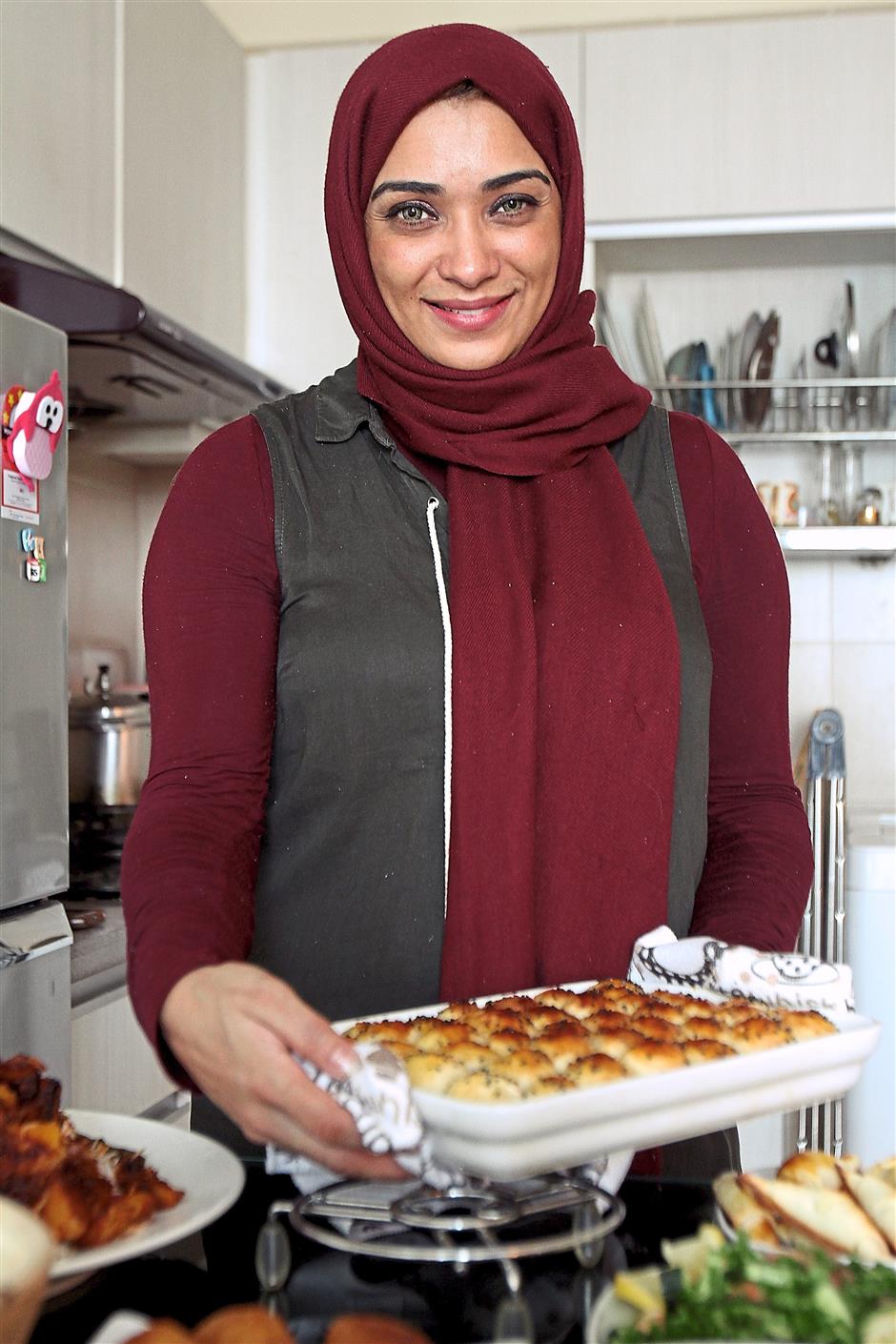
“Because of the conflict, even those not physically caught in it are economically affected,” says Shada. Nonetheless, Ramadan is important to her people and so celebrations are still being held, albeit very scaled down versions.
“People try to gather the little they have, and families still gather to celebrate however they can.”
“Ramadan is an occasion for the family, so I get extra homesick at this time,” says Shada, the youngest of four siblings. She comes from Hadramawt, Yemen’s largest governorate.
“I miss both my family and my mother’s cooking. And the more homesick I get, the more I cook.”
Shada’s answer is to step into her small home kitchen and weave together a tableful of the sights, smells and tastes of home.
“My mother taught me to cook when I was 20,” she says. “I was so intimidated at first, because Yemeni cooking can have a lot of steps, and it can take a long time to make a dish. But I had to learn, because in my culture, all the women know how to cook. My friends would have made fun of me if I didn’t!”
Shada’s elder sister and two brothers also learnt their way around the kitchen, especially once they left home.
Her cooking lessons expanded beyond the food of Yemen, and grew to include dishes from other Middle Eastern countries – like dolma, the stuffed vegetables popular all over the region, or the pasta with white sauce and cheese which is widely-eaten in Egypt.
Shafout is one of Shada’s favourite dishes on the iftar table. “It’s so unique, it’s good for you, and it’s really delicious, especially on a hot day – perfect for iftar,” she says. Shafout is basically an appealingly tangy, herbed yoghurt in which floats pieces of spongy lahoh, a type of Yemeni bread which seems closer to a pancake.
There’s also khushka, one of the seemingly ubiquitous dishes which combine rice and meat, chicken or fish – like kabsa, mandy or briyani.
“This recipe for khushka has been in my family for generations, and is one of my favourite dishes,” says Shada. “I found out that khushka has South Asian origins – it comes mainly from southern India. This was very interesting to me, but was not a surprise, taking into consideration the history of Yemeni-Indian trading relations in the old times. There are many Indian dishes that we have adopted to our Yemeni menu, especially in the south.”
Shada finds that most of what she needs for an authentic Yemeni meal is easily obtainable in the Klang Valley, at one of the many Arabic grocers that have sprung up due to the sizeable population of students and visitors. There are a few things though, that must be sent from home – like the delicate Arabic coffee she loves, roasted very gently and spiced with cardamom and ginger.
“We also have a special spice mixture that we used called baharat – and while this is easily available at most Middle Eastern grocers, you can also make your own. It’s a seven-spice blend including cinnamon, paprika, cumin, coriander and cloves,” she says.
Finally, Shada says that the bint al-sahn – which she translates as “the daughter of the dish” is always a show-stopper. It’s a layered wonder, a cake-like bread – or bread-like cake! – of thin dough layers stacked in a dish. “It’s served in the baking dish, and cut so you can see all the layers – then it’s drizzled with honey. The number of layers is up to you – some people just put five, but I make it with up to 15,” she says.
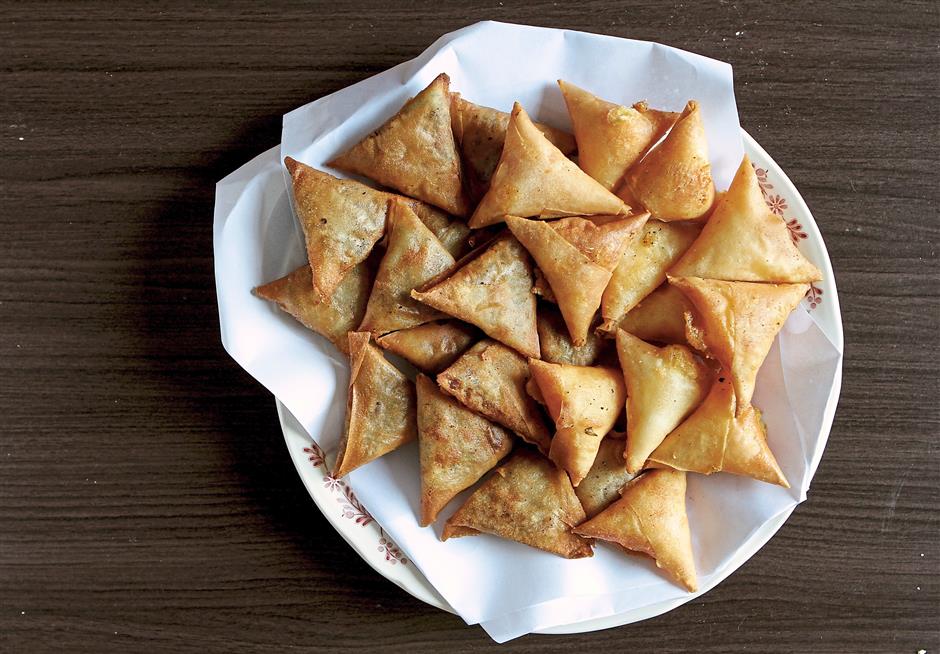
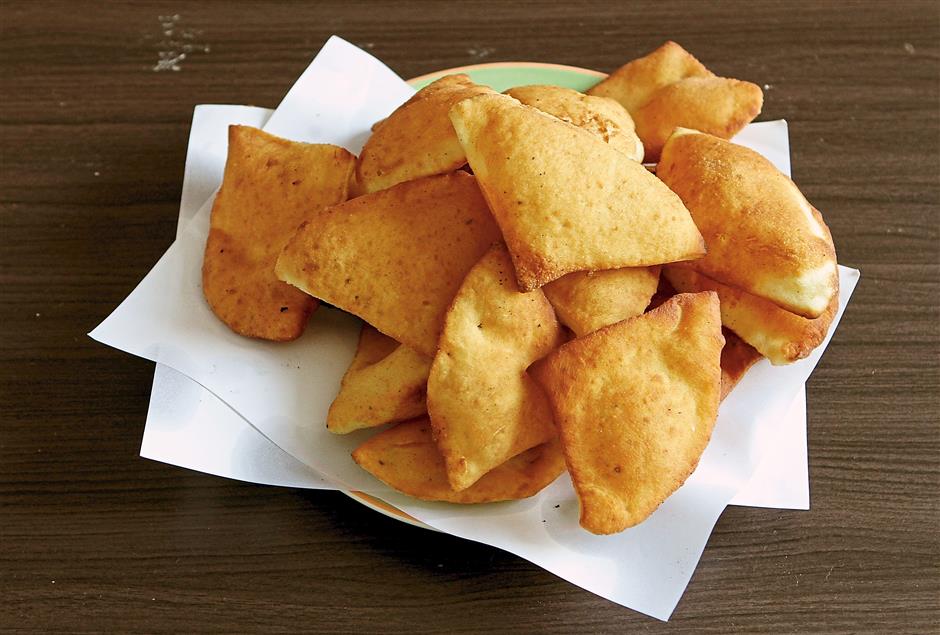
Other wonderful things you might expect on a Yemeni iftar table: the ever-popular sambousik, which are filled with ground meat or cheese – and found on the menus of most Yemeni restaurants here in KL – qamir, a type of fried bread from Hadramawt and shorba, or soup, which can be made with corn or buckwheat, that gives the dish texture.
At the end of the day though, the iftar table is as much about the people around it as it is the dishes laid out on it.
“I have wonderful friends here – when I am homesick, they just come flying over!” says Shada. This month especially, they will be spending much time together – like the family that they have become.
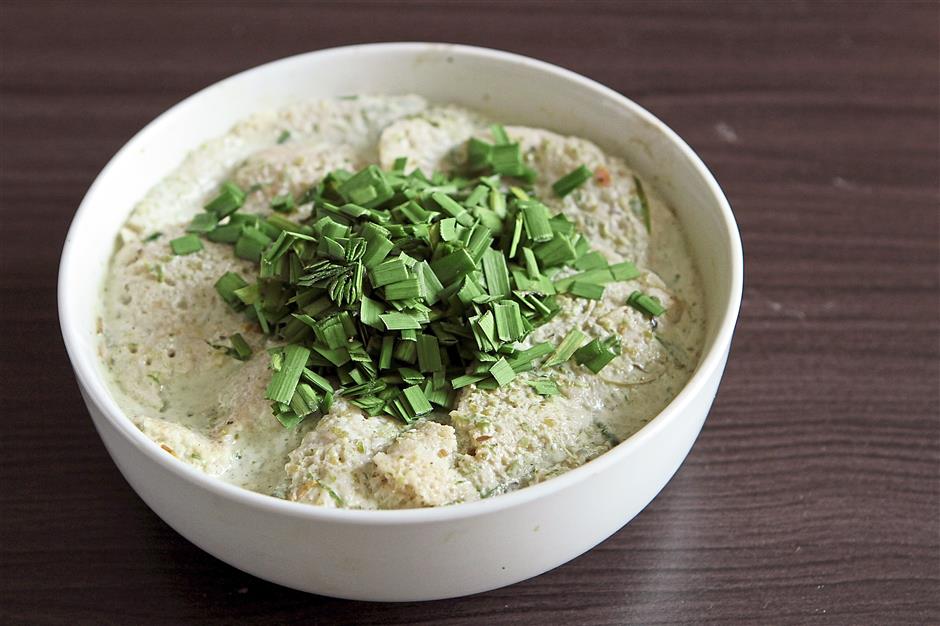
Shafout
4 servings
10g mint leaves
10g fresh coriander or parsley
2 cloves garlic, minced
1 or 2 jalapeños
1 cup yoghurt
salt, to taste
2 pieces lahoh or Arabic flatbread
chopped parsley, for garnishing
Place the mint, coriander or parsley, garlic and jalapeños in a blender and process till well-mixed.
Place the yoghurt in a mixing bowl and stir in the herb mixture, a little at a time. The mixture should be light green. Season to taste.
Tear the lahoh into pieces and place in a serving dish. Pour the yoghurt mixture over and set it aside for 2 minutes or so, so the yoghurt can absorb into the lahoh pieces. Sprinkle with parsley and serve.
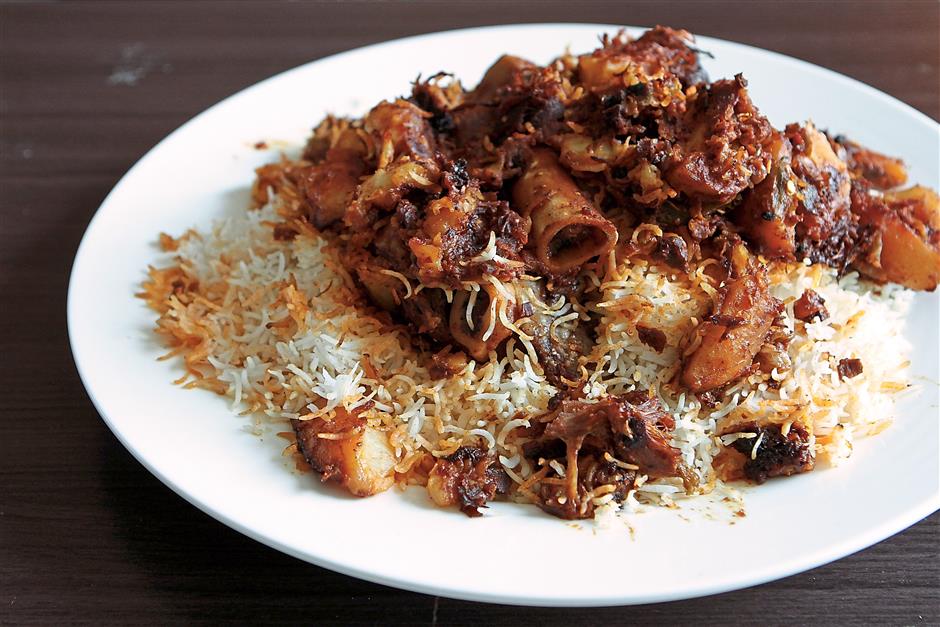
Khushka
4 servings
oil, for frying
3 potatoes, peeled and sliced thickly
1 cup rice
salt, to taste
1/2 kg meat (chicken, lamb or beef), cut into pieces
1 onion, peeled and sliced
3 cloves garlic, sliced
2 jalapenos, sliced
1 tsp baharat (seven spice mix)
1 tsp ground cardamom
1g cloves
1g black pepper
1/2g cinnamon stick
2 tbsp tomato paste
salt, to taste
Place the oil in a pan and deep-fry potato slices till golden brown. Remove, drain of excess oil and set aside.
Soak the rice in warm water with some salt for 10 minutes.
Boil the rice with salt till 3/4 cooked. Rinse and set aside.
Cook the meat in a pressure cooker for 30 minutes, or till tender.
Add some oil to a deep, heavy-bottomed saucepan and fry the onion till golden, then add the garlic, jalapenos, cooked potatoes and meat. Mix well, then add the baharat and the whole spices.
Stir in the tomato paste and salt, and simmer till mixture is thick.
Once the mixture has reached the desired consistency, place the rice on top. Sprinkle the top of the rice with 3 tablespoons of water, cover the saucepan and leave to steam over low heat for 15 minutes.
Remove from heat, and allow to rest for 10 minutes before serving.
To serve, place the serving dish over the saucepan and up-end it, so that its contents end up on the serving dish – rice at the bottom, and the meat mixture on top.
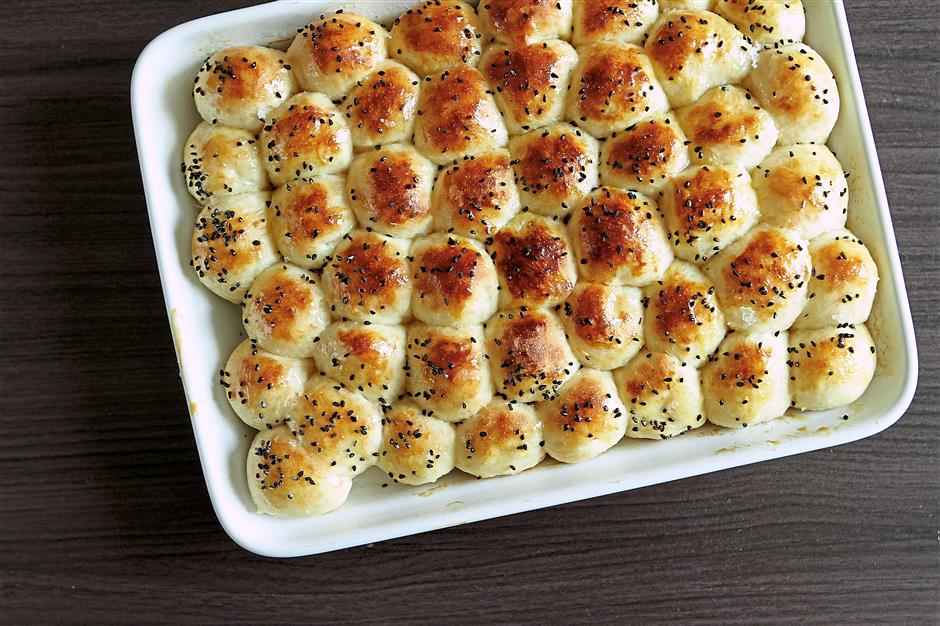
Khaliat Nahel (Beehives)
syrup
1 cup water
1 cup sugar
1/3 tsp vanilla essence
2 cups white flour
3 tbsp powdered milk
pinch of salt
3 tbsp sugar
1 tbsp yeast
3 tbsp oil
warm water, as needed
140g soft white cheese (preferably the Laughing Cow triangle cheese wedges)
1 egg yolk, for egg wash
black seeds (nigella seeds)
To make syrup: Mix the water and sugar in a saucepan over medium heat, and stir in the vanilla essence. Cook, stirring, till all the sugar has melted. Remove from heat and set aside.
To make beehives: In a large mixing bowl, combine the flour, milk, salt, sugar and yeast. Add in the oil and warm water. Mix well and knead till you get a soft dough. Cover the mixing bowl with a damp cloth and set aside for 30 minutes.
Grease a lined baking tray.
Divide the dough into small balls (about the size of a ping pong ball). Press a small piece of the cheese into the middle of each ball, and enclose in the dough. Place the dough balls into the baking tray, allowing them to touch.
When you have filled the baking tray with dough balls, brush the surface with egg wash. Sprinkle with the black seeds and bake in an oven pre-heated to 250°C for 20 minutes.
Remove from oven and pour the syrup over. Serve warm.
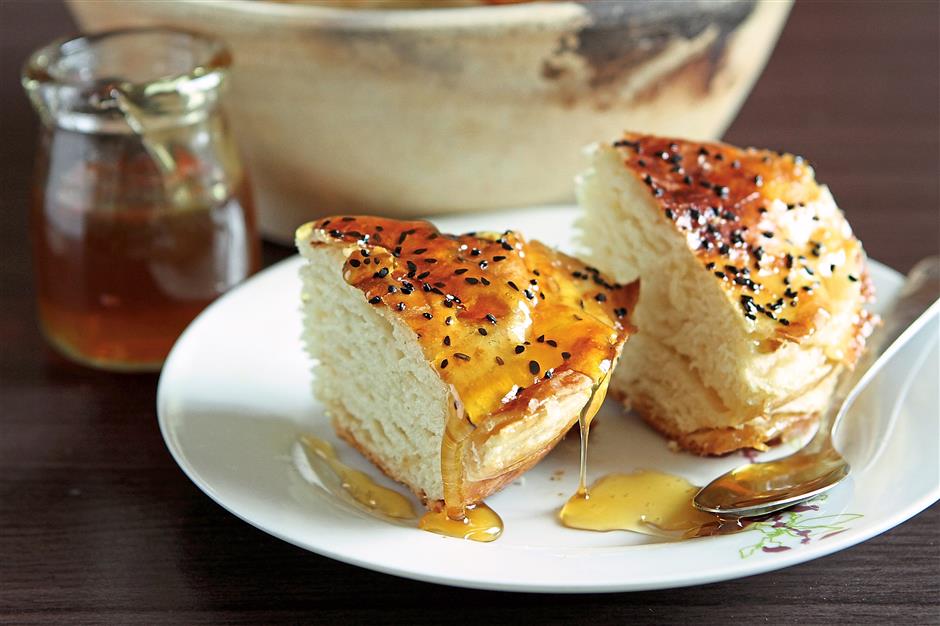
Bint Al-Sahn (Layered cake)
4 servings
1 tbsp yeast granules
1/4 cup water
2 cups bread flour
2 eggs
1/4 cup milk
1/4 cup water
3/4 cup melted butter or ghee
1/4 tsp salt
1/4 cup additional melted butter or ghee, for brushing
black cumin or sesame seeds
1 egg yolk, for egg wash
honey, for serving
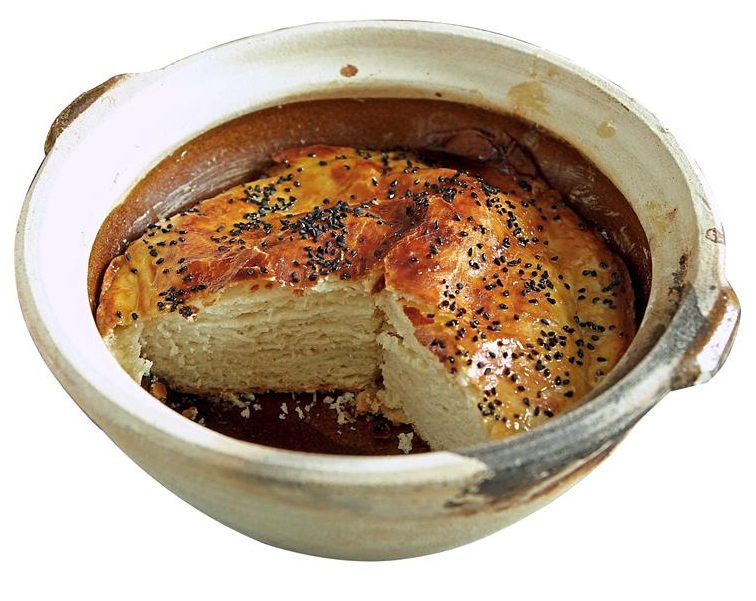
Dissolve the yeast in 1/4 cup water. Mix with the flour, eggs, milk, water, butter or ghee and salt in a large mixing bowl, and knead for 10 minutes, until you get a soft dough.
Divide the dough into 8 to 10 portions.
Form each portion into a ball, and place on a flat surface.
Grease a round 25cm cake pan or claypot and set aside.
Roll a dough ball out thinly and place into the bottom of the claypot. Brush it with melted butter. Repeat the process for all remaining dough, stacking each layer on top of the previous one, then brushing with butter – except for the top layer. Brush that with the egg wash and sprinkle with black cumin or sesame seeds.
Bake at 300°C for 15 minutes.
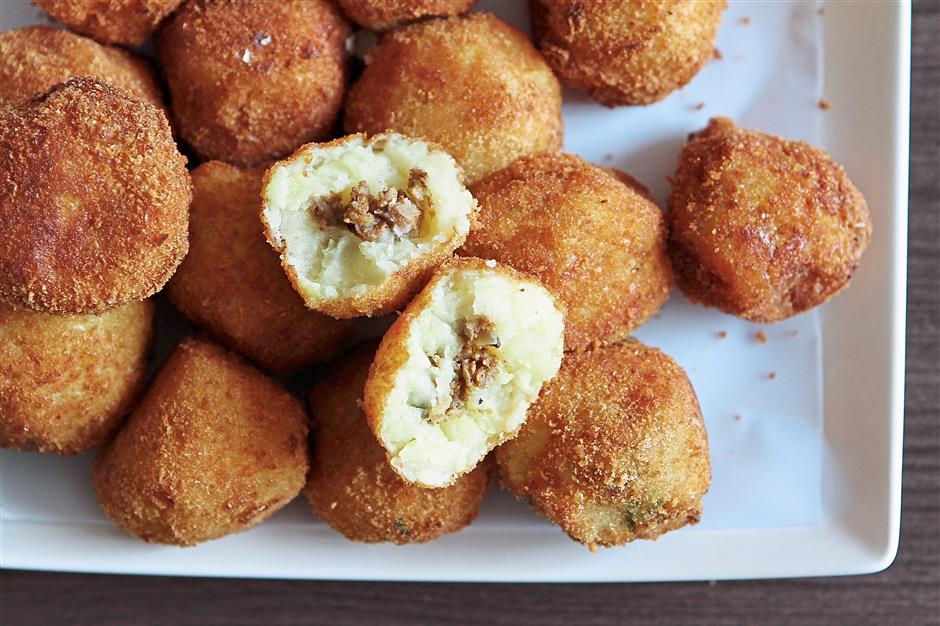
Catlix (stuffed potato balls)
Makes about 15
1kg potatoes
oil, for frying
1/2 onion, peeled and minced
1 jalapeño, minced
1 clove garlic, peeled and minced
1/4 kg minced lamb or beef
2g mixed ground spices
salt, to taste
chopped coriander leaves, according to your preference
1 egg, beaten
breadcrumbs, for coating
oil, for frying
Boil the potatoes in water until they are soft.
Peel and mash them with a fork till smooth, and season to taste.
Place some oil in a pan, and sautee the onion, jalapeno and garlic till fragrant. Add in the minced meat, and stir-fry lightly till cooked. Add the spices and season to taste.
Remove from the heat and stir the coriander leaves through.
Form the mashed potato into small balls. Make an indentation in the middle of each ball and fill with a little of the minced meat mixture.
Coat each ball with beaten egg, then roll in the breadcrumbs till fully-coated.
Place some oil into a heavy-bottomed saucepan or wok and deep-fry the potato balls till golden brown. Serve hot.
Sharing a meal during Ramadan
The United Nation’s World Food Programme (WFP) has launched two simultaneous fund-raising campaigns in conjunction with Ramadan this year; one is aimed at preventing famine in Yemen, the other to support Syrian refugee children and Lebanese kids in need.
Its official ShareTheMeal app allows users to make donations – and choose where to send that donation, with Yemen and Lebanon the first two countries to be included in that option. It can be used with both iOS and Android smartphones; donations start at US$0.50 (RM2)
On May 18, ShareTheMeal won the 2017 Google Play Award for Best Social Impact App; it has been downloaded by over 830,000 people, and resulted in 13 million meals shared with children in Jordan, Syria, Lebanon, Malawi and Cameroon.
Already a subscriber? Log in
Get 20% OFF The Star Digital Access
Cancel anytime. Ad-free. Unlimited access with perks.