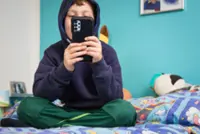
Recently I organised a workshop on “Overcoming sensory dysfunction”. It is a disorder that affects most children with special needs, especially those with autism. When a child tip-toes, spins endlessly or refuses to touch soapy water, there is a high probability that he has sensory dysfunction, also known as sensory processing disorder (SPD).
Most folks will not have heard of SPD. If you see a child who enjoys knocking his knees together, is afraid of the swing, or is afraid of balloons, then you will probably think that he has a bad habit or is overreacting. The truth is, he is afraid or is unable to cope with the sensations. It is a disorder that affects all our five senses – touch, smell, hearing, visual and taste – including vestibular and proprioceptive senses (awareness of body position). One could either be under- or over sensitive.
When we touch, see or taste, our brain receives the sensory information, processes and outputs them as useful information to be used for further action. For example, when we accidentally touch something prickly, our brain will quickly send signals to tell us to immediately withdraw our hand. This is the typical sensory integration that most of us have. It is our built-in defence system. It is a normal, neurological, developmental process which begins at the time of conception and continues until one dies.
However, if this process is abnormal or inefficient, then the brain will not be able to interpret the input and thus will result in a delayed reaction or giving out incorrect output. Our overall development will be negatively affected, sometimes with severe consequences. Imagine a child who has a poor appetite simply because all food that goes into his mouth tastes/feels like “bitter sand”. How is he going to attain good health?
A child with special needs (learning disability) will most likely have some degree of sensory dysfunction. Thus, he will usually display odd behaviour, have poor concentration and thus, have difficulty learning.
Imagine you had some form of sensory dysfunction. You are seated at your desk and the lesson is in progress, but this is what you may experience:
- You can smell every scent in the room and it is making you nauseous;
- You hear too much noise, even the soft sounds from the air-cond, and it is very annoying; and
- You can't sit still as you have this incredible, uncontrollable desire to stand up and stretch, or worse, to run, jump and hop!
Thus, the child is perpetually being distracted by discomfort. This disorder has a huge impact on his learning ability and if it is not treated, the child will lose out on learning. Being labelled “stupid”, “stubborn” and/or “not-trainable” is very common and it sure adds salt to the wound. As such, it is best to seek treatment as early as possible so that the child can use his energy for learning rather than coping with his sensory issues.
The best person to help the child would be an occupational therapist who also has additional training in sensory integration. She would do an assessment to determine if a child has sensory dysfunction and thereafter, plan the therapy sessions accordingly. She would recommend a “sensory diet” and it is best that this diet is followed on a daily basis. This is to obtain the desired results in the shortest time possible.
So, the next time you come across a child who is having a meltdown, don’t be quick to label him a child behaving badly or blame the parents for not disciplining the child. Take a second to consider that he might have SPD. He could be throwing a tantrum because he is unable to verbalise his thoughts and emotions and this is his way of telling his parents that his shirt is scratching his skin so badly that he just can’t tolerate it anymore. Or that he can no longer stand the crowd at a shopping mall as he is visually processing too much light, colours and movement.
Anna Wong, mother to a 16-year-old special girl, founded Glen Stream (www.senses-at-play.com) in 2005 to assist other parents on this challenging journey. Her company offers related products and services.
Already a subscriber? Log in
The Star Festive Promo: Get 35% OFF Digital Access
Cancel anytime. Ad-free. Unlimited access with perks.