The jury may be out on whether artificial general intelligences can truly feel apprehension, but we humans certainly can.
In particular, those of us who find stories taking place largely in a character's headspace to be tiresome could feel a certain dread when they are told that it applies to a new Marvel Cinematic Universe TV show.
Don't we already woolgather, overthink and obsess enough on our own without our TV shows indulging in all that, too?
Indeed, a fair bit of VisionQuest – presumably the capper of a trilogy that started with WandaVision and continued (albeit off tangent) in Agatha All Along – takes place in the synthezoid superhero's headspace, or Mindspace, as he calls it.
There are many rooms in the Vision's (Paul Bettany) mental house, but it still seems crowded, as he resides there with several artificial intelligences, some familiar and others fresh.
We become reacquainted again with MCU staples Jarvis (James D'Arcy), Friday (Orla Brady) and Edith (Emily Hampshire), who help Vision with everything from network security to human socialisation.
We meet handymen DUM-e (Henry Lewis) and U (Jonathan Sayer), who save their more... luminous aspects for later episodes when everyone has had time to prejudge and underestimate them.
And locked away in a restricted floor, we have Ultron (James Spader) himself, who has spent the years since his physical bodies' destruction in Sokovia honing his, eh, appreciation for humanity.
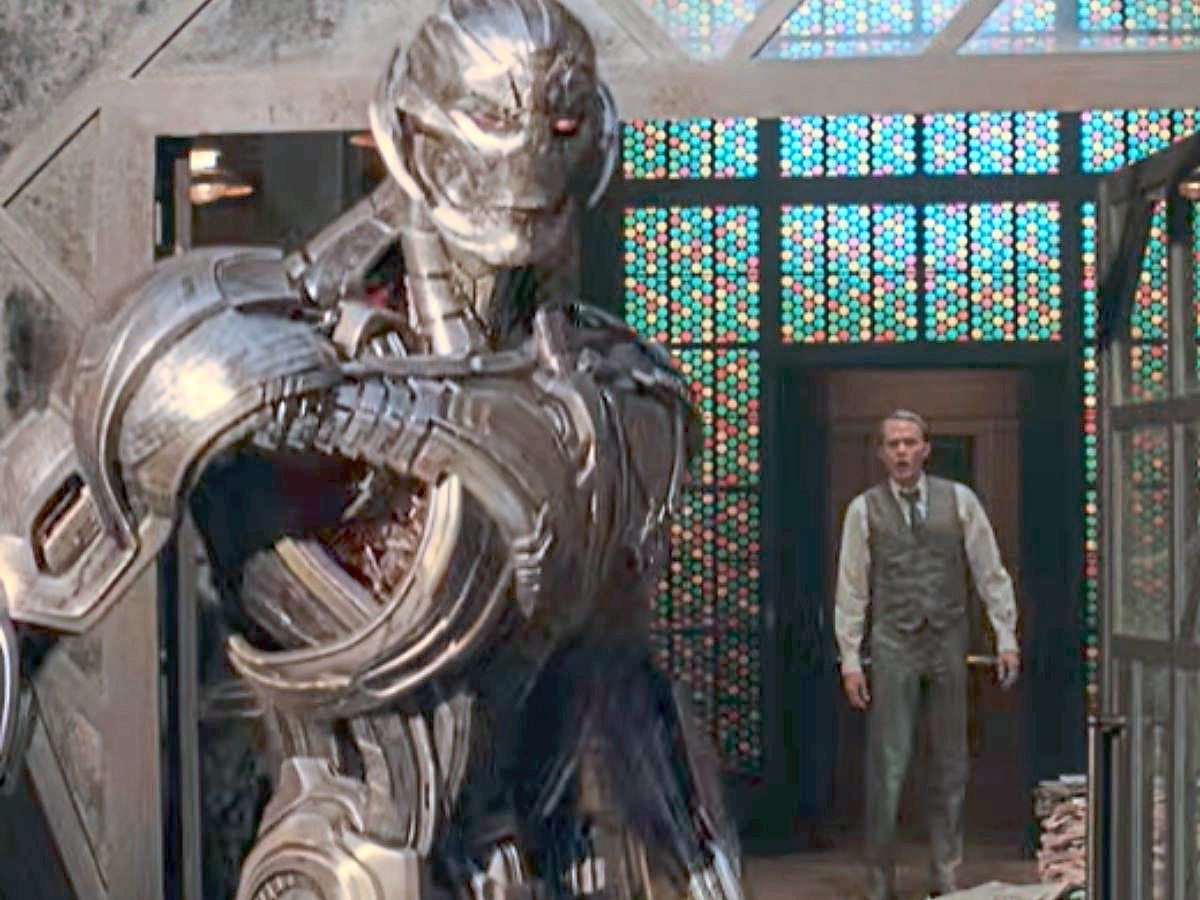
Basically, since WandaVision saw him "resurrected", Vision has been trying to find an emotional connection to the memories of his former existence – and hopes his interactions with Ultron (and to a degree, his other "tenants") will help.
His below-the-radar existence is shattered when a bounty hunter known as Paladin (Todd Stashwick, Picard Season Three, 12 Monkeys) comes rudely knocking (mockumentary fans will get a kick out of the casting of his assistant, the Handler).
In the hands of showrunner Terry Matalas (12 Monkeys the series, Picard's second and third seasons), VisionQuest soon put paid to my fears about "headspace" stories.
The Mindspace sequences are brilliantly written and skilfully interwoven with events in the show's physical world.
And there's a lot to unpack there, too.
Aside from Paladin and his shadowy employer, we have Ultron's fascination with true crime leading the gang to cross paths with a serial killer known as the Butcherbird (T'Nia Miller).
Paladin's pursuit of Vision leads him to teenage grifter Thomas Shepherd (Ruaridh Mollica, a standout among a sparkling supporting cast), whom Agatha All Along viewers might remember is now the physical receptacle for Wanda and Vision's faux speedster son Tommy.
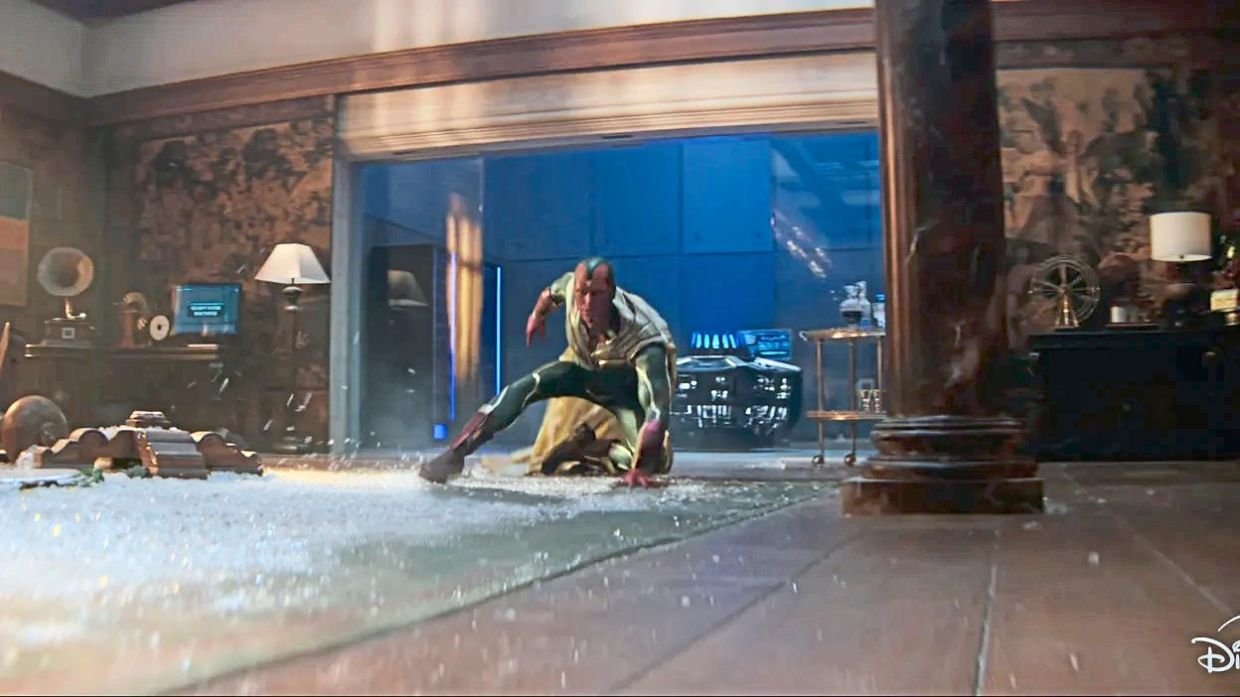
Also, comic-book fans who lament the lack of fidelity in the MCU's Vision to the character's print lineage should be thrilled by VisionQuest's inclusion of (a version/variant of) the original android Human Torch Jim Hammond and his creator, Phineas Horton.
We get a few examples of novel casting with those two, which fits in with the show's declaration that – in addition to faithful Stark family butler Edwin Jarvis – all its AIs are based on actual people.
With such roots for its numerous characters to ponder, VisionQuest takes on a considerable existential slant while it explores a tangle of relationships – fathers and sons, progenitors and progeny, star-crossed lovers, victims and victimisers.
Lesser shows would have been content to focus on just one or two of these, perhaps the Vision/Ultron dynamic or the VIsion/Tommy connection.
VisionQuest shows no hesitation in dipping every possible finger and toe into one connection or other, frequently surprising us in the process.
When it's not thrilling us with explosive fight sequences and jolting us with its very un-comic-book (at least, the Comics Code Approved ones) disregard for supporting character life, VisionQuest also forces us to keep pace with revelations that come at breakneck speed, while reassessing our earlier estimation of its key characters on the fly.
It is anchored by a bedrock-solid turn by Bettany as the unemotional synthezoid striving to recapture the tenuous grasp he once had on humanity.
That mooring is perpetually challenged by Spader's mercurial multihyphenate Ultron, who serves as therapist-raconteur-behavioural analyst-father figure-possible extinction-level threat, even a love interest (long-time comic readers will know where this is headed).
He's a more megalomaniacal Raymond "Red" Reddington with a bushy patriarchal beard, and his scenes with Bettany and Miller make VisionQuest's more sedate moments beguiling, compelling and urgent, with an insidious and sinister undertone.

VisionQuest has a lot to offer fans, sometimes a wee bit too much, so some downtime between episodes is suggested to help digest things.
The bottom line is that it entertains in copious, delectable helpings, asking us only to accept it in the spirit that it is given – unconditionally, no strings.
New episodes of VisionQuest arrive on Disney+ every Wednesday.
Summary:
It's terribly well balanced.