For Calvin Chua, every painting adventure across the country begins with a checklist: his travelling watercolour set and, most importantly, a handy supply of cakes and snacks.
No stranger to venturing into rural areas and villages, the Selangor-based artist often shares his boxes of treats with the Indigenous communities he meets along the way.
Chua, who usually packs an extra bag of snacks, sees it as a small gesture of appreciation and a way of connecting.
“You can see the smiles in these paintings. These are some of the young people I have come to know while visiting their Orang Asli villages. I have a series from Sungai Siput in Perak, which I visit regularly,” says Chua, 65, during a recent interview at the gallery.
There is also a series on Pulau Carey in Selangor, featuring the Mah Meri community, with a particular focus on its wood carvers.
In his own relaxed way, this is how Chua keeps his art connected to people and places – from paddy fields to longhouses.
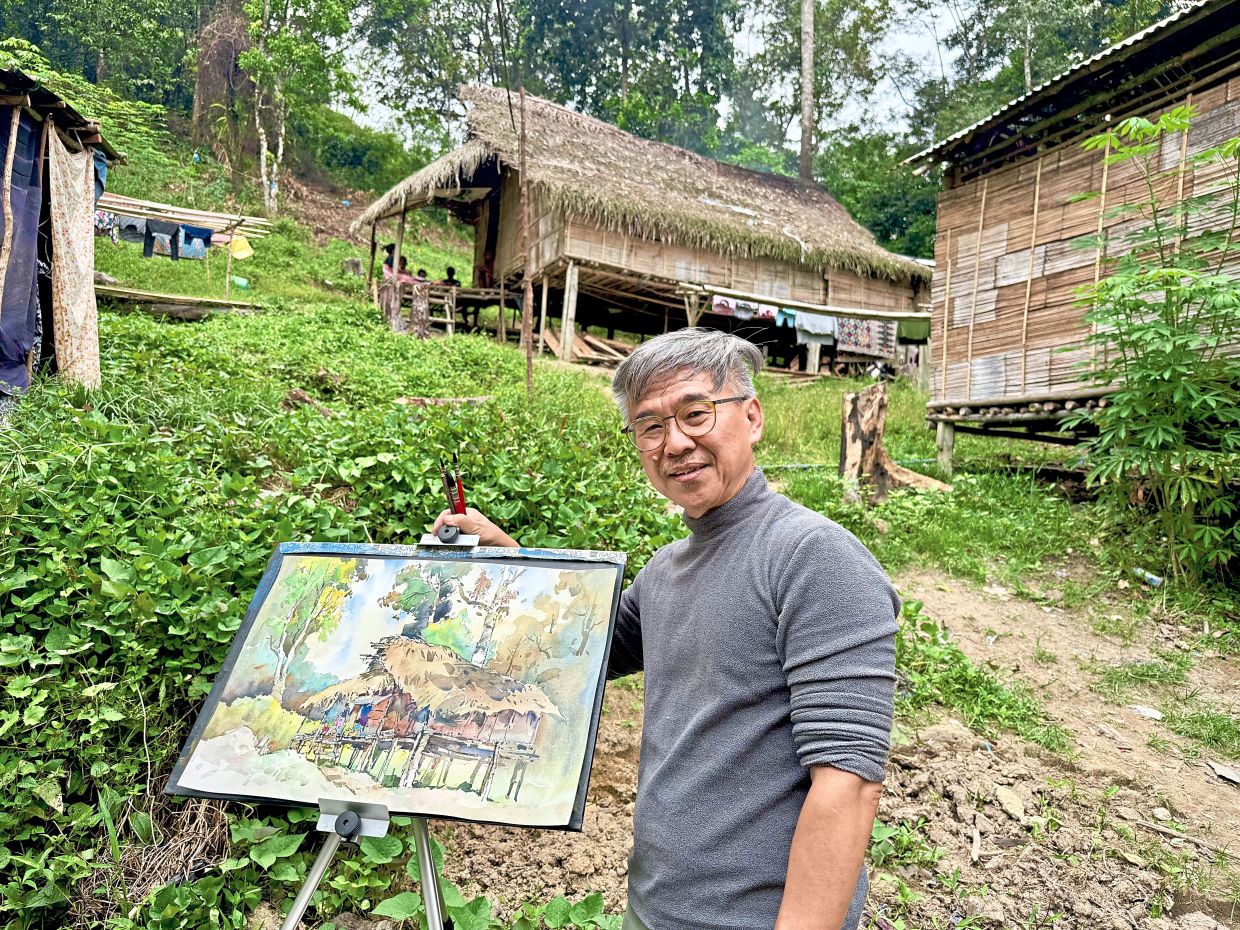
He then takes time to absorb the beauty of his surroundings before finding a suitable spot – usually by a river – to set up his tripod and palette. There, he begins bringing the landscape to life with delicate washes of colour on paper.
These trips, lasting a few days in the interior of Perak or a little longer when he travels to Sarawak, have become a regular part of Chua’s painting routine.
A collection of Chua’s artworks – mainly from Sarawak and Perak – is currently on display at AweGallery in Petaling Jaya as part of his 14th solo exhibition Forestborn.
Running until Sept 3, the exhibition features 30 works in various sizes, spanning watercolours, oil paintings and sketches.
It is his first solo exhibition since Dance On Canvas at Fo Guang Yuan Art Gallery in Jenjarom, Selangor in 2024, a celebration of movement and rhythm.
“All my paintings are reminiscent of my childhood. I grew up in a small Kedah town called Bukit Pinang, where there was a paddy field behind my house, an orchard and a river nearby. These were places where I spent much of my childhood, carefree and at leisure,” says Chua.
“During my travels, whenever I visit a village in the rainforest, I find myself inspired by the surroundings and gain many ideas. This inspired me to create a rainforest series.
"There is a delicate balance and harmony among all living creatures in the forest – from the trees and birds to the insects and other flora. I find beauty in its simplicity and in the way everything coexists and works together,” he adds.
Watercolour and sketching might be Chua’s preferred choices on location, allowing him to travel light and capture the tranquillity of nature and fleeting moments with ease.
However, the new exhibition, featuring striking oil-on-canvas portraits, also reflects Chua’s mastery of different mediums, with his signature use of greens and browns as a base.
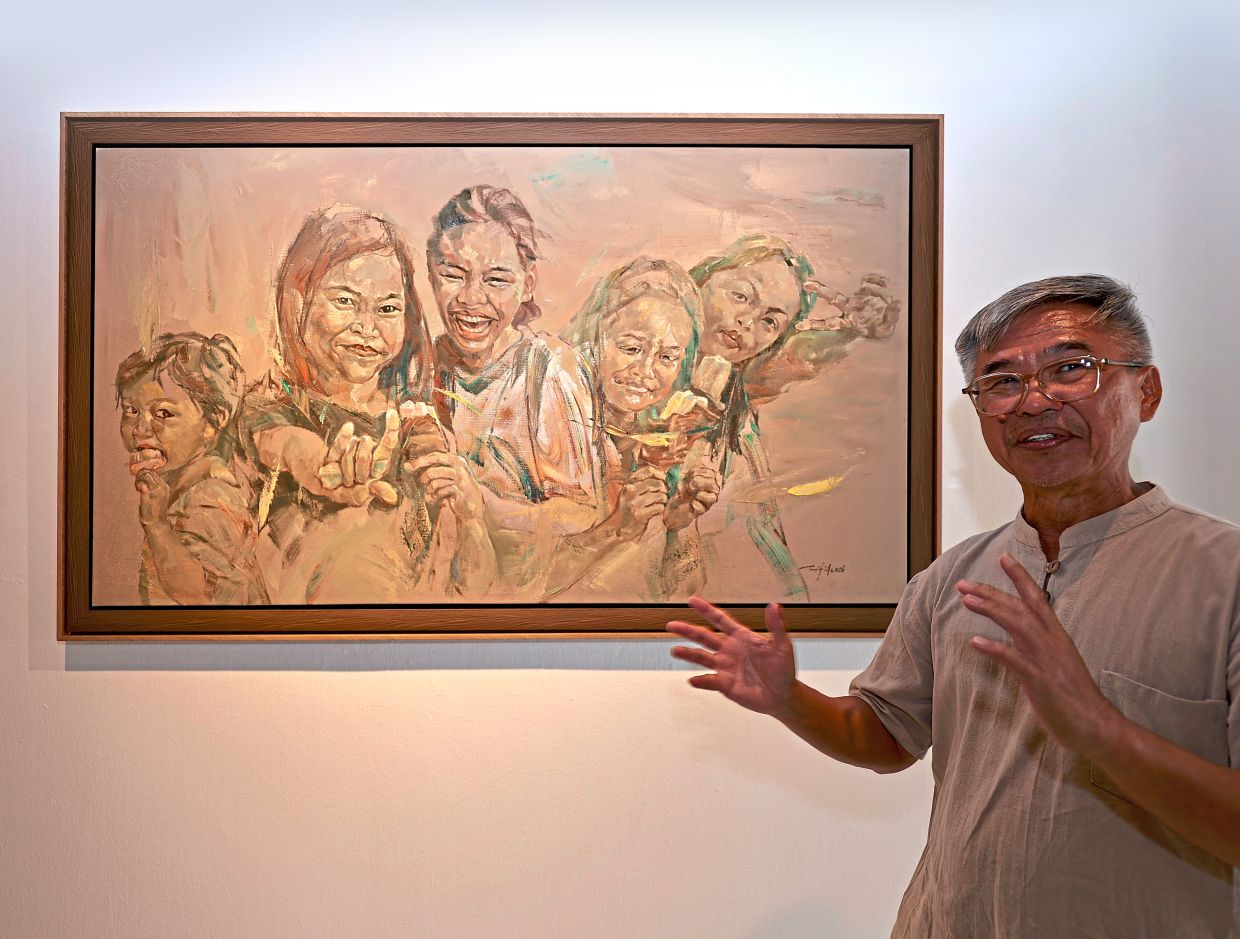
“I don’t really think so much about the medium, but rather how I want to express my feeling is more important. I usually take videos of the environment to capture the vibe, so that when I get home to my home studio I can paint acrylics. It’s really the moment that I want to capture,” he says.
There is a subtle sense of storytelling in Chua’s work, which often centres on ordinary people living in harmony with their surroundings.
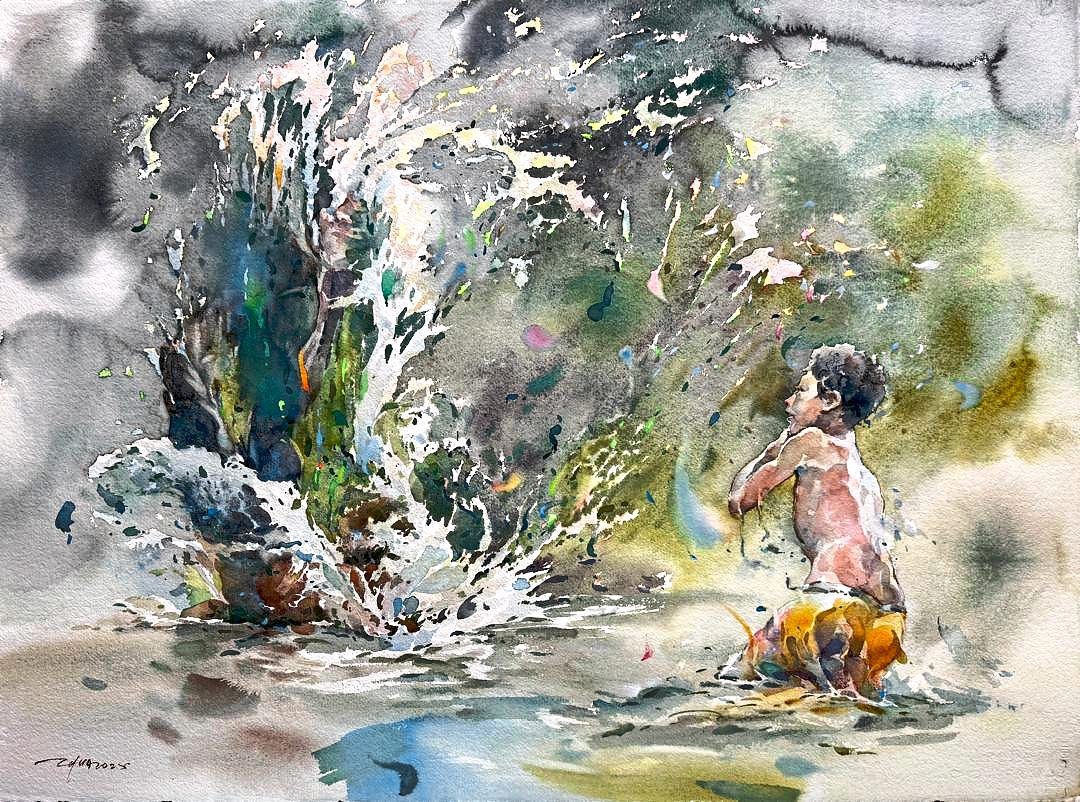
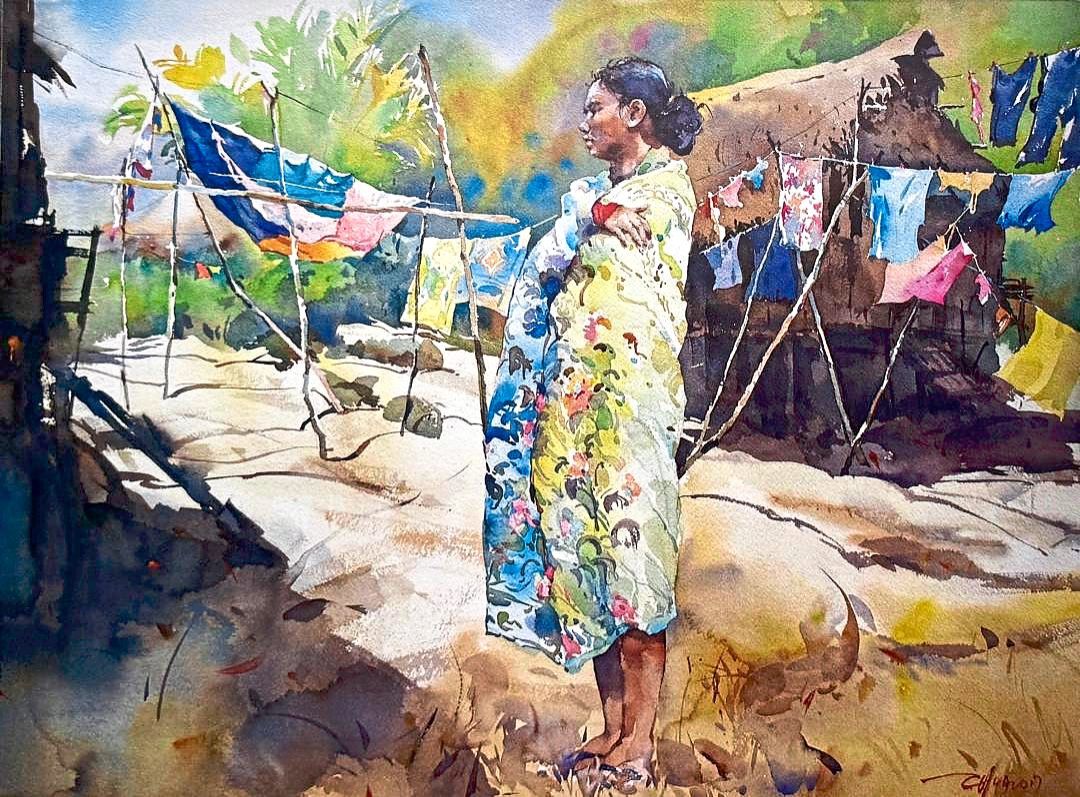
Rural life of children making a splash in a river, a traditional dance ceremony in Sarawak and an everyday moment of people hanging out clothes are among the scenes featured in the exhibition.
It is Chua’s textures, tones and playful brushwork that bring these scenes to life.
Forestborn exhibition curator Ong Jian Yang sees in Chua’s painterly language the maturity of an artist who has learned to trust observation, restraint and experience.
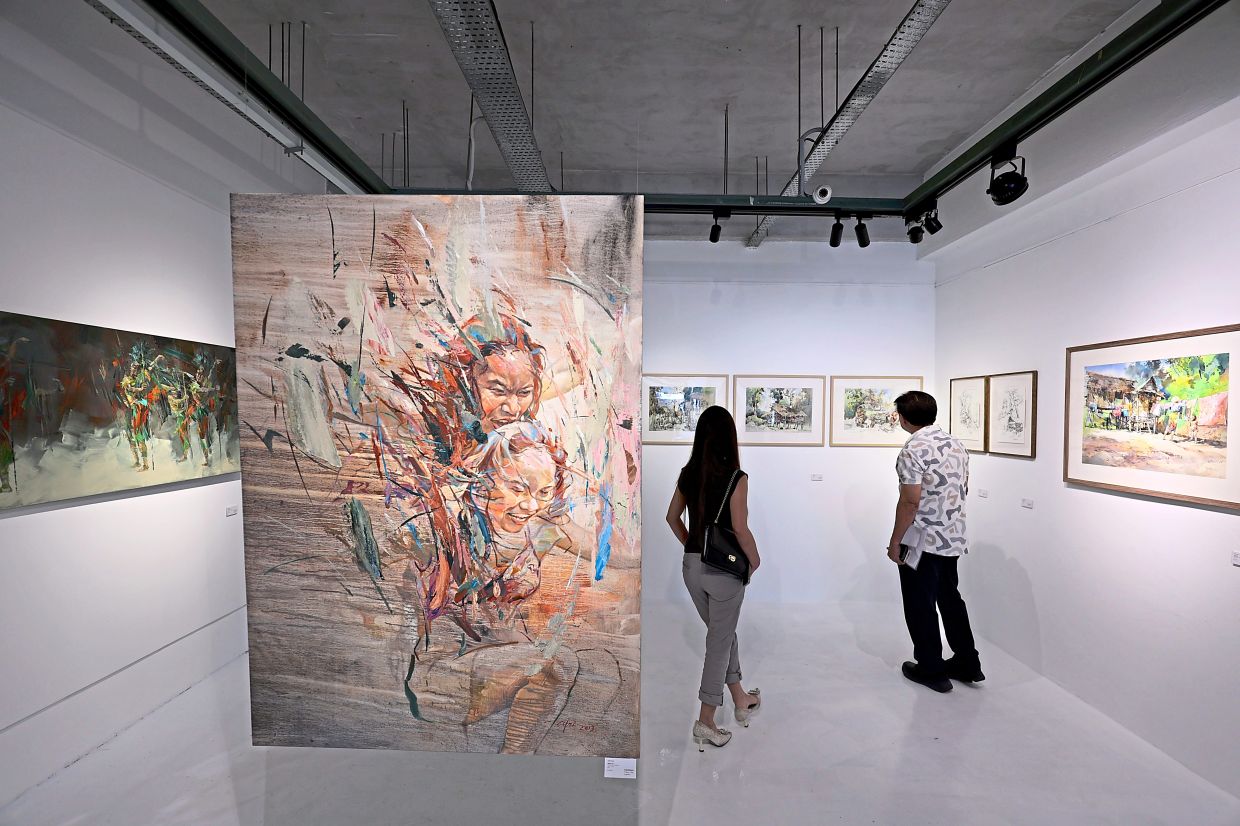
“Rather than seeking to record his subjects with photographic precision, Calvin captures something more elusive: the atmosphere, emotion and memory that remain after a moment has passed,” says Ong.
As chairman of the Malaysian Watercolour Society, Chua sees the medium as more than a technique, it is also a way of preserving these everyday stories for future generations.
“The beauty of watercolour lies in its wet-on-wet technique, which other mediums can’t replicate. It is also easy to prepare. I’m glad to see a growing culture of sketchwalks, where people gather at landmarks to paint in watercolour,” he says.
This growing interest in watercolour is encouraging for Chua, who has been painting since the early 1980s and remains deeply committed to the craft.
As an artist, educator and art diplomat – he recently led a group of watercolour artists on a tour of China – he has witnessed the local art scene evolve. He takes particular pride in seeing younger Malaysians pick up a brush and find joy in capturing their surroundings.
One memory stands out for Chua: a trip to Sa Pa Valley, Vietnam, for an international workshop. While exploring the forest, he emerged into a valley filled with families and children playing in the water.
“I remember the sound of the wind through the trees and the soft laughter in the distance, like a party was taking place,” he recalls.
Although his art has taken him to faraway places such as China’s Silk Road, Chua finds particular inspiration in exploring Malaysia beyond the main roads.
To him, the Forestborn exhibition is also is a timely showcase, coinciding with Merdeka month and leading up to Malaysia Day – a period of reflection on the country’s identity and heritage.
“I’m very happy to exhibit such authentic subject matter during Merdeka month. I wanted to bring out the beauty of Malaysia – its harmony, people and nature. I’m fortunate to travel and capture these moments, including the recent Gawai parade in Sarawak. Through this exhibition, I wanted to show how Malaysians express their identity,” he concludes.
Forestborn is showing at Awegallery in Petaling Jaya until Sept 3.