



MORE than five centuries ago, in the early 16th century, the Nusantara region has attracted the attention of explorers from around the world for its natural wealth. At the time, the humble nutmeg (Myristica fragrans) from the Banda Islands began as a major attraction, drawing ships across the oceans towards eastern Indonesia.
However, an important historical lesson continues to repeat itself: We have often allowed the region to serve merely as a source of commodities, while much of the greatest added value to that product is enjoyed elsewhere.
This has ultimately prevented communities from fully enjoying the prosperity generated by their own natural resources. The key ingredients of prosperity – technological capabilities, innovation, productive industries and quality employment – have yet to be fully realised.
“The real question is not what we have. The deeper and more important question is what we do with what we have,” said Indonesia’s National Development Planning Agency (Bappenas) deputy head Febrian Alphyanto Ruddyard.
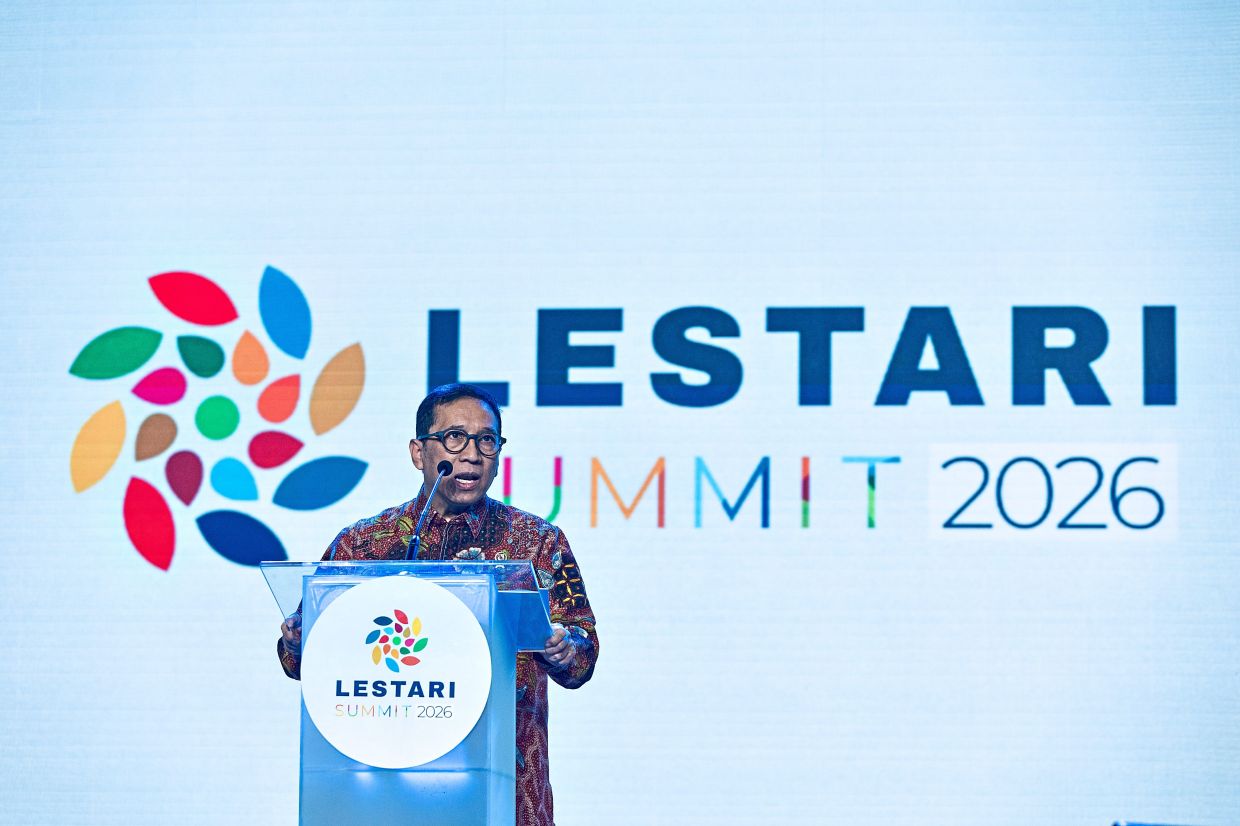
Febrian posed this reflective question while delivering an opening policy speech titled “Policy Making for Sustainability: Indonesia’s Pathway to Inclusive and Competitive Growth” at the Lestari Summit 2026 in Jakarta on July 22. At the forum, which brought together policymakers, businesses, academics and civil society, he emphasised the importance of a new paradigm for viewing sustainability.
There is a reason Febrian raised the question. From Bappenas’ perspective, Indonesia’s history of highly coveted commodities is repeating itself. If the world once competed for spices, it now needs critical minerals for electric vehicles, renewable energy, sustainable food systems and biodiversity conservation. The difference is that today’s challenge is not merely about pursuing production and innovation, but about putting sustainability principles into practice.
Sustainability has often been framed as a dilemma between economic growth and environmental protection, or between development and conservation. However, Febrian believes this old dichotomy must now be abandoned. Every country, including Indonesia, must be able to develop industries that create high added value while reducing emissions.
“In other words, sustainability is not about slowing development. Sustainability is about improving the quality of development,” said Febrian.
Indonesia is now entering a strategic transition towards becoming one of the world’s major economic powers. Its fundamentals are strong, ranging from abundant biodiversity and significant renewable energy potential to a dynamic young population and strategic geopolitical position at the crossroads of the Indo-Pacific. However, all these resources require the right policy direction to translate them into prosperity for the people.
The role of markets, innovation and private investment is important.
Nevertheless, Febrian stressed that major transformations rarely occur without clear policy direction, strong institutions and consistent long-term planning.
From Bappenas’ perspective, sustainable sectoral transformation rests on three main pillars. First is sustainable industrial downstreaming.
“Government downstreaming policies are not merely about processing minerals domestically,” said Febrian.
The main focus is to build a competitive industrial ecosystem, strengthen national technological capabilities, encourage innovation and ensure that the added value created remains in the country.
Second on the agenda is climate-adaptive food security. Success in this sector is no longer measured simply by agricultural production volumes, but by the ability to build food systems that are resilient to climate change, improve water-use efficiency, restore ecosystems and enhance the welfare of rural communities.
The third is strategic energy transition. The energy transition is not simply about replacing one type of fuel with another, but a strategic step towards strengthening national energy security, accelerating clean investment, adopting new technologies and creating quality jobs.
Transformation and the regenerative paradigm
Beyond commodities and infrastructure, people remain the key to transformation. No nation can become advanced simply through abundant natural resources without a corresponding improvement in the quality of its human resources. Therefore, investment in education, vocational training, digital skills and talent development is fundamental to ensuring that Indonesia’s younger generation are not merely spectators, but drivers of innovation at the global level.
In planning, Bappenas emphasises an evidence-based planning approach that integrates geospatial data and analytical technology. This is necessary because 21st-century development planning requires accurate data to ensure that every policy produced is future-oriented.
More broadly, there is a conceptual leap from the framework of sustainable development towards regenerative development. While traditional sustainability frameworks often focus on minimising harmful impacts or maintaining the status quo, regenerative development goes further by actively restoring and improving the quality of life-supporting systems.
Febrian believes that to respond to global dynamics beyond 2030, Indonesia can no longer think only about preserving what already exists.
“Development must be able to improve the condition of the systems that support human life. Development must leave behind healthier forests, more liveable cities, more innovative industries, more adaptive institutions and a better-prepared society,” he said.
The regenerative concept raises a fundamental ethical question for policymakers: Can each generation pass on foundations for development that are stronger than those it inherited? If so, development will have achieved a meaning that goes far beyond economic growth figures alone.
Ultimately, this transformation requires cross-sector collaboration through a pentahelix approach involving government, business, academia, civil society and the media. The government provides strategic direction, businesses bring investment and innovation, universities contribute research, while civil society and the media help ensure the process remains inclusive.
The measures of public policy success also need to be redefined, shifting the focus away from formal reporting or claims of commitment towards tangible impacts on the ground.
“Our true measure of success is the quality of life we have managed to improve, the opportunities we have created, the economic resilience we have maintained and the trust we have built both at home and in the eyes of the international community,” said Febrian.
