PETALING JAYA: Setia Awan Land Sdn Bhd is looking to tap the growing demand from the automotive supply chain and other high-value industries with its RM1.4bil Tanjong Malim Hi-Tech Park, which has already secured two investors involved in Proton’s supply chain.
The 447-acre industrial development – located near Proton City and outside the designated Automotive High-Tech Valley (AHTV) area – is expected to benefit from the expansion of the automotive and electric vehicle (EV) ecosystem around Tanjong Malim.
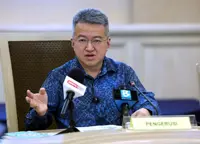
Setia Awan sales and marketing general manager Miles Chan said the property developer expects the park to benefit from the continued expansion of the automotive and manufacturing ecosystem in the area.
“As the automotive and EV ecosystem expands, we expect greater demand from manufacturers, component suppliers, logistics providers and other supporting businesses seeking to establish operations close to Proton City and the wider AHTV growth corridor,” he said.
“This presents an opportunity to address the gap between growing demand and the current supply of industrial land in Tanjong Malim.”
AHTV is a government-supported automotive hub that offers incentives to attract investment and is anchored by Proton City.
Setia Awan launched Tanjong Malim Hi-Tech Park on Sept 21, with Phase 1 covering 104 acres. The park offers infrastructure-ready industrial land parcels starting from five acres, with options for both sale and lease. Chan said Phase 1 had achieved a 50% take-up rate to date, including two confirmed foreign direct investments, with further discussions ongoing with prospective investors.
The two confirmed investors are Ningbo Fresh Technology Co Ltd and Sheentech Automotive Systems Sdn Bhd, both of which are involved in Proton’s supply chain.
Their investments in the park are expected to reach approximately RM500mil.
Infrastructure works for Phase 1 are expected to be completed by early 2027, with individual facilities to subsequently progress according to the respective investors’ operational requirements and construction timelines.
The first phase is targeted for completion by the first half of 2028, while the entire 447-acre development is targeted for completion by the third quarter of 2029.
Beyond the industrial component, Setia Awan is also developing Ionera, a 27.2-acre commercial component comprising 168 commercial units alongside amenities and services. Chan said Ionera had recorded more than 100 registrations and bookings, while a memorandum of understanding had also been signed with retail chain Billion Group, which is set to become its anchor tenant.
He said the commercial component was intended to provide retail, dining and other daily amenities for businesses and workers in the park, helping to create a more integrated industrial ecosystem.
“By bringing together industrial land, supporting infrastructure, commercial amenities and business support, our aim is to build a sustainable industrial ecosystem that can serve a broader range of industries over the long term.”
Chan said the development was being positioned as more than an industrial land offering, with its master plan incorporating supporting infrastructure and commercial amenities for businesses, workers and the surrounding community.
While automotive-related businesses are expected to be among the key users, Chan said the park was also open to high-value manufacturers, logistics operators and technology-driven companies.
“As the development grows, we expect it to attract a diverse range of businesses across manufacturing, logistics, technology and supporting industries, creating a well-supported industrial ecosystem that can contribute to long-term business and economic growth.”
He said the development is planned with infrastructure aimed at supporting “modern manufacturing and technology-driven industries”, including a centralised water reservoir, drainage and sewerage facilities, external water and sewerage reticulation, as well as telecommunications manholes and ducting.
Chan said the park’s location is another key selling point, with direct connectivity to the North-South Expressway and proximity to major logistics infrastructure.
It is about 9km from the Tanjong Malim toll and KTM cargo facilities, 110km from Port Klang and 130km from the Kuala Lumpur International Airport.
Chan said these connections would give manufacturers access to major domestic logistics routes and export gateways, while Perak’s comparatively competitive land and operating costs could further support investment decisions.
He said investors may also benefit from the Muallim Speed Lane, a facilitation framework designed to streamline the approval and implementation process for investors.
Chan elaborated that Setia Awan could assist investors in navigating the process, with development plan approval targeted within 30 days and the certificate of completion and compliance (CCC) and operating licence process facilitated within 24 hours, subject to the relevant requirements and approvals.
Eligible investors may also qualify for incentives such as pioneer status, investment tax allowance and import duty exemptions, depending on the nature of their investments and government approval, he added.
For Setia Awan, the entry into industrial development forms part of its broader strategy to diversify beyond residential and mixed-use projects.
Chan said the company saw an opportunity to address the gap between growing demand and the current supply of industrial land in Tanjong Malim, while providing businesses with the infrastructure and flexibility needed to expand.
“Tanjong Malim Hi-Tech Park enables Setia Awan to respond to this opportunity while establishing a presence in the industrial segment,” he said.
“Over the longer term, we aim to contribute to the growth of Tanjong Malim’s industrial sector by creating an ecosystem that can attract new investments, support the expansion of existing industries and accommodate the broader network of suppliers and supporting businesses that will grow alongside them.”
Setia Awan has more than 30 years of property development experience, with a presence across the Klang Valley, Perak, Melaka and Negri Sembilan. The company has delivered approximately 9,882 units with a cumulative gross development value (GDV) of RM2.9bil, and currently has an active development pipeline with a combined GDV of RM6.66bil.