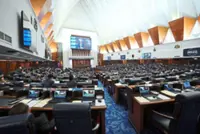
THE Malaysian Budget 2027 is scheduled to be tabled in Parliament on Oct 9.
It would focus on fiscal consolidation, reducing the cost of living, and expanding high-value employment. The government is not expected to introduce any new taxes in Budget 2027.
Instead, the focus will remain on expanding existing revenue streams, tightening tax enforcement, and advancing structural reforms.
Stricter measures are also expected from the Royal Malaysian Customs Department, utilising advanced tools like digital tax stamps and security-surveillance systems at borders to prevent tax leakage.
The year 2026 has given a sobering reminder that, in an increasingly unsettled world, stability cannot be taken for granted.
The protracted conflict in West Asia drove crude oil prices above US$100 a barrel and sent shockwaves through global supply chains. Yet, Malaysia has held its ground.
The biggest question around Budget 2027 may not simply be how much money the government spends. It may be where the government decides to draw the line.
There are competing demands for more welfare, better infrastructure, flood mitigation, business incentives, regional development, and living-cost relief, all while Malaysia is trying to invest in higher-value industries and prepare for an ageing population.
The government has given some signals as to where it intends to put its money and attention, with living costs, higher-paying jobs, strategic industries, healthcare, ageing, and the care economy among the major issues likely to shape the budget.
Caregiving priority
One of the clearest themes emerging ahead of Budget 2027 is the growing pressure around caregiving.
Additional funding is intended for welfare programmes, including assistance under the Social Welfare Department, support for caregivers and efforts to expand the professional caregiving workforce.
The issue is becoming increasingly difficult to ignore as Malaysia moves towards becoming an aged society.
The government has projected that 15% of the population could be aged 60 and above by 2030, putting greater pressure on families and the country’s existing care infrastructure.
There has been a plea by caregiving companies and organisations to the Finance Ministry to review the imposition of a service tax for caregiving services, as the additional cost might need to be absorbed by the caregivers due to affordability issues.
Living costs are expected to remain one of the biggest Budget 2027 issues.
The government has indicated that targeted assistance could be expanded, including through programmes such as Sumbangan Asas Rahmah, while Jualan Rahmah initiatives may also receive further support.
The pressure has become more acute amid concerns over global crude oil prices and supply-chain disruptions.
Existing relief provisions, such as the lifestyle tax relief covering eco-friendly or sustainable items and maximum tax deductions for childcare and kindergarten fees are expected to be prolonged or expanded into Year of Assessment 2027.
There are also calls for Budget 2027 to look beyond simply building large transport assets.
Public transport advocates have argued that funding should place greater emphasis on whether people can actually complete their journeys efficiently, including having reliable feeder buses, better last-mile connectivity, and more consistent operating schedules.
With higher fuel prices causing the government a big hole in the pocket, greater connectivity of the public transport systems will go a long way towards helping manage fuel consumption.
For small and medium enterprises, the argument is increasingly less about how large the government’s grant pool is and more about whether the money actually produces results.
Business support should be measured against concrete outcomes, including artificial intelligence (AI) and automation adoption; technical and vocational education and training integration and apprenticeship uptake; export expansion and, in the light of the recent events, stronger supply-chain resilience.
This direction would broadly align with the government’s wider focus on moving Malaysia towards higher-value industries.
Childcare benefits
The government is targeting a higher female labour force participation rate, and childcare is expected to be part of that strategy.
Potential measures include subsidised childcare infrastructure and incentives for more flexible working arrangements.
Malaysia is continuing to attract investment into data centres and other digital infrastructure, but the government has signalled that future incentives may come with stricter conditions.
In particular, data centre investments could be tied to requirements around energy and water efficiency, as concerns grow over whether rapid digital expansion could place additional pressure on public utilities.
Budget 2027 is expected to continue supporting strategic sectors such as semiconductors, AI, digital services, pharmaceuticals, logistics, aerospace and the energy transition.
For the government, Budget 2027 will be another test of whether it can balance immediate relief with the much harder task of changing how Malaysia grows in the years ahead.
Malaysia has made progress in strengthening economic growth, attracting investment and consolidating its fiscal position.
However, headline indicators offer limited reassurance if wages do not keep pace with expenses or if households do not experience better employment opportunities and public services. Budget 2027 should therefore be measured not only by how much the government allocates, but by the difference it makes to people’s lives.
Middle-income Malaysians also require greater attention. Many earn too much to qualify for substantial assistance but continue to face high housing, education, healthcare and caregiving costs. The government should review whether personal income tax reliefs adequately reflect these pressures and consider household circumstances such as family size, location and caregiving responsibilities.
If a broader consumption tax is considered, essential goods must remain protected, while vulnerable and lower-middle-income households should be adequately compensated.
Malaysians must also be able to see where the savings from difficult reforms are channeled into. The government should publish clear indicators showing whether its expenditure has reduced hospital waiting times, improved school facilities, raised household incomes, strengthened graduate employment or made public transport more reliable.
Ultimately, Budget 2027 does not simply need to be bigger. It needs to be better targeted, transparent and accountable. Economic reform will be sustainable only when Malaysians can feel its benefits through stronger purchasing power, better wages, quality employment and improved public services.
Harvindar Singh is council member, Chartered Tax Institute of Malaysia and tax partner at SCS Global Consulting (M) Sdn Bhd. The views expressed here are the writer’s own.