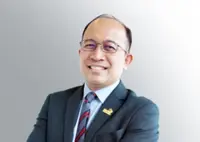
FOR Nigel Wong, the measure of good industry leadership is not how loudly you raise a problem but how effectively you solve it.
As the Malaysian Association of Tour and Travel Agents (MATTA) president, Wong has spent years doing exactly that, travelling across the country to meet members on the ground, listen to their challenges firsthand and build the kind of evidence base that turns grievances into actionable solutions.
That work crystallised into Trust, MATTA’s most ambitious initiative to date, and one Wong believes could fundamentally reshape how the tourism industry governs itself.
Trust is an industry-led framework that reinforces accountability, responsible practices and information sharing across the tourism ecosystem.
Listening before legislating
Before any platform was built, Wong made a point of going down to the ground himself.
Over the course of his MATTA leadership, he visited members across different states, listening directly to the challenges they face, rather than relying solely on filtered reports coming up the chain.
“You can’t be a good leader if you are only taking reports. You need to be proactive and go down on the ground to understand from the people themselves what challenges they are facing,” he said.
“Every state and every member is different, and they have their own issues and problems to deal with.”
What emerged from those sessions was a picture more complicated than anyone had initially anticipated. The problems were not siloed. Illegal operators, policy gaps and cross-border enforcement failures were deeply interlinked, varying in character from state to state.
According to Wong, three prominent pain points, however, surfaced consistently. The first is illegal transport operators – covering everything from tour and sightseeing buses and vans to limousines and private car services – compounded by cross-border complications with Singapore and Thailand that agencies struggle to resolve cleanly.
Second is the umrah and hajj sector, where unlicensed individuals and social media influencers promote and sell pilgrimage packages without insurance or formal accountability, leaving customers exposed when things go wrong.
The third is the prevalence of online operators, many of which are based outside Malaysia and the nation’s jurisdiction, which limits enforcement options available to domestic authorities and government bodies.
Insight to initiative
The recognition that problems were both widespread and interlinked led to the central question: What vehicle could bring together industry stakeholders, data and the government in a coherent, actionable way?
For MATTA, the answer was Trust, and at its operational core, TravelWatch.ai, an agentic AI platform designed to do what teams of human investigators could not do at scale.
The platform allows industry members, and eventually the public, to submit reports in any language, eliminating the language barriers that often result in incomplete or inaccurate accounts.
“If an individual can make reports in their language of choice, the data will be more accurate and of higher quality, as they will be able to better describe the issues they are facing,” said Wong.
From there, the AI takes over, gathering evidence, cross-referencing cases, identifying behavioural patterns and matching them against relevant provisions of Malaysian law.
“If you were to do it as an individual, it would take hours and hours of work just to browse social media, search websites and delve into documents to collect evidence,” said Wong.
The platform is capable of processing video, images and speech, and can browse through large volumes of documents while simultaneously mapping findings against applicable statutes.
Wong said that this means what might take a dedicated team days to piece together can now yield a first report draft in a fraction of the time.
Crucially, the system is not designed for criminal enforcement referrals, but for policy intelligence.
Pattern-matching across submitted reports can surface systemic gaps – cases where the problem is not a rogue operator but a regulatory blind spot that licensed businesses have been navigating around for years.
“Through the data we collect, we can tackle problems not just from a legal perspective but also from a policy perspective,” said Wong.
“It’s basically a two-pronged approach. We escalate complaints or reports to the relevant agencies, helping them in their enforcement efforts.
“At the same time, [we] work together with these agencies and other governing bodies to help make our policies and regulations better, so that it benefits everyone.”
Proactive, not reactive
Wong is deliberate about positioning Trust as a complement to existing government enforcement mechanisms.
The platform does not seek to bypass due process, as user privacy protections, legal compliance and factual accuracy checks remain embedded in the workflow.
He explained that what changes is the speed and quality of the information that reaches decision-makers.
“We’re not eliminating red tape, per se – we’re just able to do it faster, streamline processes and make them more efficient,” he said.
“We are assisting our government counterparts in reducing the amount of time and resources it takes to find actionable information. We have to be proactive in our efforts because, by the time you react to a situation, it is already too late.”
The initiative also addresses the scale of economic damage that informal operators inflict on the formal tourism ecosystem – damage that Wong says is substantial, even if the full figures remain difficult to quantify.
The concern extends beyond lost revenue as well. When tourists are defrauded or left stranded by unaccountable operators, the reputational fallout lands not on any individual bad actor, but on Malaysia as a destination.
“When something does happen to a tourist, and there is no accountability, that is where Malaysia’s image as a safe, welcoming country takes a hit,” said Wong.
“The tangible and intangible damage to the country, its coffers and the people who abide by the laws and regulations is very high.
“Trust is one way for us to mobilise the industry to tackle the problem together.”
Coalition building
For Trust to become a permanent fixture of the industry rather than a one-cycle campaign, Wong knows that MATTA cannot carry it alone.
The next phase of the initiative involves bringing in other recognised industry associations, such as the Malaysian Bumiputera Tour Operators Association (Bumitra), Malaysian Chinese Tourism Association (MCTA) and Malaysian Indian Tour and Travel Association (Mitta), whose members face many of the same structural problems.
The logic is straightforward. A report submitted by a single association carries one weight, while a coordinated data submission representing the collective experience of the entire formal tourism sector carries considerably more weight.
“We want to work closely with other recognised associations. We believe this system can be used to work with our industry counterparts – collectively and collaboratively – to identify issues, which we can then present to the government,” said Wong.
That collaborative architecture, he argues, is what distinguishes Trust from previous industry advocacy efforts – the difference between a complaint and a case.
“This is how Trust is intended to fit into the jigsaw puzzle. To complement the whole ecosystem, not break or disrupt it, but add value to a system that is already there by introducing AI and greater collaboration into the mix,” Wong noted.
Trust was officially launched by Tourism, Arts and Culture Minister Datuk Seri Tiong King Sing during the MATTA Membership Summit 2026 earlier this year, reflecting the importance of public-private collaboration in strengthening industry standards, consumer confidence and responsible tourism practices nationwide.
Wong said this was done to ensure government counterparts were fully briefed and legal parameters were clearly understood – a reflection of the same structured, data-first instincts that have defined his tenure at MATTA.
Now that it is in motion, his message to the industry is simple.
“What we need people to do is what they do every day. Send your reports to Trust, and leave the rest to us.”