PETALING JAYA: Despite intensifying global energy security concerns, Hong Leong Investment Bank (HLIB) Research expects elevated Brent crude oil prices to drive higher capital expenditure (capex) by Petroliam Nasional Bhd (PETRONAS), supporting a recovery in upstream activity by 2027.
HLIB Research noted that PETRONAS’ capex has historically tracked Brent crude prices with a 51% correlation, albeit with a one‑year lag due to project lead times and disciplined capital allocation.
This suggests that past oil price upcycles could again point to a spending rebound by 2027.
“During the 2012 to 2014 cycle, high oil prices supported PETRONAS’ capex of RM57bil to RM65bil, while the 2022 rebound led to a recovery in spending to RM53bil to RM54bil in 2023 and 2024 as activity normalised post‑pandemic,” it said.
If the historical relationship holds, HLIB Research projected that sustained high Brent crude prices in 2026, expected to average around US$90 per barrel, would underpin stronger spending momentum.
It added that PETRONAS’ actual capex has generally remained within guidance and that the group has maintained a positive net cash position for more than a decade, providing a buffer for dividends.
HLIB Research maintained its “overweight” call on the sector, underpinned by stronger upstream earnings prospects, improving oil and gas services and equipment (OGSE) order flows, and long‑term demand for storage, pipelines and broader energy infrastructure.
An additional tailwind is emerging as countries diversify trade routes and reduce reliance on single chokepoints.
HLIB Research said the Iran conflict has underscored the strategic importance of the Strait of Malacca, which handles about 22% of global maritime trade.
“Based on our estimates, Japan and South Korea are the most exposed, with 65% and 63%, respectively, of their crude imports sourced via the Strait of Hormuz, followed by China and India at 43% and 39%, respectively,” it said.
Analysts noted that the Strait of Malacca remained a critical trade corridor linking Middle Eastern supply routes to China, Japan and South Korea, with vessel transits rising from 63,636 in 2004 to a record 102,525 in 2025.
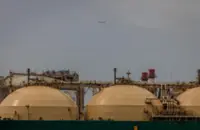
HLIB Research also highlighted the growing strategic role of Pengerang as a regional energy logistics and storage hub.
“Based on our channel checks, activity levels at Pengerang terminals have picked up recently, supported by vessel diversification and rerouted trade flows amid ongoing geopolitical disruptions,” HLIB Research said.
It added that New Zealand is reportedly exploring fuel‑storage options in Malaysia and Singapore as part of efforts to diversify away from a single supply route.
HLIB Research said Dialog Group Bhd and Wasco Bhd stand to benefit from Pengerang’s rising prominence.
Dialog is well‑placed to expand its storage footprint given its midstream positioning, tank‑terminal exposure and 660 acres of land in Pengerang.
Wasco is forecast to benefit from rising demand for pipeline coating and engineering works, supported by new pipeline infrastructure, strengthened crude supply routes and floating production, storage, and offloading‑related projects.
HLIB Research added that Wasco’s strategic presence in Qatar should enhance its exposure to tender opportunities for recovery infrastructure projects across the Middle East.