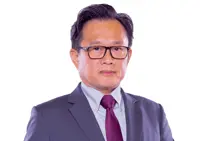
SYDNEY: A global wave of mergers and acquisitions is looming among private equity-backed data centre (DC) companies as their debt burdens become unmanageable, says Greg Goodman, chief executive officer (CEO) of Australian industrial property giant Goodman Group.
Goodman Group, which started out with a single industrial building in Sydney in the 1990s, is making a hard pivot to DCs, building out a global network of sites stretching from Los Angeles and Paris to Tokyo and Hong Kong.
The company is among legions of businesses worldwide racing to provide infrastructure for an artificial intelligence (AI) boom that will consume trillions of dollars.
In a rare interview at the company’s Sydney headquarters, the 63-year-old founder said he has growing concerns about the scale of private equity leverage fuelling the DC explosion.
The rising refinancing costs of billions of dollars of debt are unsustainable, he said, predicting forced asset sales that will ultimately leave a smaller group of better-capitalised players.
“There’ll be consolidation around the world,” the billionaire said. “You’ll see fewer DC developers and operators.”
The scenario will play out over the next two to four years, he said, declining to identify companies that may be vulnerable or point to examples of worrying debt.
Doubts about the viability of corners of the credit market have been circulating for months, with JPMorgan Chase & Co CEO Jamie Dimon in February calling out rival lenders for doing “dumb things”.
But the Goodman boss went further, mapping out the potential consequences in the DC sector should borrowers become overstressed and banks turn more selective with their lending.
“Look at all the private equity models,” he said. “There’s billions and billions of refinancing required just to keep these things sustainable.
“When does enough become enough for some of the big banks?”
Bain Capital-owned Bridge Data Centres (BDC) has engaged banks for a potential new loan of up to US$6bil.
BDC and DayOne Data Centers Ltd are looking to double last year’s facilities to at least US$5bil and as much as US$7bil, respectively.
Globally, DC construction starts surged from about US$60bil in estimated completed value in early 2020 to US$340bil by 2025, according to MSCI Real Capital Analytics data.
The Iran war is now adding to the challenges, piling pressure on strained power grids and swelling construction costs.
“Infrastructure is not getting easier,” Goodman said. “It’s getting harder.”
Rising power prices and energy security have already become a bigger consideration for bankers deciding whether to finance AI infrastructure.
In the Asia-Pacific region alone, approximately US$800bil of DC investment is expected by 2030, according to a February report by Deloitte LLP.
At Goodman’s offices, built on the site of an old hat factory a few kilometres from Sydney Airport, Goodman said he’s not concerned about the large listed companies investing in the sector.
Among them is Goodman’s top global customer, Amazon.com Inc, one of the world’s biggest spenders on DCs.
Goodman also said he’s in no rush to embark on any acquisition spree when DC operators feel the pinch.
Goodman’s alarm chimes with his reputation for conservative borrowing.
Some of the caution is embedded in scar tissue from the global financial crisis, when Goodman Group slumped to back-to-back annual losses, restructured debt and raised capital to weather the meltdown.
Since then, the CEO has sought to protect the company from similar trauma.
Goodman Group’s gearing – defined as interest-bearing liabilities divided by total assets – was about 4% at the end of 2025.
The average among its Australia-listed peers is 23%, according to data compiled by Bloomberg.
And the company retains so much of its earnings each year to fund its developments that its dividend yield is a miserly 1%.
Interim and final dividend payments to shareholders have been unchanged since 2018.
Goodman makes no apologies for keeping control of capital.
“Goodman can do everything we need to do over the next five years without being stretched financially,” he said. “That is really important.”
His approach to the DC opportunity is to “share the rewards and share the risks”.
The Canada Pension Plan Investment Board and Goodman announced a partnership in December to invest A$3.9bil (US$2.8bil) to develop DC projects in Frankfurt, Amsterdam and Paris.
That followed last year’s formation of a Hong Kong DC investment vehicle owned by Goodman and other institutional backers.
By the end of June, the company expects to have more than A$14bil of DC projects underway on powered sites owned by the company or with other investors.
Over the next seven or eight years, about A$150bil of its DC developments will need to be funded, Goodman said in the interview.
More partners will come on board to take on some of the financial burden, he said. However, success is not guaranteed.
“When everyone is in a frenzy, it’s easy to overpay for things,” said Yingqi Tan, an analyst at Morningstar Inc in Sydney.
DC developments are capital intensive and have long development lead times.
So the demand forecast they make today may or may not materialise.
“With those risks hanging over the sector, Goodman’s decision to bring in capital partners to avoid stretching itself makes sense,” Tan said.
“We do like seeing all these DC developments getting de-risked,” she said.
It’s all far removed from the Goodman Group of last century.
The company was listed on the Australian stock exchange in 1995 with eight Sydney properties and a market value of A$37mil.
It now has a total investment portfolio of A$87.4bil and a market value of about A$61bil.
While the CEO is wary of loading up with too much debt, he said the AI boom was a long-term opportunity that was too big to ignore – perhaps the biggest of his career.
“It’s like a beach ball coming down a cricket pitch,” he said.
“You’d have to be pretty blind not to hit it.” — Bloomberg