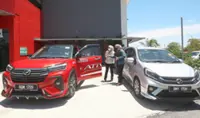
JAKARTA: Rising global energy prices triggered by the United States and Israel war on Iran are accelerating Indonesia’s shift towards electric vehicles (EVs)
It comes as consumers increasingly seek alternatives to internal combustion engine (ICE) cars amid concerns over fuel cost volatility and long-term energy security.
Private employee Bagus Adhiprakoso, who purchased his first personal vehicle, an EV, in March, said a combination of competitive pricing, advanced features and concerns over fuel prices influenced his decision.
“I sympathise with those who still use conventional cars, but it all depends on individual needs. Considering the current situation and my lifestyle, I think using an EV fully meets my requirements,” he said.
Initially sceptical about Indonesia’s EV infrastructure, like charging stations, Bagus said his concerns eased after evaluating his daily mobility patterns.
Similar considerations are emerging among prospective buyers.
Yonathan Philip Djari, another private employee, said he is considering switching from a fuel-based vehicle to an EV, though only for his second car for now.
Beyond the appeal of quieter and more technologically advanced vehicles, he pointed out the uncertainty in fuel markets as a key factor.
“The controversy surrounding private fuel providers and state-owned companies made me question the government’s readiness to ensure the availability of high-quality and evenly distributed fuel for the public,” he said.
“Coupled with geopolitical issues highlighting the country’s reliance on imported fuel, even though prices have so far remained under control, there are concerns that petrol prices could surge in the near term.
The volatility of fuel prices is also worrying going forward,” he said.
Yonathan added that Indonesia’s relatively stronger position in electricity generation, supported in part by coal oversupply, offers a sense of stability compared to fuel imports.
“There is hope that owning an EV will be less dependent on international conflicts,” he said.
Still, he emphasised that EV adoption remains gradual, noting that he has no immediate plans to replace his primary ICE vehicle.
Data from the Association of Indonesian Automotive Industries (Gaikindo) supported the sentiment, with battery electric vehicle (BEV) sales up 95.9% in the first quarter this year – 33,150 units, compared with the same period last year.
The surge lifted BEV market share to around 15.9% of total wholesales of 209,021 units, up sharply from 8.2% of 205,539 units in the first quarter of 2025.
Hybrid electric vehicles (HEVs) also gained ground, with their share rising from 6.8% to 8.1% over the same period.
Automakers have also detecting a structural shift in consumer preferences, particularly towards hybrid models seen as a practical bridge technology.
Bob Azam, vice-president director of Toyota Motor Manufacturing Indonesia, said hybrids are gaining traction as they align better with market conditions.
“Hybrids are a relevant transitional solution, particularly amid uncertainty in global energy prices and regional dynamics such as those in the Middle East, which also affect energy stability,” he said.
The government has reiterated its commitment to reduce dependence on fossil fuels and accelerate electrification.
“One of the steps is to use electricity, electrification, so we no longer rely too heavily on fossil fuel-based energy,” said President Prabowo Subianto in Central Java on Apr 9.
He added that such measures could significantly reduce, or even eliminate, fuel imports in the coming years.
To genuinely reduce reliance on fossil fuels, the public believes EV policies must be designed in a comprehensive manner, including the role of incentives.
Bagus acknowledged that government incentives played a decisive role in his purchase decision.
“Without incentives, I would definitely reconsider, as price remains the main factor,” he said.
Yonathan echoed this sentiment, warning that any reduction in incentives could delay his purchase plans.
“If incentives are reduced, there is a strong possibility I would postpone buying an EV due to the relatively high upfront cost compared to ICE vehicles,” he said.
He also highlighted the importance of maintaining affordable electricity tariffs for EV charging, alongside expanding charging infrastructure, which still lags behind the extensive network supporting conventional vehicles.
Beyond economics, environmental considerations also shape consumer attitudes.
While acknowledging that EVs generally offer lower lifetime carbon emissions than ICE vehicles, Yonathan pointed out concerns over the environmental and social impact of Indonesia’s nickel industry, a key component of EV batteries.
“If these issues continue to escalate or fail to improve, my hesitation to purchase an EV could increase,” he said.
Indonesia’s EV momentum mirrors a broader global shift, particularly across Asia-Pacific markets.
According to data from Benchmark Mineral Intelligence, global EV sales reached 1.75 million units in March alone, a 66% jump from the previous month. In the first quarter, total sales approached four million units worldwide. — The Jakarta Post/ANN