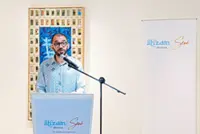
PETALING JAYA: IGB Commercial Real Estate Investment Trust (IGB Commercial-REIT) sees portfolio diversification as a key pillar of its long-term growth strategy.
Deputy chief executive officer Irene Sin May Lin said the REIT will continue to evaluate opportunities carefully.
“While our core focus remains on high-quality office assets, we are also studying opportunities in sectors such as industrial, education, healthcare and hospitality.
“These segments could provide complementary income streams and further strengthen the resilience of the portfolio if the right opportunities arise,” she told StarBiz.
When assessing potential acquisitions, Sin said IGB Commercial-REIT’s priority is always to consider assets with strong fundamentals, strategic locations and the ability to deliver stable long-term recurring income.
“For example, within the Mid Valley Southkey integrated development in Johor Baru, the north and south towers, which represent pipeline assets for the REIT, stand as quality commercial office assets situated within a well-established ecosystem that combines retail, lifestyle and office components.
“Developments of this nature illustrate the type of location, connectivity and asset quality we look for when evaluating potential opportunities that could complement the REIT over time.”
With that said, Sin said IGB Commercial-REIT’s approach remains disciplined.
“We are not looking to diversify simply for the sake of expansion, but rather to enhance the long-term income stability and resilience of the REIT.”
For its fourth quarter ended Dec 31, 2025, IGB Commercial-REIT’s revenue rose 14.3% year-on-year to RM68.8mil, while net property income (NPI) increased 37.5% to RM38.8mil.
For the full year, revenue reached RM259.9mil, with NPI growing to RM153.3mil.
“The performance was supported by improved occupancy, positive rental reversions and steady leasing momentum across our portfolio,” said Sin.
“One of the key highlights during the year was our continued focus on unlocking value from our existing assets.
“We undertook initiatives to optimise underutilised spaces and enhance building infrastructure, enabling tenants to operate more efficiently within our properties.”
Simultaneously, Sin said disciplined cost management helped strengthen overall margins.
“These efforts supported stronger occupancy levels while ensuring our buildings remain competitive in a market where tenants are becoming increasingly selective about quality, efficiency and sustainability standards.”
Overall, Sin said the results reflect the resilience of IGB Commercial-REIT’s portfolio and the effectiveness of its asset management strategy.
“While the market environment remains cautious, well-located, high-quality assets continue to demonstrate strong fundamentals, which give us confidence as we move into the next phase of growth.”
IGB Commercial-REIT’s portfolio comprises 10 commercial buildings strategically located in the Klang Valley, which are split between Mid Valley City and the Kuala Lumpur Golden Triangle.
Its assets within Mid Valley City are Menara IGB (and IGB annexe), Centrepoint South, Centrepoint North, The Gardens South Tower, The Gardens North Tower, Southpoint offices and retail, as well as the Boulevard offices and retail.
Its assets within the Kuala Lumpur Golden Triangle include GTower, Hampshire Place Office and Menara Tan & Tan.
“A major milestone for IGB Commercial-REIT in 2025 was that all 10 of its assets are now green-certified,” noted Sin.
“Achieving a fully green-certified portfolio is an important milestone as sustainability is increasingly linked to asset quality, tenant demand and long-term investment value.”
From an operational perspective, Sin said green buildings allow IGB Commercial-REIT to improve efficiency through initiatives such as energy optimisation and solar adoption.
“These measures help manage operating costs and support margin sustainability over the long term.
“It also strengthens our value proposition to tenants, particularly multinational companies that have their own environmental, social and governance (ESG) commitments and increasingly prefer offices that support their sustainability goals,” she added.
Sin explained that buildings that meet these standards tend to enjoy stronger tenant retention and demonstrate greater resilience during softer market cycles.
“From an investor perspective, a fully green-certified portfolio enhances our positioning with global institutional investors, many of whom place significant emphasis on ESG-aligned assets,” she said.
“It also supports access to sustainable financing options while strengthening the long-term attractiveness of the portfolio.
“Ultimately, this milestone reflects our commitment to future-proofing our assets while continuing to deliver stable and sustainable returns to unitholders.”
Looking ahead, Sin expects the office market to remain stable, but increasingly selective.
“Companies today are far more deliberate about the spaces they occupy.
“There is a clear preference for well-located, high-quality buildings that support productivity, sustainability goals and an improved workplace experience.
“This ongoing ‘flight to quality’ trend continues to benefit Grade A assets with strong fundamentals.”
At the same time, Sin said occupiers are still refining their hybrid work strategies.
“Rather than significantly reducing space, many companies are right-sizing and reconfiguring their offices to better support collaboration and flexibility.
“For landlords, this means continuing to evolve alongside tenant needs by providing adaptable spaces, robust building infrastructure and environments where people genuinely want to work.”
Cost management is another important consideration, added Sin.
“Businesses are balancing rising operating costs with continued investments in technology, sustainability and talent.
“As a result, leasing decisions are becoming more strategic and tenants are evaluating buildings more carefully.
“At the same time, competition from newer developments means landlords must remain proactive in maintaining and upgrading their assets.”
Within this landscape, Sin said IGB Commercial-REIT is also seeing encouraging potential in Johor, particularly within the Mid Valley Southkey development.
“The north and south towers at Mid Valley Southkey are quality office assets within a well-established integrated development.
“Projects of this nature are well positioned to benefit from increasing cross-border business activities between Malaysia and Singapore.”
Sin further highlighted that integrated developments that combine offices, retail and lifestyle offerings are becoming increasingly attractive as companies seek convenience, accessibility and a stronger ecosystem for their employees.
“Overall, we believe assets that prioritise quality, sustainability and tenant experience will continue to perform well.
“Our focus remains on strengthening the portfolio so that it remains resilient and well positioned to capture opportunities, as companies continue upgrading their workplace environments.”