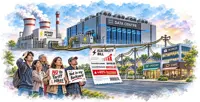
KUALA LUMPUR: Malaysia’s position as a net energy exporter, with petroleum reserves confirmed sufficient until at least May 2026, and the fiscal headroom created by two years of subsidy rationalisation, has placed the country in a meaningfully stronger position than its neighbours to navigate the current global energy crisis.
Think tank Social and Economic Research Initiative Bhd (SERI) chairman Dr Helmy Haja Mydin said the fact that Malaysia has not had to resort to any of these measures is a reflection of the MADANI government’s progress in fiscal management and the commitment to holding the subsidised RON95 price at RM1.99 per litre as an important protective floor.
However, he said the government must be clear-eyed about who is and who is not being shielded.
"The RON95 subsidy protects the pump price. It does not protect against the cascade of secondary costs, such as rising food prices, higher transport fares, and increased costs of goods and services already filtering through the economy.
"For B40 households, where 47 per cent of Malaysians report difficulty raising RM1,000 in an emergency, the margins are razor-thin. An oil crisis does not need to reach the petrol pump to impact the dinner table,” he said in a statement.
Helmy said SERI has called on the government to consider measures as part of its crisis response, such as expanding and accelerating targeted cash transfers, monitoring and capping the transmission of essential goods prices, protecting small and medium enterprises from cascading costs, and preparing contingencies for a prolonged crisis.
For think tanks, civil society, and policy institutions like SERI, he said that this is not merely a geopolitical concern; it is a fundamental question of whether the structures meant to protect the vulnerable and uphold justice are still functioning.
"We call on all parties to the conflict to pursue an immediate cessation of hostilities and a return to the negotiating table.
"We call on the international community to prioritise humanitarian access, protect civilians, and work towards a just and durable peace. And we remind policymakers everywhere that the costs of war are never borne equally - they fall heaviest on the poor, the displaced, and the forgotten,” he added. - Bernama