SINGAPORE: A dangerous new escalation in the Middle East conflict now drawing in the region’s oil infrastructure makes it likely that consumers and businesses in Singapore will soon see petrol prices rise again after a round of hikes last week.
Electricity prices, which depend heavily on natural gas, may also go up if Middle East supplies remain disrupted.
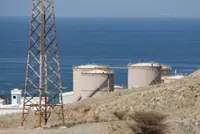
The expanding conflict is now seeing oil and liquefied natural gas (LNG) facilities in Bahrain, Kuwait, Qatar, Saudi Arabia and the United Arab Emirates targeted in attacks by Iran, while Israel has struck critical oil facilities in Tehran.
While the closure of the Strait of Hormuz has already disrupted the transport of oil, it would be quick to reverse once reopened.
But the damage to the region’s oil infrastructure means it would take much longer for production and exports to resume even after the missile and drone strikes stop.
Global benchmark Brent crude shot up as high as US$111 a barrel in early trading yesterday, up 20% from its close last Friday. This is the highest level Brent has reached since July 2022, when oil surged after Russia’s invasion of Ukraine.
Analysts said oil production cuts were expected as most producers in the region were signalling that they were running out of capacity to store the unshipped output.
The United Arab Emirates’ Abu Dhabi National Oil Co said on Saturday that it has “activated its well-established protocols and is working closely with the relevant authorities to protect its people, assets and operations”.
Kuwait Petroleum Corp said it was lowering production at both its oil fields and refineries after “Iranian threats against safe passage of ships through the Strait of Hormuz”.
Bloomberg News reported on Sunday there was also a continued physical threat to tankers plying the Persian Gulf.
Since the start of hostilities on Feb 28, Britain’s maritime security agency UKMTO has issued around 10 alerts for attacks on vessels in Hormuz, a narrow waterway connecting the Persian Gulf to the Indian Ocean that handles a fifth of the world’s oil and large volumes of LNG.
The International Maritime Organisation listed on its website on March 6 a total of nine attacks on ships in the strait in one week, including four incidents that killed a total of seven people.
The Strait of Hormuz is just 38.5 km wide at its narrowest point and traces the coastline of Iran, which is facing a joint air campaign against it by the United States and Israel.
Iran on its part has retaliated with missile and drone attacks on Israel and Arab states across the Middle East that host American military facilities.
The oil production cuts come on top of the force majeure declared by Qatar, one of the world’s top LNG exporters and a key supplier for Singapore, after a strike last week on its Ras Laffan plant, which cools and compresses natural gas into liquid that can be shipped.
Some 15 million barrels of crude oil and 290 million cubic metres of LNG pass through Hormuz each day from the Middle East to mainly Asia and Europe.
Analysts said oil supplies from the Middle East, which accounts for roughly 40% of all global crude exports, may remain constrained or even dwindle further as tankers plying the region are running out of marine fuel, which typically comes via Hormuz as well.
But for petrol and diesel prices in Singapore and the rest of Asia, the more immediate impact is coming from China, the region’s third-biggest petrol supplier that on March 5 told the country’s top refiners to temporarily suspend exports immediately, with some exceptions.
Petrol prices in Singapore are fixed by retailers daily, taking the Mean of Platts Singapore (MOPS) average of daily price assessments published by S&P Global Platts. While S&P MOPS assessments are not made public, analysts said they had been volatile and skewed to the upside through most of last week.
Petrol pump prices in Singapore crossed S$3 per litre last week and are expected to test S$4 levels last seen for the premium Octane 98 grade in early June 2022.
US investment bank Goldman Sachs estimated that even if the two pipelines that evade Hormuz – the East-West pipeline from Saudi Arabia that terminates in the Red Sea and the Fujairah pipeline from the UAE ending in the Gulf of Oman – operate at full capacity, there would still be roughly 16 million to 17 million barrels per day of supply at risk.
Qatar’s Energy Minister Saad al-Kaabi told the Financial Times last week that all Gulf energy exporters would shut down production within days, driving oil to US$150 a barrel.
He also predicted that LNG prices would rise by almost four times the level before the war began, reaching US$40 per million British thermal units (BTU). He was probably referring to spot prices that are already close to US$30.
Last week, the US Henry Hub natural gas benchmark was US$2.97 per MMBtu, while the European Title Transfer Facility benchmark was at US$17.01, and the Japan-Korea Marker was US$15.495. — The Straits Times/ANN