
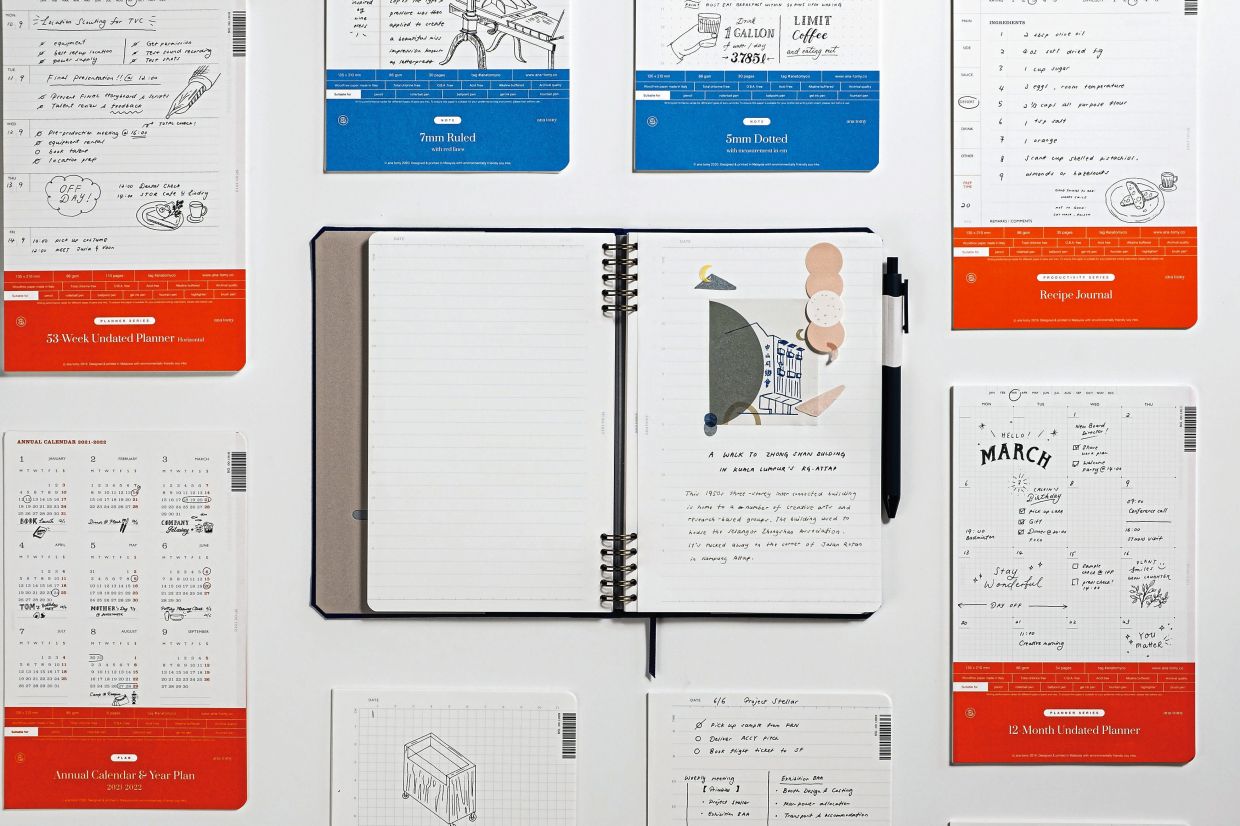
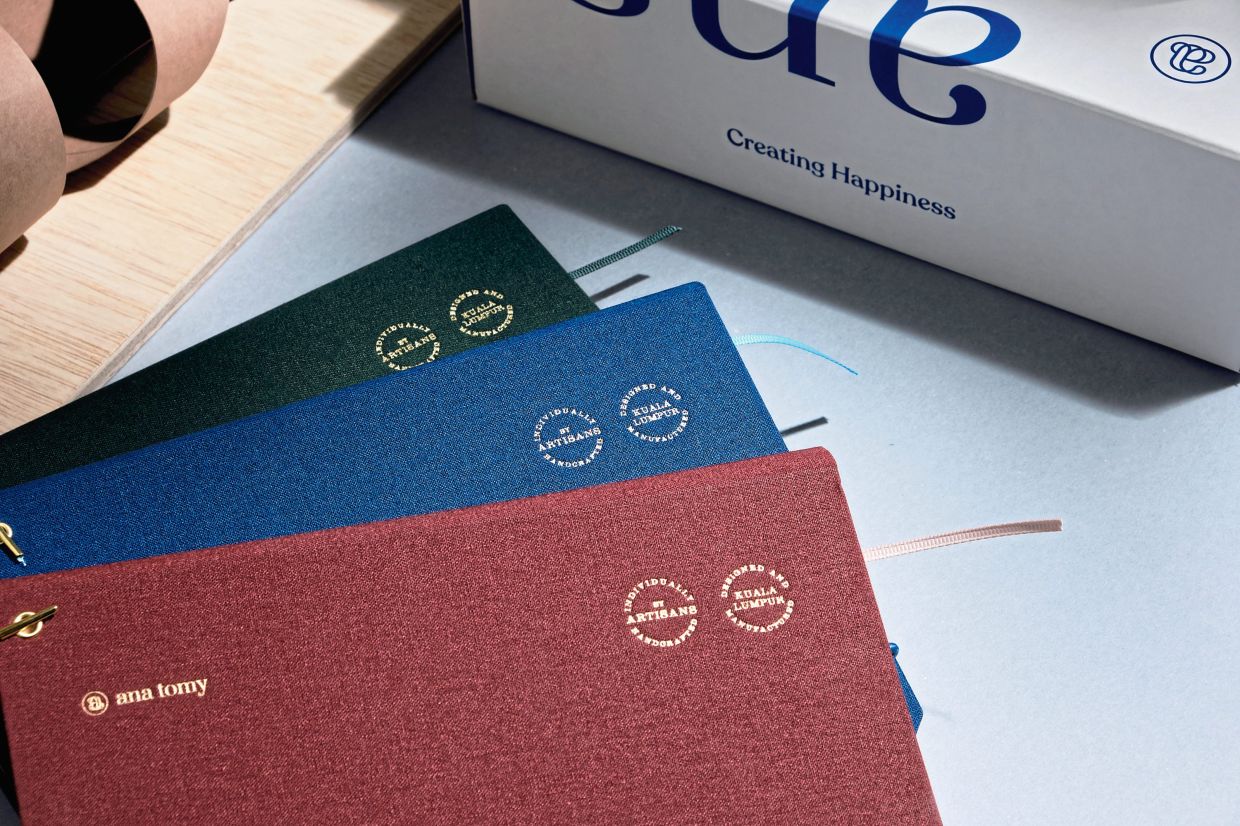
TUCKED in the creative enclave of Kuala Lumpur’s Zhongshan Building, Ana Tomy’s store is a one-stop curated trove of stylish stationery and lifestyle goods. Its selection of wirebound and threadbound notebooks, in all manner of colour and styles, are particularly coveted among stationery enthusiasts.
To its three founders, however, the main offering here isn’t the retail items, but rather the premium, personalised experience they come with. For a notebook or tote bag that is truly their own, customers come in, select their desired components from a wide range of options, and have it built on the spot.
“When we design a product, we’re really creating a platform and space where people can participate in the process,” says Cliff Leong, director and co-founder of Ana Tomy.
Leong, along with Fidella Ch’ng and Zeejay Wong, comprise the company’s founding team.
No strangers to crafting bespoke products, they are also the minds behind The Alphabet Press, a letterpress stationery company focusing on customised business cards, wedding invitations and paper goods.
“The Alphabet Press was largely service-based, and we had always wanted to create our own product and have our own stores,” he recalls.
“The challenge was coming up with a product, because design is so subjective and personal. We eventually brainstormed this idea of a service that lets customers choose and create what they want.”
Ana Tomy, anchored by the concept of “mass customisation” was born. The founders sought to provide a middle ground between uniform, transactional retail experiences and fully tailored, customised services on the market.
“With bespoke services, there’s much more communication and understanding of needs, but it’s time-consuming and expensive. We wanted to merge that premium custom experience with accessibility and speed,” he says.
Through mass customisation, customers get to personalise each part of a notebook, from the cover design and elastic band colour, to the type of pages and inserts they want.
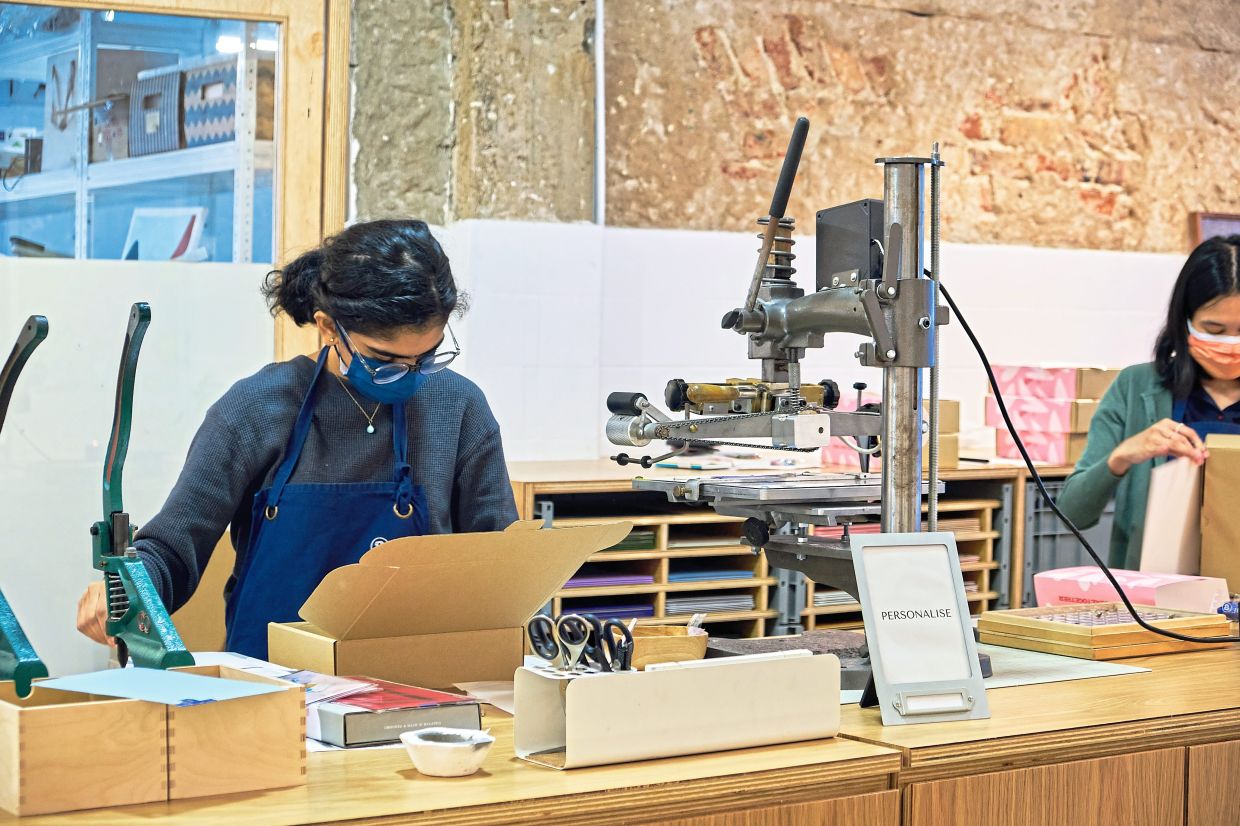
As a result, there are over 100,000 possible combinations one can end up with. After all the personalisation choices are made, an artisan assembles the final product in 20 minutes.
Since the brand’s launch in 2016, Ana Tomy’s customisable notebook offering has proven to be a success with consumers. The brand’s notebooks currently contribute close to 60% of its revenue, Leong reveals.
Much time and effort has been channelled into refining and improving the personalisation experience. The team continually aims to walk the line between having enough variety and customisable elements for customers and overwhelming them with too many choices.
“Over the years, we have learned a lot about what’s too much and what’s too little,” he says. “It was important for us to create a very simplified and streamlined experience.”
As a result, the customisation process has been broken down to three efficient steps: cover, paper and accessories.
Given that the customisation and assemblage play such a prominent role in the experience, extensive training is also poured into ensuring the front-end artisans deliver consistent quality of service, he adds.
Aside from this, the base notebook itself is also regularly updated based on customer feedback. Over time, the product is improved as new technologies and materials become available and economies of scale make such changes attainable.
“The whole notion of our brand is that through small changes and upgrades along the way, we can provide more flexibility, modularity and accessibility for customers in how they use the product.”
Additionally, the business’ corporate gifting services also provide a level of personalisation, offering customised content pages as well as individualised name engraving for each recipient.
Ana Tomy has two retail stores in Malaysia and two in the Philippines, with its fifth outlet opening soon in Manila. The business also has a strong eCommerce presence, though Leong notes that the online and offline strategies are designed for different needs.
“In physical stores, there are lots of samples displayed, so customers tend to take their time feeling and trying the options. When it’s online, people are geared toward quickly and efficiently getting to checkout, so we’ve made it easier by providing pre-selected suggestions.”
He adds that those shopping online tend to be long-time, loyal customers who will be the first to grab newly launched products and collections, while outlets like its Pavilion Kuala Lumpur store act as an introduction to the brand for new customers.
The popularity of Ana Tomy is testament to the sizeable local consumer market seeking premium stationery goods and paper products. Leong opines that this demand has long existed, though such products have only become accessible and affordable for a wider market in recent years.
“It has always been instinctual for humans to put ideas down on paper. As technology advances and we shift into a more digital lifestyle, stationery has become a niche category. Due to this, we see people now demanding higher quality stationery options,” he says.
Beyond stationery, the business has expanded to customisable lifestyle products such as bottles and bags. It has also established its “Artist Discovery” programme, which enables illustrators and artists to showcase and monetise their works through Ana Tomy’s notebook covers.
“Through this outreach, we are tapping into a community of creatives and artists who each have their own unique story. As a brand rooted in individuality and creativity, engaging these artists helps us reach a key audience that resonates with our values, which allows us to continue growing organically.”
Already a subscriber? Log in
Get 20% OFF The Star Digital Access
Cancel anytime. Ad-free. Unlimited access with perks.
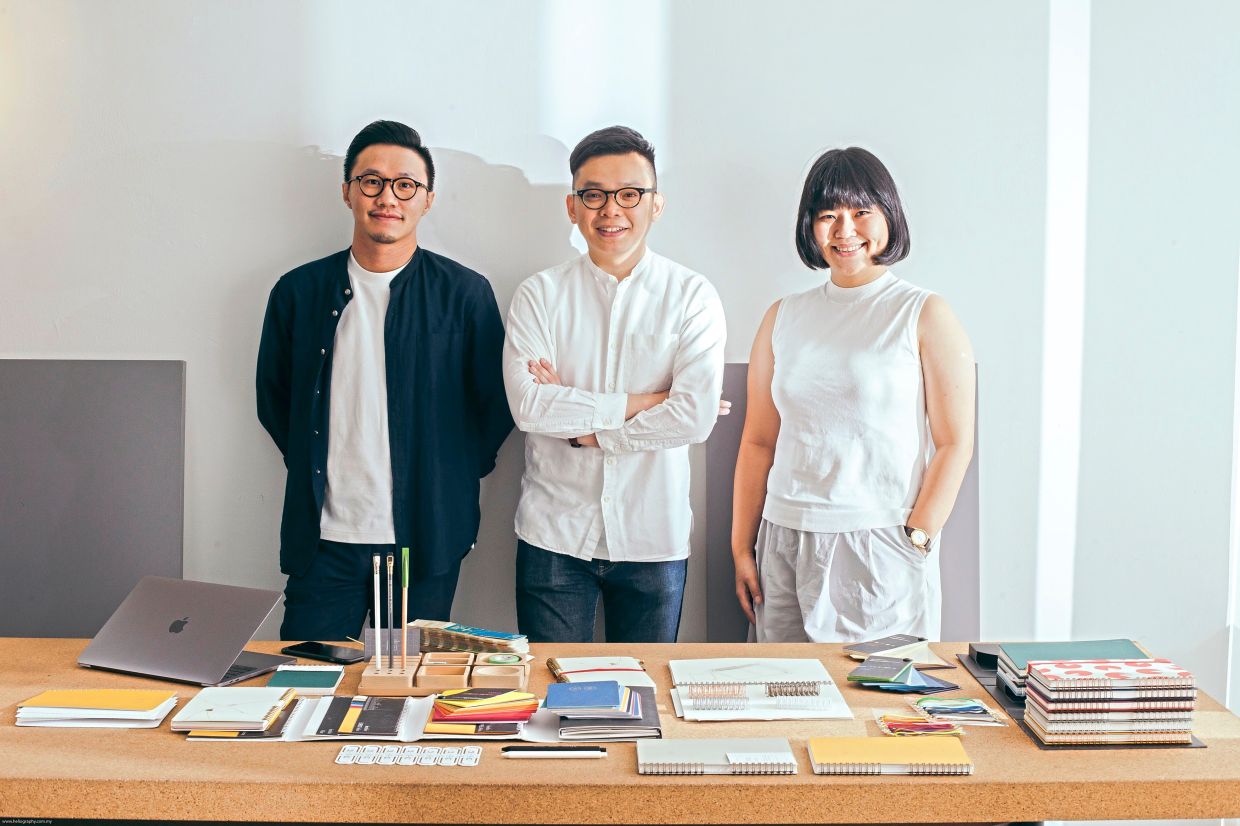
(From left) Leong, Wong and Ch’ng. Ana Tomy was founded to merge a bespoke experience with accessibility and speed. Photos: Ana Tomy
The aim of product development is to continually enhance flexibility of use for customers.
Notebooks currently contribute close to 60% of the business’ revenue.
Following the customer’s customisation, an artisan assembles the final product in-store in 20 minutes.