
PETALING JAYA: Although the reciprocal tariff to be imposed on Malaysia by the United States is not significantly expected to dent the country’s economy for now, economists say the government should step up its trade and investment with Asean and other regions to offset any potential drop in exports to the world’s largest economy.
They noted at present the country’s economic fundamentals were intact, owing to its diversified economy, strong domestic demand, robust public and private investments amid the looming global recessionary risks from the tariffs.
Most economists are projecting the country’s economy to grow by 4% to 5% for 2025, which is still commendable despite global trade tensions and a possible trade war.
For the entire year of 2024, the economy grew 5.1%, and for this year, the gross domestic product (GDP) growth target is between 4.5% and 5.5%.
Effective April 9, Malaysia would be slapped with a 24% reciprocal tariff as US President Donald Trump’s administration targets countries with which it has the largest trade deficits.
A baseline 10% would apply to all goods entering the United States effective April 5.
Malaysia was featured at the 11th spot of the reciprocal tariff chart Trump held up when making the much-awaited announcement.
According to the chart, Malaysia applies a 47% tariff on the United States, with reciprocal tariffs on Malaysia set at half that rate.
Sunway University professor of economics Yeah Kim Leng told StarBiz domestic consumption and foreign and domestic direct investment together with government spending have become more prominent drivers of Malaysia’s growth this year.
He said this is because of the likely slowdown in the country’s exports arising from Trump’s tariff hikes on a global scale.
He said boosting trade and investment within Asean and with other regions such as the European Union (EU), Africa, Middle East and North-East Asia, including China, may partially offset any decline in exports to the United States markets due to higher tariffs.
Yeah said it is still a bit early to revise the projected GDP growth for this year, given the ongoing trade negotiations and uncertain trade adjustments to differential tariffs imposed on different countries.
“Nevertheless, the downside risk has ratcheted up with the unprecedented and highly disruptive tariff policies being pursued by the Trump administration to restructure the global production and trade order in its favour,” he noted.

Bank Muamalat Malaysia Bhd chief economist Mohd Afzanizam Abdul Rashid said the latest move by the United States on reciprocal tariffs is a real test whether Asean could come as a collective nation and negotiate for a better deal.
He said going collectively to negotiate with the United States is the right direction, and this is where Asean as the key platform comes into play to secure better trade deals.
“Risk of retaliation by the affected countries can lead to a further increase in the cost of doing business and a slowdown in global growth.
“I suppose the main idea of the United States’ move is to bring countries to the negotiation table and to hatch a win-win solution,” said Mohd Afzanizam, who is forecasting Malaysia’s GDP growth for this year to be between 4.5% and 5%.
On another note, he believes the domestic demand as an economic growth driver is robust.
He said Bank Negara has the monetary policy space to prescribe an easing policy in the event of more pronounced weaker global growth.
“The government has been reprioritising its spending and has been allocated more resources for a cash transfer programme and progressive wage policy that could help improve private consumption growth.
“However, businesses would be more wary of spending while the higher cost of living could keep consumers spending judiciously,” Mohd Afzanizam said.
Meanwhile, the Investment, Trade and Industry Ministry (Miti) said Malaysia is not looking at retaliatory tariffs against the United States.
The ministry said it views the tariffs seriously and is actively engaging with US authorities to seek solutions that would uphold the spirit of free and fair trade.

Commenting on the latest tariffs, OCBC Bank senior Asean economist Lavanya Venkateswaran said it would impact Malaysia’s growth.
She said Malaysia’s tariff rate of 24% is high compared to the bank’s estimate but lower compared to regional peers.
She said the semiconductor sector, almost a third of Malaysia’s exports to the United States, have not been slapped with the tariff yet but does not rule out the likelihood for this sector being impacted, she said.
The bank is reducing its 2025 GDP growth forecast to 4.3% year-on-year from 4.5%. This is given the impact of weaker external demand, as most of Malaysia’s trading partners have been hit by tariffs.
“While the stance of fiscal and monetary policy may not make dramatic shifts, it will likely lean towards becoming more growth supportive. The government plans to rationalise RON95 prices in a bid to reduce fuel subsidy expenditures.
“The government has stated that low-income groups will not be impacted. We see rising risks that this implementation could be delayed particularly if tariffs on semiconductor exports to the United States are announced before the second half of the year,” Lavanya said.

RAM Rating Services Bhd senior economist Woon Khai Jhek, who is maintaining his GDP growth projection of 4% to 5% for the year for now, said despite the challenges posed by rising trade tensions due to the reciprocal tariffs, there are opportunities for Malaysia.
This can be in the form of trade diversion and improved cost competitiveness because of the relatively small increase in US tariffs compared to other major exporters, he said.
“This will primarily benefit Malaysia’s non-electrical and electronic (E&E) exports, which accounts about 40% of total exports to the United States, as the 24% reciprocal tariff faced is lower than many of our Asean peers such as Vietnam, Thailand and Indonesia, respectively at 46%, 36% and 32%.
“China also faces a higher tariff of 34%, which will be on top of the existing 20% tariff already in place, bringing the cumulative tariff rate to 54%,” he said.
However, Woon said the ramping up of US trade protectionist policies and the continued softening of global trade momentum poses downside risks to RAM’s 2025 growth forecast.
If these downside risks continue to materialise, he said it may push GDP growth closer to the lower end of the rating agency’s forecast range.
“Reciprocal tariffs faced by Malaysia are amongst the lowest in Asean, being only higher than the Philippines (17%) and Singapore (10%), which could give Malaysia a relative cost advantage and position Malaysia as an alternative supplier.
“The ongoing tech upcycle this year may also lend some support to export growth, but again, positive momentum may be slightly muted if the proposed US E&E tariffs weigh on market sentiment and E&E trade.
“If efforts by Miti in engaging with the United States are proven fruitful, and some of the tariffs are being reduced or even lifted, this could also alleviate the pressures faced by the Malaysian economy,” Woon noted.
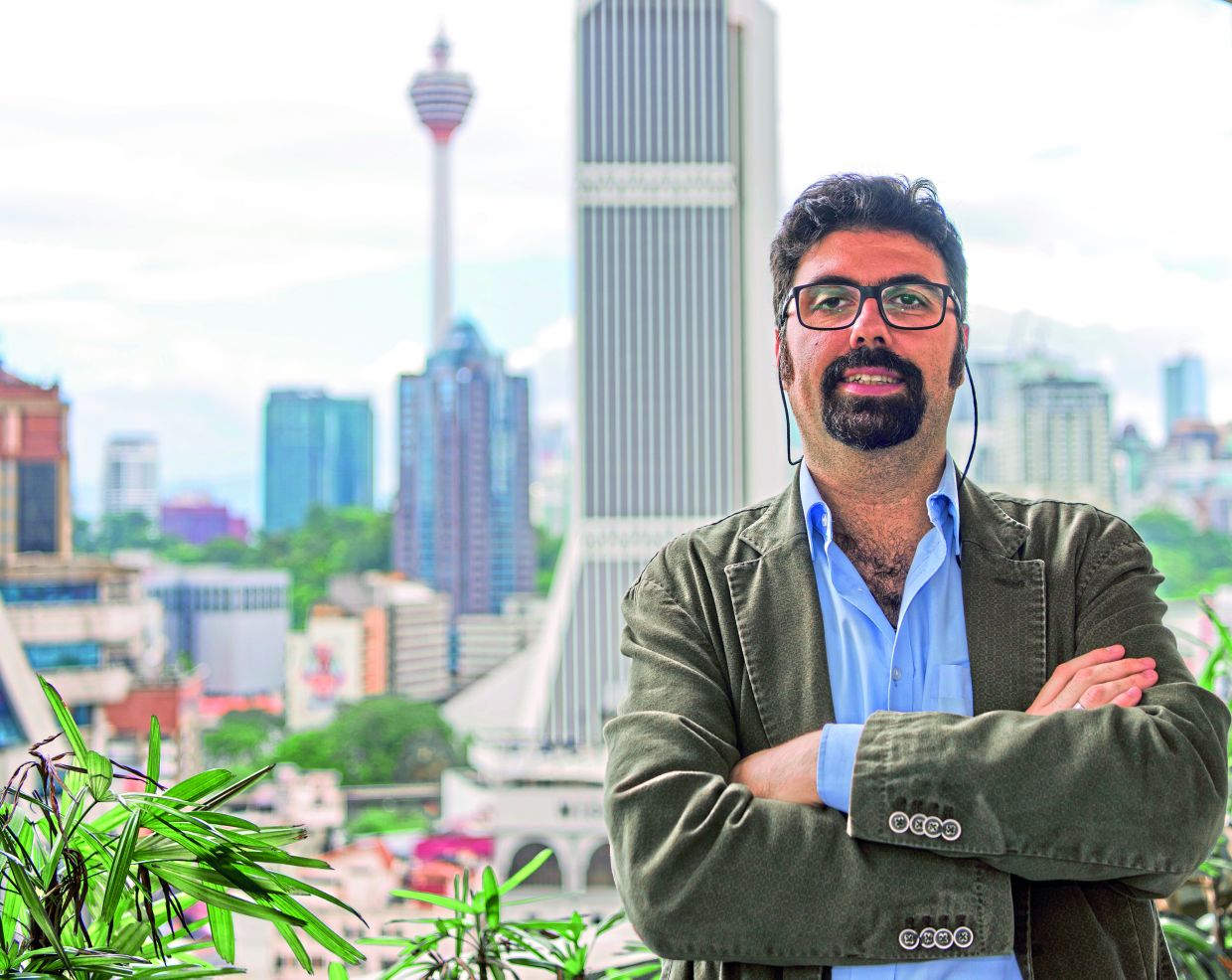
On his perspective on the tariffs, Centre for Market Education chief executive officer Carmelo Ferlito reckons the world is going towards something more complicated than just a trade war.
“We are probably going toward a radical epochal shift in the perception of international trade, a change like the one that happened before the first World War.
“This is the culmination of a reshaping which started in the early 2000s, when criticisms toward globalisation started to emerge. It is the end of that period, a global shift toward protectionism and Trump is probably just putting the “nails on a coffin” which was built before him.
“But this shift will be painful, due to a high degree of integration in global supply chains. Malaysia and the whole world will be affected,” he said.
As to what would drive the Malaysian economy, Ferlito said the most important data from 2024 was the accelerated pace of investments.
“We need to work to keep that pace and to accelerate to find new markets for those investments,” he said.