BEIJING: Installed new energy capacity in the coal-rich Inner Mongolia autonomous region, including wind and solar, has surpassed 120 million kW, exceeding the region’s installed thermal power capacity for the first time.
Inner Mongolia has achieved this milestone one year ahead of schedule, most recently having connected a one-million-kW photovoltaic project to the grid. Its total installed power capacity is now 240 million kW, and its installed thermal power capacity is 117 million kW.
Inner Mongolia possesses abundant new energy resources, with wind energy potential of 1.46 billion kW, accounting for approximately 57% of the national figure.
The region’s solar potential amounts to 9.4 billion kW, representing nearly 21% of the national potential.
Currently, new energy installations connected to the grid in the region generate 270 billion kW hours of electricity annually, equivalent to reducing standard coal use by 84 million tonnes and reducing carbon dioxide emissions by over 220 million tonnes.
Inner Mongolia also boasts coal reserves totaling 536 billion tonnes, accounting for nearly one-third of the national total.
In 2023, its annual coal production came in above 1.2 billion tonnes, of which approximately 60% was sold outside the region, with about 250 million tonnes used to generate thermal power within the region.
According to a bulletin posted on the regional energy bureau’s website in January, Inner Mongolia at the time planned to shut down three coal mines in 2024 with a total production capacity of 2.1 million tonnes.
Inner Mongolia has also made great strides in technological innovation in the field of new energy.
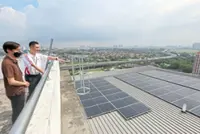
The region has integrated wind and solar power generation with desertification control, for example, by using solar panels to provide shade and reduce surface water evaporation to enable plant growth beneath.
Projects such as this ingeniously combine new energy development with desert ecosystem restoration.
Inner Mongolia can be seen as a microcosm of the rapid growth of China’s new energy sector, which has maintained double-digit annual growth in recent years. — Xinhua