INFLATION is a wrecking ball to all countries across the world with many mitigation efforts being undertaken to blunt the pressing impact on higher prices on people.
It is no different here where an austerity move has been started to essentially pay for the humongous subsidy bill the government has to bear. StarBizWeek asks Finance Minister Tengku Datuk Seri Zafrul Abdul Aziz a series on questions that touches on the austerity move and efforts to keep inflation at bay for the rakyat.
StarBizWeek: How much does the Finance Ministry (MoF) expect to save from the latest austerity drive? How much money will the government save in the second half of 2022, via the removal of subsidies that were announced recently?
Tengku Zafrul: The MoF is targeting to achieve savings of about 5% against the balance already allocated to ministries, outside regular opex such as emoluments.
But I would like to re-highlight a clause in the Treasury Circular which states that rakyat-centric programmes and development will continue. Even projects that have started on preparatory works including design will continue. Only those that have yet to be committed will be deferred. Whatever savings we make will be channelled towards the rising subsidy bill.
On subsidies, let me make it clear that subsidies have not been removed. In fact, the government is spending much more on subsidies this year.
> Firstly, subsidies and assistance are projected to touch RM80bil for 2022 compared to Budget 2022’s approved figure of RM31bil.
> Second, we are spending much more than in previous years, particularly with the rise in oil prices. Subsidies on petrol, diesel and LPG alone are projected to exceed RM37bil, compared to RM11bil in 2021 and RM1.6bil in 2020.
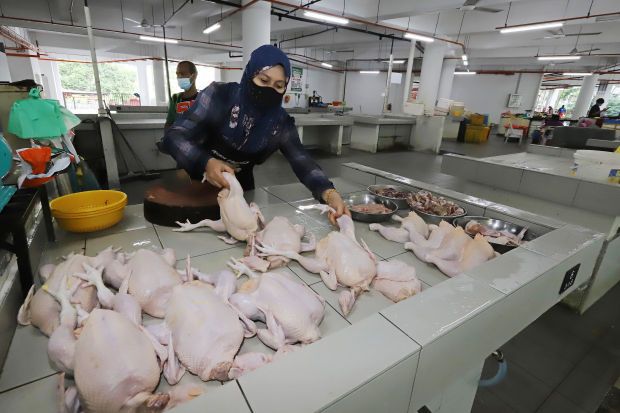
> Third, we are spending more in second-half 2022 (2H22) than in (1H22). For chicken and eggs, RM1bil was announced for July onwards compared to RM730mil for February to June. Additionally, the government has announced maintaining electricity tariffs for 2H22, which is estimated at RM5.8bil compared to only RM0.7bil in 1H22.
> Fourth, for chicken, the subsidy back in February 2022 was only RM0.60 per kg, whereas for July and August, it is at RM1.20 per kg, despite the increase in chicken prices due to the continued increase in input cost.
How will the budget deficit look like in view of these spending cuts and the large subsidy bill? Could the fiscal deficit target be breached this year, amid the high expenditure?The MoF is currently maintaining its deficit target of 6% for 2022. The increase in expenditure will be managed through additional revenues expected from higher oil prices, cost savings and the economic recovery.
The decision to gradually increase the ceiling prices of chicken and eggs is not principally motivated by budget deficit considerations.
Particularly for chicken and eggs, Malaysia is already at beyond 100% SSL (self sufficiency level) but during 1H22, price controls appeared to have caused market distortions and supply disruptions. Hence, the decision to allow for a partial increase in chicken and egg prices is to ensure Malaysians continue to enjoy adequate supply of food at reasonable prices.
I have repeatedly shared that the current subsidies, touching RM80bil, is unsustainable, and results in significant leakages and smuggling.
Petrol, diesel, LPG and cooking oil at subsidised prices is less than half the market price, making smuggling “profitable” for unscrupulous operators. Hence, the government plans to move towards targeted subsidies, to optimise the nation’s finite resources, and channel them towards those who truly need assistance.
Would the government’s recently announced austerity drive cut Malaysia’s growth for 2022? What is the impact going to be on economic growth, especially in the second half of the year and the first half of next year?The expected savings is roughly 3% of the estimated annual public consumption and 0.4% of projected GDP, so the impact, if any, would be minimal, although every little contribution helps.
But what is most important is that our policy responses continue to build on the recovery momentum, as reflected in the latest key economic indicators. Our labour market has clearly improved with unemployment at 3.9% in May. We are also enjoying strong private consumption, as per MIER’s Consumer Sentiment Index which rose to 108.9 points in 1Q22 (4Q21: 97.2 points).
Similarly, the DOSM’s Business Tendency Statistics shows increased business optimism at 3.5% in 2Q22.
The external sector has also maintained its stellar performance with Malaysia’s total trade in June 2022 continuing to grow by 43.4% to RM270.4bil, where gross exports surged by 38.8% to record a new all time-high of RM146.2bil.
On that score, Malaysia’s GDP looks set to achieve between 5.3% and 6.3% in 2022 mainly supported by firm domestic demand, recovery in tourism-related sectors, continued external demand, opening of all economic sectors, improved private sector spending, reopening of international borders and improvement in the job market.
We posted encouraging growth at 5% in 1Q22, and the momentum looks likely to result in stronger 2Q22 growth, as well as for the rest of the year. However, we are cautious of downside risks to the growth outlook, arising from escalation of geopolitical conflicts and worsening supply chain disruptions.
Are there any plans on raising government revenue in the interim apart from just cutting cost?
Thus far, the prosperity tax announced in Budget 2022 for companies earning more than RM100mil, as well as the widened scope for sugar tax, have been good for revenue.
But what is most important is our medium-term planning to expand and strengthen our revenue base, which we will do through the Medium Term Revenue Strategy (MTRS).
The MTRS is a comprehensive approach in undertaking effective tax reforms to boost revenues and improve the tax system over the medium term.
The formulation of the MTRS will be based on three main pillars which are tax policy, tax administration and tax legal framework. All options are being considered, including consumption tax and a possible mechanism for carbon tax. The MTRS will also look at better tax compliance and effectively addressing cross-border tax evasion.
Inflation in May would have reached 11.4% without subsidies and now that the subsidies on chicken and bottled cooking oil are removed, including with higher ceiling prices, will we see a sharp jump in inflation – particularly food inflation?We have run our numbers and given the weightage of chicken and eggs in the CPI basket of 1.2% and 0.4% respectively, the increase in ceiling prices is not expected to result in more than 0.05% increase in inflation.
As such, the adjustment of ceiling prices by 50 sen per kg for chicken and two sen per egg together with the removal of bottled cooking oil subsidies will not and should not result in a sharp jump in overall or food inflation from July 2022.
Do you think the RM100 extra cash handout will be sufficient to offset this impact or should there be more handouts in coming months?
We did run our numbers internally before we agreed on the RM100 additional cash handout. The increase in ceiling prices of chicken and eggs are less than 6% of current prices. Based on DOSM household expenditure survey, it is estimated that a typical family monthly expenditure is about RM50 for raw chicken and RM15 for eggs. On these items alone, the cash assistance of RM100 is sufficient to cover the increase in prices until year-end. Nevertheless, the Government will continue to monitor food prices and evaluate the need for further assistance, if necessary.
Our policy responses are aimed at moderating, not totally eliminating the impact of high inflation. As mentioned earlier, the Government is in fact spending more to mitigate the impact of higher prices to the rakyat. For chicken and eggs, it is RM730mil for February-June 2022, and RM1bil for July onwards.
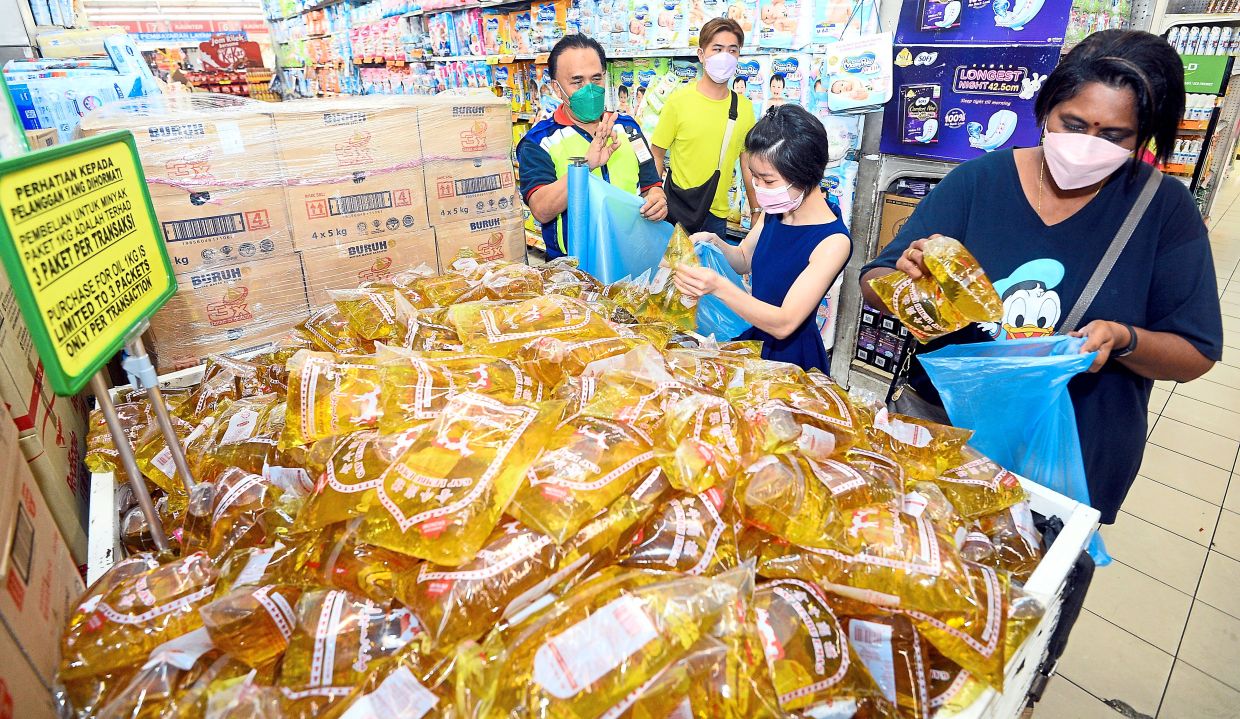
On cooking oil, we have significantly increased the subsidy for the 1kg pack, which is sold at RM2.50, versus the market price of more than RM8. Up to 60,000 metric tonnes per month of cooking oil at RM2.50 is estimated to be sufficient to meet the needs of lower income households. Cooking oil subsidies has sharply risen from RM270mil (2019) to RM530mil (2020) and RM2.2bil in 2021. At current prices, we project cooking oil subsidies in 2022 to potentially breach RM4bil.
Can the government borrow to pay for higher subsidies this year, in order to help the rakyat and if so, is this a smart move?
Subsidies are a form of Operating Expenditure (OE), therefore by law, it cannot be financed through borrowings and must be financed through revenue. The Federal Government’s total gross borrowings are only allowed to finance Development Expenditure. An exception was made during the pandemic, through the Temporary Measures for Government Financing Covid-19 Act 2020 (Act 830) which allowed crisis mitigation measures to be funded through borrowings, but this will expire in December 2022.
Beyond legislation, it is prudent financial management to only borrow for long term assets and not for day-to-day expenditure. At a country level, borrowing for development expenditure also helps build national capacity, generate economic spinoffs and contributes to future growth which in turn will help generate higher future Government revenue to repay the borrowings. Paying for subsidies today will not generate revenue for tomorrow to repay borrowings.
Is an adjustment to fuel subsidy unavoidable? And if the RON95 price is slightly raised (let’s say each increment of 10 sen), how would this impact on inflation and government subsidy bill? There are many factors that the Government has considered on this. The current blanket fuel subsidy is not sustainable in the long run and results in significant leakage. RON95 currently sells at RM2.05/litre and diesel at RM2.15/litre. For the month of June, the price without subsidy was RM4.70/litre for RON95 and RM5.40/litre for Diesel. This discrepancy creates a large incentive for smuggling in addition to benefitting the rich, and businesses. This leakage of national resources is regrettable given it could otherwise be used for development and improving public services particularly education, health and public transportation.
The projected assistance and subsidies touching RM80bil in 2022 will exceed this year’s total development expenditure budgeted at RM76bil. Therefore, the Government is currently formulating a more targeted mechanism for subsidies, especially on fuel to benefit the most vulnerable groups as well as redistribute the savings towards better public infrastructure and services.
If a subsidy reduction for the price of RON95 is implemented, it will have an impact on inflation and our subsidy bill, but what is key now is ensuring that our policy responses will help moderate inflation so that higher prices will not impact the rakyat too significantly.
High subsidies, low tax base and low wage share of GDP are some of the imbalances the government has to bear with. What are the plans to correct these imbalances? Is there any policy initiative to wean the rakyat off subsidies?
In the event that global commodity prices fall drastically, we may not even need to allocate any subsidies. The Government’s main focus is on ensuring that the rakyat are not unduly burdened by sharp increases in the price of basic goods and are shielded from the full effect of the recent spike in global commodity and food prices.
The increase in subsidies is mainly due to the higher subsidies for petrol, diesel and LPG due to the soaring price of Brent crude oil. However, almost RM12bil of the RM37.3bil projected petrol-based subsidies for 2022 are enjoyed by the T20, versus only RM8.5bil by the B40. On average, a typical T20 household spends RM640 per month on fuel whereas a B40 household spends RM180 per month. This means a T20 household benefits 3 times more than a B40 household.
The Government needs to move away from blanket subsidies. These are potentially wasteful as they benefit the rich more than the poor. But we must take an inclusive approach on this. The mechanisms that we are currently testing will determine how best to deliver the subsidies only to the most deserving, including the ones who are less digitally-connected.
As for wage share of GDP, the compensation of employees (COE) of GDP recorded 37.2% in 2020, while the 12th Malaysia Plan’s target is 40% by 2025. In terms of wage structure, the economy has recorded encouraging wage growth over the years. For instance, excluding the pandemic year in 2020, for the period 2015 to 2019, the mean wage grew by 8.7% on average yearly. Further, the minimum wage will be reviewed and revised every two years to allow the market to offer a decent wage level particularly to increase the well-being of the low-paid workers, with the most recent being on May 1, 2022, at the rate of RM1,500.
Other efforts to improve wages include attracting quality investments to create more high-paying and high-productivity jobs, continuous upskilling and reskilling programmes, encouraging industries to implement productivity linked-wage system (PLWS) to link compensation to productivity and encouraging a more balanced profit sharing between employers or business owners with workers.
Already a subscriber? Log in
Get 20% OFF The Star Digital Access
Cancel anytime. Ad-free. Unlimited access with perks.