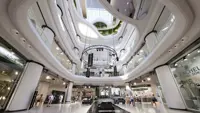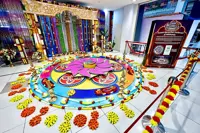
SHOPPING traffic has been building up since August this year; by now, shoppers have returned to all major shopping malls located throughout the country.
But sales are generally not yet back to pre-pandemic levels; it is observed that shoppers still like physical stores while retailers, having learned from the pandemic, are going on greater digitalisation.
On weekends, major shopping malls are packed with shoppers and diners, while traffic jams inside shopping mall car parks have returned.
Since interstate travel was allowed in the middle of October, retail businesses that have been dependent on tourists have rebounded.
“It is not just within the Klang Valley but also in Langkawi, Georgetown, Ipoh, Genting Highlands, Cameron Highlands, Pangkor Island, Desaru Coast and Melaka,’’ said Retail Group Malaysia managing director Tan Hai Hsin.
Almost all retail-related trades have been allowed to open for business, except for night entertainment outlets.
IOI Mall Puchong has seen a positive pick-up, back to its normal crowd capacity, both over weekdays and weekends.
Throughout the pandemic, the mall had remained a must-go destination for the community for residing around it, for their daily essentials.
“The fastest sector to rebound is food and beverage (F&B), and others a close second, including fashion and apparels.
“Our entertainment activities have all commenced, with a capacity of about 60% to 70%, due to compliance with standard operating procedures (SOPs) that include social distancing,’’ said Complex – IOI Mall, general manager Dylan Chan.
Retail sales in Malaysia are expected to climb higher in December 2021 and January 2022 due to two major festive events – Christmas and the Chinese New Year (CNY).
“For the fourth quarter of 2021, our estimated growth rate is 12.7% compared with the same period a year ago,’’ Tan said.
“No major impact is expected on retail due to the limit on large gatherings during Christmas and CNY.’’
However, online retail purchase will not replace physical stores after the pandemic is over; the current observation is that shoppers are back to physical stores and diners gather at cafes and restaurants.
Nevertheless, the Covid-19 pandemic has forced many retailers to pay attention to greater digitalisation of their businesses. where online shopping has become another major channel of distribution.
Malaysian retailers in the new normal will invest more in digital infrastructure that allows consumers to buy goods and services in multiple formats with ease.
Overall, most retailers are happy that they have been allowed to open for business.
However, sales are not back to pre-pandemic levels due to:
> Limit on in-store shoppers’ capacity in a retail store and controlled seating capacity in an F&B outlet.
> For retail stores, there is a limit on the time spent within the store. For F&B outlets, restrictions on seating arrangements discourage social gatherings.
> Many families are still reluctant to bring their young children and old folks to visit shopping centres.
> At the moment, there are still many F&B outlets in shopping malls and shop offices that do not allow dine-in.
For example, some kiosks, stalls and outlets find that they can survive with takeaways and delivery.
These include ice cream parlours, bakeries, bubble tea shops, breakfast and coffee bars as well as dessert cafes.
> During the recent lockdowns, many retail and F&B outlets had let go of their employees to save costs and it will take time for them to recruit and train new workers.
> The economy is still in the process of recovery, with take-home salaries still below pre-pandemic levels.
With the support from local authorities, IOI Mall Puchong is looking to host more communal and family activities such as educational workshops and social events.
These include family picnics, arts and crafts, cooking demonstrations and classes.
“A shopping mall is a place for social and economic connections, and remains a hospitable and communal space,’’ said Chan, referring to all the malls under the IOI brand – IOI City Mall Putrajaya, IOI Mall Kulai in Johor, IOI Mall Puchong and the soon-to-be-opened IOI Mall Phase II in 2022.
Malaysian retailers need indirect assistance from the government to stay alive, Tan said.
These include:
> More budget allocation for proactive action plans to control the spread of Covid-19, thus preventing another lockdown; Malaysian non-essential retailers cannot afford another forced closure of physical stores.
> All retailers with physical stores should be allowed to stay open with strict SOPs in the event of another lockdown; the experience from the past one-and-a-half years indicates that online shopping, pick-ups, takeaways and delivery are not sufficient to keep retailers and F&B outlets alive.
> Allowing foreign tourists to visit Malaysia in stages is critical for the retailers that used to depend on the tourists; they are located in major cities like Kuala Lumpur, Selangor, Johor Baru, Melaka, Penang and Kota Kinabalu.
> Proactive and concrete plans to stimulate the economy in 2022; with more vibrant economic activities, there will be more jobs and higher take-home pay, which will enable consumers to spend more willingly on goods and services.
Overall, the situation now is much better than during the long period of lockdowns recently.
We should, however, comply with all the SOPs in place as there is now a new Covid-19 variant to deal with.
Yap Leng Kuen is a former StarBiz editor. The views expressed here are the writer’s own.
Already a subscriber? Log in
Get 20% OFF The Star Digital Access
Cancel anytime. Ad-free. Unlimited access with perks.