PETALING JAYA: After a decade of solely relying on the low-margin passenger vehicle charter business, G Capital Bhd
is pivoting towards renewable energy solutions, trying to shift from contract-based revenue to recurring income.
Formerly known as Gunung Capital Bhd, the group first ventured into the mini-hydropower generation business in 2013 and has a total of 11 active sites to date, with a total estimated installed capacity of 90.15 MW.
Two of the sites have begun commercial operations, although they have yet to deliver profits.
In addition, G Capital owns the exclusive rights from the Perak state government to act as the master developer for mini-hydropower plants at 31 identified sites in the state. This comes with an estimated total installed capacity of 297.9 MW.
Through its 90% stake in Gunung Hydropower Sdn Bhd, G Capital has also secured the approval in December 2020 to construct a 10 MW mini-hydropower plant in Sungai Perak.
The group has until December 2025 to complete the construction. According to G Capital, this project is expected to generate a potential revenue of over RM400mil over the next 21 years.
Earlier this year, G Capital also diversified into solar power generation by acquiring a 70% stake in Solarcity Malaysia Sdn Bhd.
According to G Capital, the solar business will begin delivering profit in the third quarter of financial year 2021 (FY21) as two projects under Solarcity will be commissioned in the coming months.
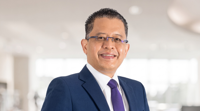
The mini hydropower business, on the other hand, will turn profitable in FY24-FY25, according to G Capital’s executive director Tan Sri Dr Ali Hamsa.
Ali, who was the former chief secretary to the government, said contributions from the mini hydropower and solar businesses will dominate the group’s earnings within the next five years.
“We expect the solar business to be the main revenue contributor from FY21 to FY22, and revenue from small hydro-power plants to kick in by FY24.
“We foresee an improved bottom line for the group in FY21, ” he said.
In the financial year ended Dec 30,2020, G Capital returned to the black following five consecutive years of losses.
The group recorded a net profit of RM1.7mil in the 12-month period, although its turnover fell almost 31% year-on-year to RM11.62mil.
“In the meantime, the group will not stop scouting for good merger and acquisition opportunities in any high-growth segments, riding on our sturdy balance sheet and cash holding, ” he said.
Based on its latest available results filing, as of end-December 2020, G Capital has cash of RM31.5mil against a total borrowing of RM2.3mil.
At the juncture, however, Ali said G Capital’s primary intention is to grow the existing businesses to become “sizeable and self-sustaining cash cows”.
“We have no plans to dispose of the transportation business at the juncture.
“We are also looking for synergistic partnerships like we have done in Solarcity earlier this year.
“The acquisition allows the group to tap into solar business and expand its potential with the group’s stronger financial capability, ” he said.
Ali pointed out that in line with G Capital’s aspiration to become a diversified investment holding company, it is looking to “add variety into its business portfolio”.
Last year, via its wholly-owned subsidiary Gunung Resources Sdn Bhd, G Capital has also invested in three listed companies, which the group described as “good quality” stocks.
Based on Bursa Malaysia filings, G Capital has a 13.75% stake in tiles manufacturer YB Ventures Bhd
, formerly known as Yi-lai Bhd.
In CN Asia Corp Bhd
, which manufactures tanks and vessels, G Capital has a 3.64% stake after ceasing as a substantial shareholder in March 2021. Meanwhile, it owns a 7.7% stake in Majuperak Holdings Perak, a listed property developer under the Perak State Development Corp.
In further diversifying its business portfolio, G Capital had also announced its venture into the banking business last year.
In December 2020, it announced that it has received approval-in-principle from Cambodia’s central bank to set up a full-fledged commercial bank in the country. The approval-in-principle came with the approved capital of US$100mil (RM414.25mil).
The group had said that it would be tapping the expertise of seasoned banker Datuk Phan Ying Tong to lay down the groundwork and strategies to penetrate the Cambodian banking sector.
Phan, who formerly headed Public Bank’s Indo-China operations, would also be in the management team of the new bank.
In an earlier interview with StarBiz, Phan said the bank, which is targeting to commence operations by the third quarter of next year, would be engaging in a 60:40 digital and conventional banking approach, respectively.
However, G Capital has not announced further updates on the venture.
Ali, who declined to comment in detail, said that “works on the bank are pending due to the Covid-19 situation”.
Already a subscriber? Log in
Get 20% OFF The Star Digital Access
Cancel anytime. Ad-free. Unlimited access with perks.