Is there a key to unlock uncertainty?


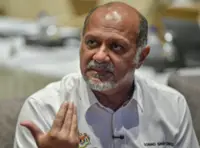
Mahathir may be somewhat skeptical of US policies in the region; ultimately, he knows that he cannot afford to draw outright US hostility and he stays always just short of that point, said Inter-Pacific Securities head of research Pong Teng Siew

DOES the United States President Donald Trump really have the key to unlock uncertainty and shattered confidence, as incoming European Central Bank chief Christine Lagarde says he has?

It may not be so much personality driven, as the growth of a disturbing trend in protectionism and anti-globalisation takes shape.

But the impact of Trump’s actions and unpredictability has global proportions, and is seen in the slowdown of trade, investments, new orders and upheaval of supply chains.

As the leader of the largest and most powerful economy, he is closely watched and seems to have stirred more enthusiasm among nations for similar fights.

The biggest key that Trump has, said Lagarde in a CBS news programme, is in relation to “predictability and certainty of the terms of trade; it is the unknown that is hurting.”

This is a potentially “loaded” statement that either Trump changes US trade and foreign policies or he goes if impeached, following a whistle blower’s allegations on pressuring Ukraine to investigate political rival Joe Biden, according to Maybank Investment Bank group chief economist Suhaimi Illias.

This risk of impeachment comes at a time when Trump is facing elections next year.

Frequent unpredictable twists and turns in the US-China trade talks have led businessmen and investors on a wild roller coaster ride, guessing on the endgame.

The West will be kept on its toes as uncertainty will likely linger.

No matter what happens in the next elections, the anti-globalisation drive should continue although some think this could be at a lower level of intensity if the Democrats were to win.

“The rise of China, which is in the camp of pro-globalisation and free trade, will see to that (prolonged uncertainty), ’’ said Malaysian Rating Corporation director of the economic division, Nor Zahidi Alias.

China is already suffering from successive contractions in growth but this will not likely hinder the country from marching forward.

It is no longer just a low-cost manufacturing hub. Demand may have dropped lately, but it is still a major market for global businesses.German and American auto companies depend on the Chinese market to increase their global sales. China is Apple’s biggest market after the US and Europe, while 32% of global luxury goods were sold to customers in China last year. The new Cold War has started, no matter what Phase One and subsequent phases of the US-China trade deal may look like, as the bitter trade tech fights ‘’have poisoned any sense of willingness on both sides to co-operate.’’

“There is no turning back from this, ’’ said Inter-Pacific Securities head of research Pong Teng Siew.

How is Malaysia bracing for this new reality? Being a trading nation, Malaysia’s foreign policy has always been neutral, friendly and pragmatic with the US and China.

To ensure benefits to the economy, trade and investments, its top leaders visit the US, Europe, China and Russia; approvals for manufacturing foreign direct investments last year was dominated by the US and China.

Malaysia gets China to buy more palm oil amid the anti-palm oil policy in the EU, and sees opportunities in palm oil sales from the drop in Chinese purchases of US soybeans as a result of the US-China trade war.

Mahathir may be somewhat skeptical of US policies in the region; ultimately, he knows that he cannot afford to draw outright US hostility and he stays always just short of that point, according to Pong.

An expansionary fiscal policy for Budget 2020 that focuses on key areas with strong multipliers will help Malaysia brace for challenging times. Trade fights may be the main culprit for uncertainty which also stems from geopolitical risks, a disorderly Brexit and the risk of slower-than-expected growth.

The global economy is operating at a new low, possibly due to an intensified and lengthy period of cheap money with the still unsatisfactory state of public balance sheets, AmBank Research head Anthony Dass said.

Cheap money has also led to a surge in debt that places significant risk on the global financial system, especially if there is a severe recession

Governments are also responsible for the lack of structural reforms to increase productivity, according to Socio Economic Research Center executive director Lee Heng Guie.

New emission standards in the euro area and China has affected auto sales.

Extreme weather conditions have brought these environmental risks into focus; greater emphasis should be placed on climate resiliency to adapt to an era of unpredictable weather, said Dass.

Factors that can be controlled by top leaders should focus on stability that “should not be the subject a tweet here or a tweet there.”

Columnist Yap Leng Kuen notes Lagarde’s reminder that ‘next door is not down the pathway’ but ‘everywhere around the world’. The views expressed are the writer’s own.

Get 20% OFF The Star Digital Access

Monthly Plan

RM 13.90/month

RM 11.12/month

Billed as RM 11.12 for the 1st month, RM 13.90 thereafter.

Best Value

Annual Plan

RM 12.33/month

RM 9.87/month

Billed as RM 118.40 for the 1st year, RM 148 thereafter.

Follow us on our official WhatsApp channel for breaking news alerts and key updates!

Next In Business News

Ringgit rises as Fed minutes weigh on US$
Australia watchdog reviews Big Four audit complaints amid KPMG probe
Trading ideas: Chin Hin, Pekat, Infomina, EITA, Pan Merchant, Aemulus, Synergy, Hektar REIT, Sapura Industrial, PRG, Enest
Oil hits multi-week high as US-Iran truce falters
Pan Merchant in RM17mil contract win
Pekat Group bags RM47mil DC contracts
AI adoption needs stronger guardrails
Chin Hin Group to acquire land in KL for RM455mil
EITA lands RM21mil Indonesian job
High CPO prices set for extended run

Others Also Read