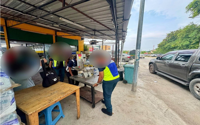
KUCHING: Sarawak’s pepper dealers are building up their inventories as they believe domestic prices of the spice have hit “rock bottom”.
White pepper has plunged some 65% to about RM17,000 per tonne and black pepper by nearly 70% to RM10,000 per tonne at the farm level, from their peaks over less than three years ago.
The current prices are a far cry from the historical high of RM50,000 per tonne for white pepper and over RM30,000 per tonne for black pepper, which were recorded in July 2015. The all-time high prices were maintained for nearly six months before the downward spiral.The meltdown is reported to have come as a rude shock to many pepper planters.
“For Sarawak, the current prices are at the very rock bottom.What I see is that the big drop in prices is over.We have not seen such low prices in the past seven or eight years.
“The risk of the prices to drop further is minimal. A better bet is for the prices to go up. So, experienced dealers and traders are building up their inventories,” according to William SC Yii, the director of Nguong Aik (Kuching) Sdn Bhd, a leading pepper exporter.
He said Sarawak’s current pepper prices were, however, still higher by between US$400-US$500 per tonne compared to Vietnam pepper. Sarawak Pepper (brandname) fetches a premium as it is known for its superb quality and is preferred by most foreign end-users.
“After hitting historical high in July-2015, domestic pepper prices are on a downtrend until today.
“The price fluctuation in first half-2018 is not much as farmers are holding onto their crops and reluctant to sell at the depressed prices.
“For the coming months, the key markets to watch are Indonesia and Brazil which are expected to harvest their new crops in August and between October and November respectively.
“How big is their crops and how aggressive will they be selling will have an impact on global prices,” Yii told StarBiz.
Expecting little fluctuations in domestic prices in the second-half year,Yii predicts a run-up in pepper price in 2020.
The last bull run started in 2009 when white and black pepper were traded at about RM11,300 per tonne and RM6,500 per tonne respectively.
He said Sarawak, which accounts for more than 95% of Malaysia’s pepper production, had now harvested about 75% of its new crops.
This year’s crops were delayed mainly because of the changing weather pattern, and the harvest is only expected to be over by September (previously between July-August).
Yii said in southern Sarawak, the main pepper production areas from Kuching to Sri Aman were expected to harvest smaller crops than last year due to “too much” rain which had caused some pepper vines to die.
“In the central region of Sarikei, Bintangor, Pekan, Julau and Kanowit where pepper gardens are mostly located, there might be a slight increase in the harvest volume of the new crop. Overall,Sarawak new crop output this year may be lower by 5% to 10% compared to last year.”
Based on the Malaysia Pepper Board’s figures, the country produced about 29,000 tonnes of pepper last year.
There are some 67,300 pepper smallholders in Malaysia, which is the world’s fifth largest producer.
Vietnam, the No. 1 producer and supplier, was reported to have a bumper harvest in new crop in the second quarter.
“Vietnam has a very big new crop this year.
“So,Vietnam pepper has (weighed on) global prices,” said Yii.
“Vietnam’s estimated production this year is 230,000 tonnes against 210,000 tonnes last year and 175,000 tonnes in 2016.”
Already a subscriber? Log in
Get 20% OFF The Star Digital Access
Cancel anytime. Ad-free. Unlimited access with perks.