MANILA: The Department of National Defence (DND) on Sunday (Nov 29) rejected China’s criticism of Japan’s plan to provide the Philippines with coastal surveillance radars and unmanned aerial vehicles, saying Beijing had no authority to dictate Manila’s defence partnerships.
In a strongly worded statement, DND spokesperson Assistant Secretary Arsenio Andolong said the Philippines, as a sovereign state, had the sole authority to choose its partners and determine how to strengthen its defence capabilities.
“This is not open to compromise of any form,” Andolong said.
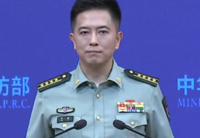
The DND was responding to remarks by Chinese Ministry of National Defence spokesperson Senior Colonel Chen Xi, who accused Japan of meddling in the South China Sea issue and stoking regional tensions by supplying military equipment to countries such as the Philippines.
Chen made the remarks on Thursday (Nov 26) in response to reports that Japan would provide the Philippines with coastal surveillance radars and surveillance unmanned aerial vehicles under its Official Security Assistance programme.
The Japanese assistance forms part of Tokyo’s broader security cooperation with Manila as the two countries strengthen their defence ties in response to China’s aggression in the South China Sea and East China Sea.
Chen also criticised a report by Japan’s National Institute for Defence Studies recommending that Tokyo maintain its presence in the South China Sea and strengthen cooperation with allies and partners to oppose China’s alleged attempts to unilaterally change the status quo through force or coercion.
The Chinese defence ministry spokesperson said Japan’s actions were undermining regional peace and stability, adding that Tokyo was not a party to the South China Sea dispute and should refrain from making what he described as irresponsible remarks.
But Andolong said China’s objection to Japan’s assistance exposed Beijing’s discomfort with efforts to monitor activities in Philippine waters.
“Only those who act unlawfully in waters within the sovereignty, sovereign rights and jurisdiction of the Philippines have reason to fear the maritime domain awareness capabilities provided by the Government of Japan,” he said.
“That China takes such strong exception to tools whose only purpose is to observe is a clear admission that its conduct in our waters cannot withstand scrutiny,” the DND spokesperson added.
Andolong also accused Beijing of using its own interpretation of sovereignty and maritime rights to oppose legitimate international partnerships.
He said China’s condition that Manila’s partnerships must respect its “sovereignty and maritime rights and interests” was effectively an objection, as these claims were based on its so-called “nine-dash line,” which has no basis in international law.
The Philippines has repeatedly rejected China’s expansive claims in the South China Sea, particularly following the July 2016 arbitral ruling that invalidated the legal basis of Beijing’s claims to historic rights over resources within the nine-dash line.
The DND also accused China of contradicting its calls for dialogue and peace through its actions against Philippine vessels and personnel in the disputed waters.
“China cannot claim to pursue dialogue while its coast guard fires water cannons at our vessels, rams our ships and injures our personnel in our own waters,” Andolong said.
“Its actions show that its words do not deserve belief or trust,” he added.
He urged Beijing to demonstrate its commitment to peace in the South China Sea by ending its coercive actions, respecting the 2016 arbitral award and complying with international law, particularly the United Nations Convention on the Law of the Sea. - Philippine Daily Inquirer/ANN