BANGKOK: Thailand and Myanmar have agreed to develop a three-year joint action plan to tackle cross-border pollution in the Kok and Sai rivers, with water quality monitoring at 12 locations across both countries expected to begin between December 2026 and January 2027.
Deputy government spokeswoman Lalida Persvivatana said on Friday (Nov 27) that the government of Prime Minister Anutin Charnvirakul was continuing efforts to address toxic contamination in the two rivers through international co-operation while protecting the health and safety of affected communities.
The agreement followed the first meeting of the Thailand–Myanmar Joint Working Group (JWG) on Water Quality Management in Border and Transboundary Rivers and a workshop on developing a joint action plan, held in Bangkok on Nov 25–26.
The Thai delegation was led by Raweewan Bhuridej, permanent secretary of the Ministry of Natural Resources and Environment, and Surin Worakijthamrong, director-general of the Pollution Control Department (PCD).
The Myanmar delegation was led by Hla Maung Thein, permanent secretary of the Ministry of Natural Resources and Environmental Conservation, and San Oo, director-general of the Environmental Conservation Department.
Representatives from relevant agencies in both countries and Myanmar’s Shan State also attended.
Lalida said both countries had endorsed an initial one-year working framework and agreed to develop a three-year action plan covering five key areas:
>Joint water quality monitoring.
>Identification of pollution sources and risk assessments.
>Protection of public health.
>Capacity building and technical co-operation.
>Policy and strategic co-ordination.
Thailand’s Pollution Control Department and Myanmar’s Environmental Conservation Department will serve as the principal agencies responsible for co-ordinating and implementing the joint measures.
The two countries agreed in principle to establish 12 joint water sampling locations, equally divided between Thailand and Myanmar.
The monitoring locations will comprise:
>Kok River: Eight locations, with four in each country.
>Sai River: Four locations, with two in each country.
The first round of joint water sampling is expected to take place between December 2026 and January 2027, depending on operational readiness and co-ordination between the two sides.
Both countries have also agreed to exchange water quality monitoring results at least twice a year to support ongoing assessments and pollution mitigation efforts.
Beyond water quality monitoring, Thailand and Myanmar will expand environmental surveillance to assess the wider impact of toxic contamination.
The additional monitoring will cover river sediment quality, the accumulation of contaminants in aquatic organisms, agricultural soil and vegetables.
Both sides will also investigate pollution sources and assess potential health risks throughout the river basins, from upstream areas to downstream communities.
Particular attention will be given to communities potentially exposed to contaminated water and agricultural products.
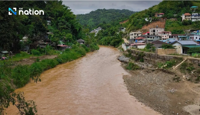
The expanded monitoring comes amid concerns over arsenic and other heavy metals linked to upstream mining activities in Myanmar’s Shan State, which have affected waterways flowing into northern Thailand.
Thailand has previously requested a six-month suspension of operations at mines suspected of contributing to arsenic contamination in the Kok and Sai rivers, pending further investigations.
Lalida described the latest agreement as an important step towards translating diplomatic discussions into practical measures, with clearly defined sampling locations, information-sharing arrangements and investigations into pollution sources.
She stressed that the government was continuing domestic measures alongside international negotiations, particularly the provision of alternative clean water supplies and monitoring of potential health impacts.
The Department of Groundwater Resources is currently drilling deep groundwater wells in Mae Sai district, Chiang Rai province, to provide clean water for residents of 14 villages.
The government aims to address contamination at its source while ensuring that affected communities receive continuing assistance in accordance with the prime minister’s instructions.
Next joint meeting to be held in MyanmarThailand and Myanmar have agreed to hold the second Joint Working Group meeting in Naypyidaw, Myanmar, to review progress and advance implementation of the agreed measures.
The next meeting is expected to build on the initial monitoring framework and further develop the three-year action plan.
Lalida said the government remained committed to tackling cross-border pollution at its source while safeguarding public health and ensuring long-term water security for affected communities. - The Nation/ANN