MANILA: President Ferdinand R. Marcos Jr on Tuesday (Nov 17) renewed his push for nuclear power and a diversified energy mix to strengthen the Philippines’ energy security, even as Japanese Prime Minister Sanae Takaichi proposed an Asian energy security body modelled after the International Energy Agency (IEA), The Philippine News Agency (PNA) reported.
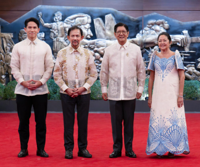
Marcos and Takaichi co-chaired the 4th Asia Zero-Emission Community (AZEC) Leaders’ Meeting on the sidelines of the 49th Asean Summit and Related Meetings in Manila.
The President said Asia remains vulnerable to disruptions along critical energy supply routes, citing the Strait of Hormuz and its impact on global supply chains.
"No single nation can insulate itself from shocks of this magnitude by acting alone,” Marcos said.
He cited around 600 active energy projects under AZEC, along with initiatives on oil stockpiling, carbon markets and regional energy cooperation.
AZEC is a Japan-led initiative that seeks to advance decarbonisation while maintaining economic growth and energy security, allowing participating countries to pursue pathways suited to their national circumstances.
Aside from the Philippines and Japan, AZEC members also include Australia, Brunei, Cambodia, Indonesia, Laos, Malaysia, Singapore, Thailand and Vietnam.
For the Philippines, Marcos said the government is advancing a strategic petroleum reserve and seeking investments in renewable energy, grid modernisation, energy storage, natural gas and emerging technologies.
He also confirmed that the country is laying the groundwork for nuclear power as a reliable, low-carbon energy source, alongside liquefied natural gas, biofuels, hydrogen, ammonia and carbon capture.
"We are laying the groundwork for nuclear power as part of a diversified, reliable, and low-carbon energy source alongside partners like Japan,” Marcos said.
The Philippines is targeting at least 25 gigawatts of renewable energy capacity by 2035 and aims to increase renewables’ share in its power generation mix to 50 percent by 2040 through its Green Energy Auction Program.
Marcos also called for stronger coordination between oil-producing and oil-consuming countries through information-sharing and practical storage arrangements. He stressed the need to uphold international law to keep sea lanes open and markets fair and transparent.
He also urged targeted investments in energy efficiency and initiatives under the country's national electric mobility framework, describing efficiency as the first line of defence against energy insecurity.
The President said the energy transition must also create decent jobs, prepare workers for emerging industries, and protect communities affected by the shift to a low-carbon economy.
The Philippines and Singapore signed their first Article 6 Carbon Credits Implementation Agreement this year, while Marcos issued a national carbon market policy framework last month to support green financing, the country's climate commitments and carbon credit trading.
Meanwhile, Takaichi proposed an Asia Oil Security Task Force to coordinate emergency oil releases and transfers, with a hub in Tokyo serving as its operational centre and the foundation for an Asian equivalent of the IEA.
The Paris-based IEA, established in 1974, provides policy recommendations, analysis and data on the global energy sector. Its 32 member countries and 13 association countries, which include Japan, account for about 75 per cent of global energy demand.
Takaichi added that Tokyo also plans to make idle oil storage tanks available for regional stockpiling, in coordination with the Philippines-led joint stockpiling initiative. - Bernama-PNA