KATHMANDU: Nepal’s diplomatic push to secure a dedicated place for the climate crisis facing the Himalayas and other mountain regions in global climate negotiations has suffered a setback, with its proposal for a separate mountain agenda failing to secure formal recognition at the 31st United Nations Climate Change Conference (COP31).
Speaking to the Press Trust of India (PTI) on Tuesday (Nov 9) on the sidelines of the summit in Antalya, Foreign Minister Shisir Khanal said Nepal and other mountain countries would continue to struggle to get their concerns formally recognised without the backing of major negotiating blocs.
While some countries explicitly supported the proposal raised on Monday, others remained reluctant, Khanal said, highlighting the diplomatic challenges of building consensus on mountain-related climate concerns within the UN climate negotiation process.
Nepal, Bhutan and Kyrgyzstan had pushed for mountain and climate change to be included as a separate agenda item at COP31. Nepal and Bhutan jointly submitted a proposal titled “1.5 deg C Warming in Mountains”, while Kyrgyzstan sought to institutionalise an annual dialogue on mountains and climate change under the United Nations Framework Convention on Climate Change (UNFCCC). Neither proposal secured a separate formal agenda item.
The setback came despite Nepal’s efforts to build a broader coalition of mountain countries and bring the rapidly worsening climate vulnerabilities of the Hindu Kush Himalaya into mainstream international climate negotiations.
However, the failure to secure a separate agenda item does not mean the issue has been dropped altogether. The COP31 presidency has agreed to continue consultations on mountains and climate change. Further research dialogues are also expected at UN climate meetings in Bonn, Germany, in 2027 and 2028.
Addressing the opening plenary on Monday, Khanal acknowledged that progress in negotiations had fallen short of Nepal’s expectations, despite constructive engagement with the conference presidencies and participating countries.
He urged the COP31 presidencies to ensure that mountain-related concerns were reflected in the conference’s final decision and subsequent consultations, identifying three priorities: recognising the urgency of limiting global warming to 1.5 degrees Celsius in mountain regions; establishing a dedicated UNFCCC work programme on mountains and climate change; and incorporating mountain-specific indicators into global climate adaptation and finance frameworks.
Nepal also wants mountain-related priorities integrated into the Global Goal on Adaptation (GGA) and the New Collective Quantified Goal on Climate Finance (NCQG), two important frameworks under the UN climate process.
Why does Nepal want a separate mountain agenda?
Nepal’s proposal was based on growing scientific evidence that mountain regions, particularly the Hindu Kush Himalaya, are experiencing accelerated warming, glacier retreat and increasing climate-related hazards.
Mountain ecosystems cover approximately 27 per cent of the world’s land area and support around 15 per cent of the global population. They also provide freshwater to nearly one-third of humanity through major river systems originating in mountain ranges.
Glacier melt, permafrost degradation, changing snowfall patterns and increasingly frequent extreme weather events threaten water security, agriculture, hydropower, biodiversity, infrastructure and the livelihoods of mountain communities.
The proposal by Nepal and Bhutan sought to advance scientific understanding of the impacts of 1.5-degree warming and potential temperature overshoot in mountain regions, institutionalise an annual high-level dialogue, initiate a process towards a dedicated mountain work programme and ensure that mountain priorities receive adequate attention in climate finance and adaptation mechanisms.
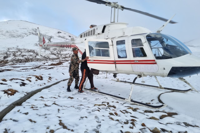
The issue has become particularly urgent for Nepal following the August 26 mountain collapse and subsequent floods and landslides in the Bhotekoshi-Trishuli river system, which caused extensive destruction across several districts.
Addressing the COP31 plenary, Khanal said more than 1,400 people had lost their lives and over 5,000 remained missing. Critical infrastructure was swept away within minutes, while reconstruction costs were estimated at approximately one-tenth of Nepal’s entire economy.
He described the disaster as a Himalayan tsunami and said climate change had contributed to the unprecedented destruction.
“Nepal comes here seeking climate justice,” Khanal told delegates, arguing that a country contributing negligibly to global greenhouse gas emissions was nevertheless bearing severe consequences of climate change.
“After the disaster we received an outpouring of sympathy. This is the time to put sympathy into the system. Promises into action,” he said.
The COP31 conference, being held in Antalya from November 9 to 20, has brought governments together to negotiate further action on climate change, including emissions reductions, adaptation, climate finance, and loss and damage.
For Nepal, the challenge now is to turn the political understanding reached at COP31 into a sustained negotiating process that gives mountain ecosystems a distinct place in the international climate framework. - The Kathmandu Post/ANN